Welcome, fellow creators. In this guide we'll show you what the Junk Journal Prompt Builder can do, which AI tools work best with it, and how to get the kind of results that fit the junk journal look - aged, layered, and full of character.
This guide is junk-journal-specific. If you're new to our Prompt Builders and want to understand the dropdowns, buttons, sheets, and general workflow first, start with our Prompt Builder guide. Prefer to watch? There's a video version of this guide on our YouTube channel too:
Video version of this guide
Table of contents:
What you can create with the Junk Journal Builder
The Junk Journal Prompt Builder is made for the whole world of vintage paper craft. With it you can build prompts for digital papers, background pages, ephemera, tags and labels, postage stamps, frames, bookmarks, gothic and Victorian patterns, distressed clipart, and more.
And it isn't tied to one mood. You can lean romantic and shabby chic, dark and gothic, travel-themed, botanical, fairytale, or mysterious and witchy - whatever world you're building in your journal. The dropdowns are full of themes and styles to mix, and if something you want isn't there, you can always add it and customize the builder to fit your needs. So treat the lists as a starting point, not a limit.
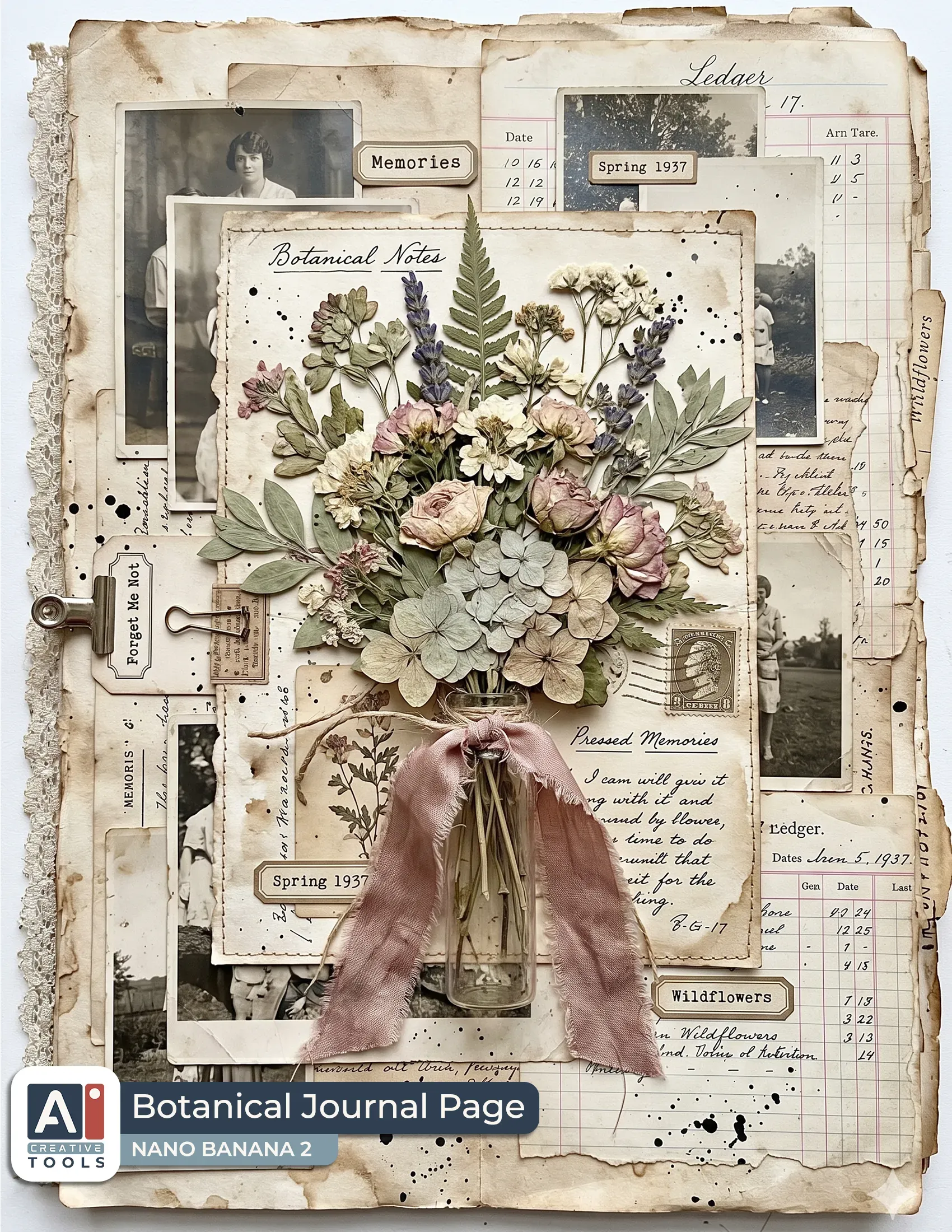
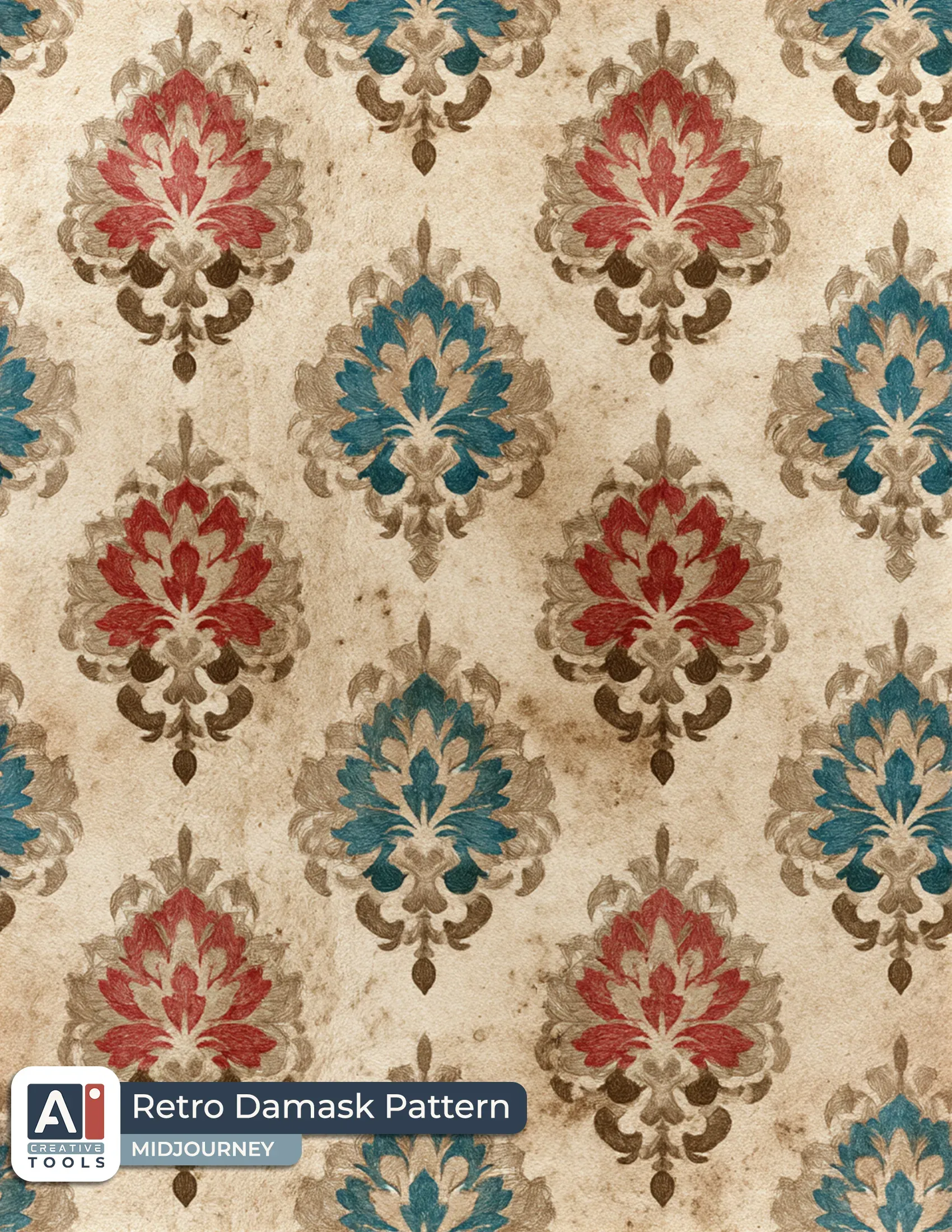
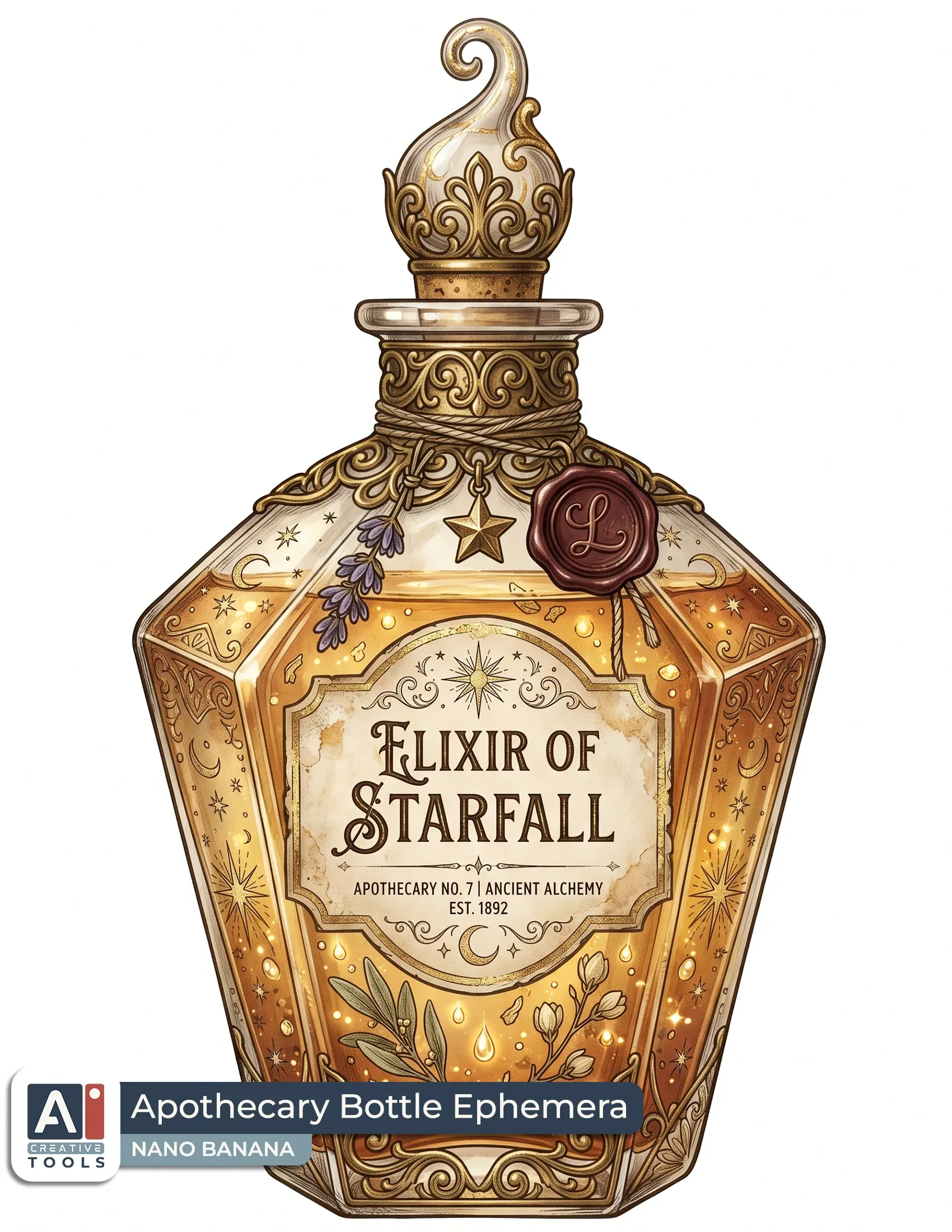
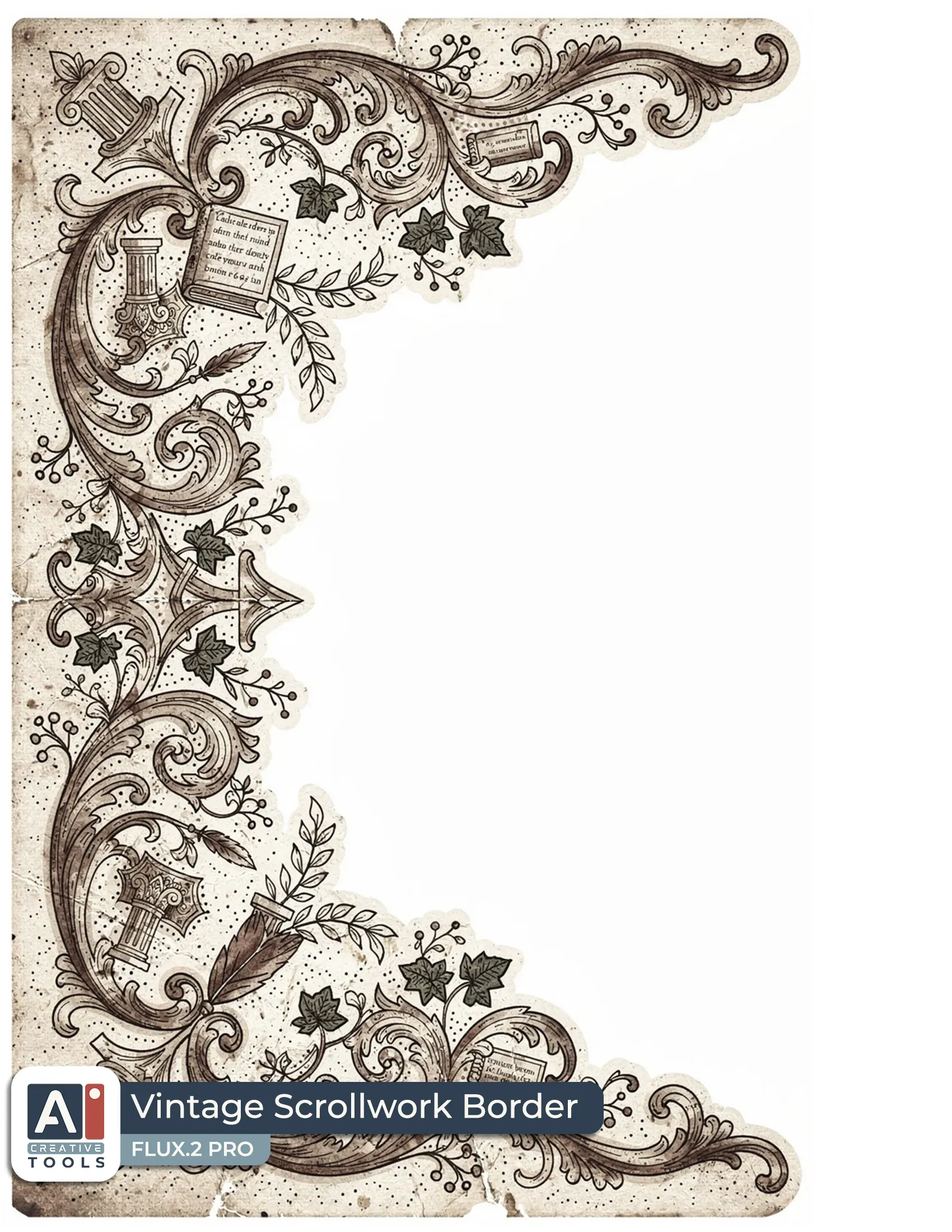
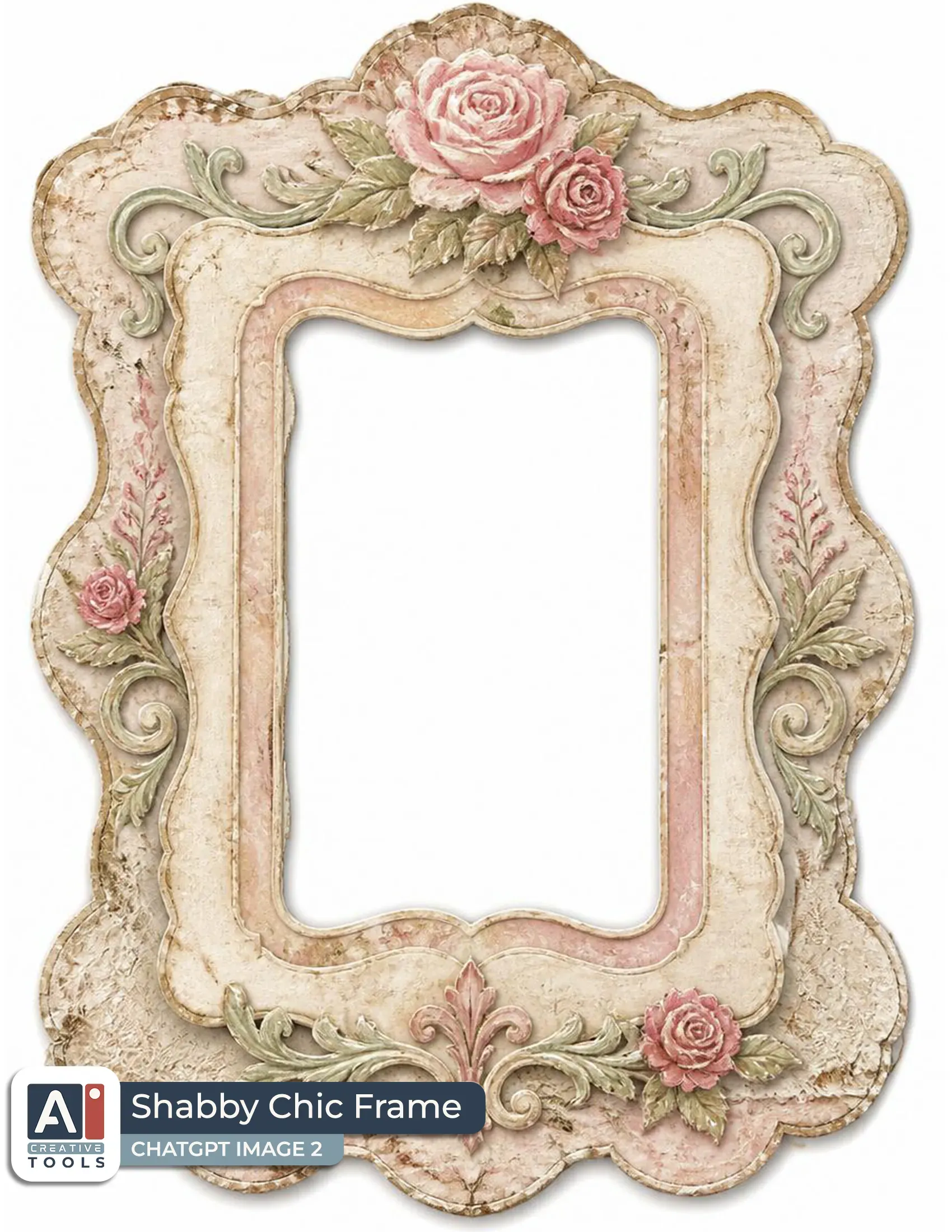
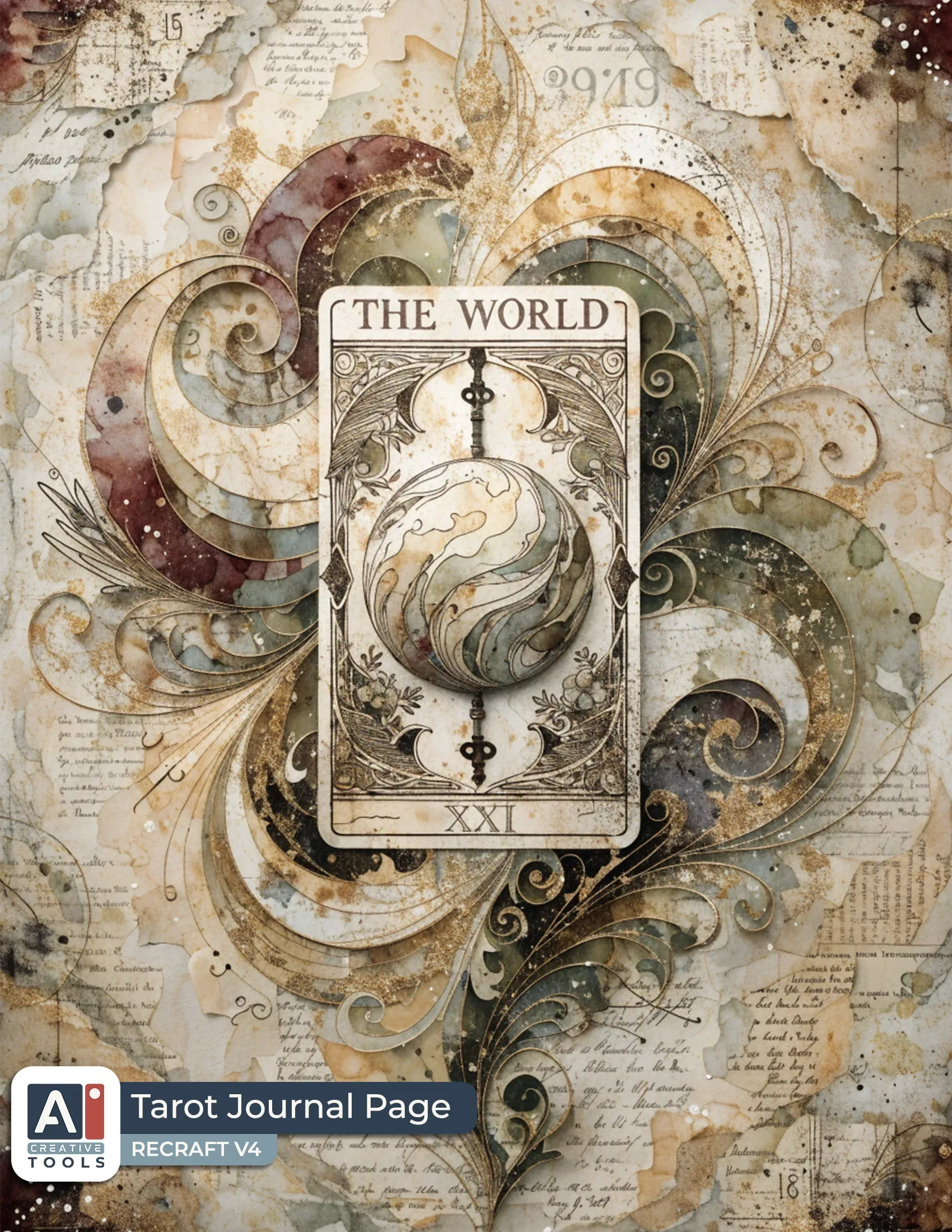
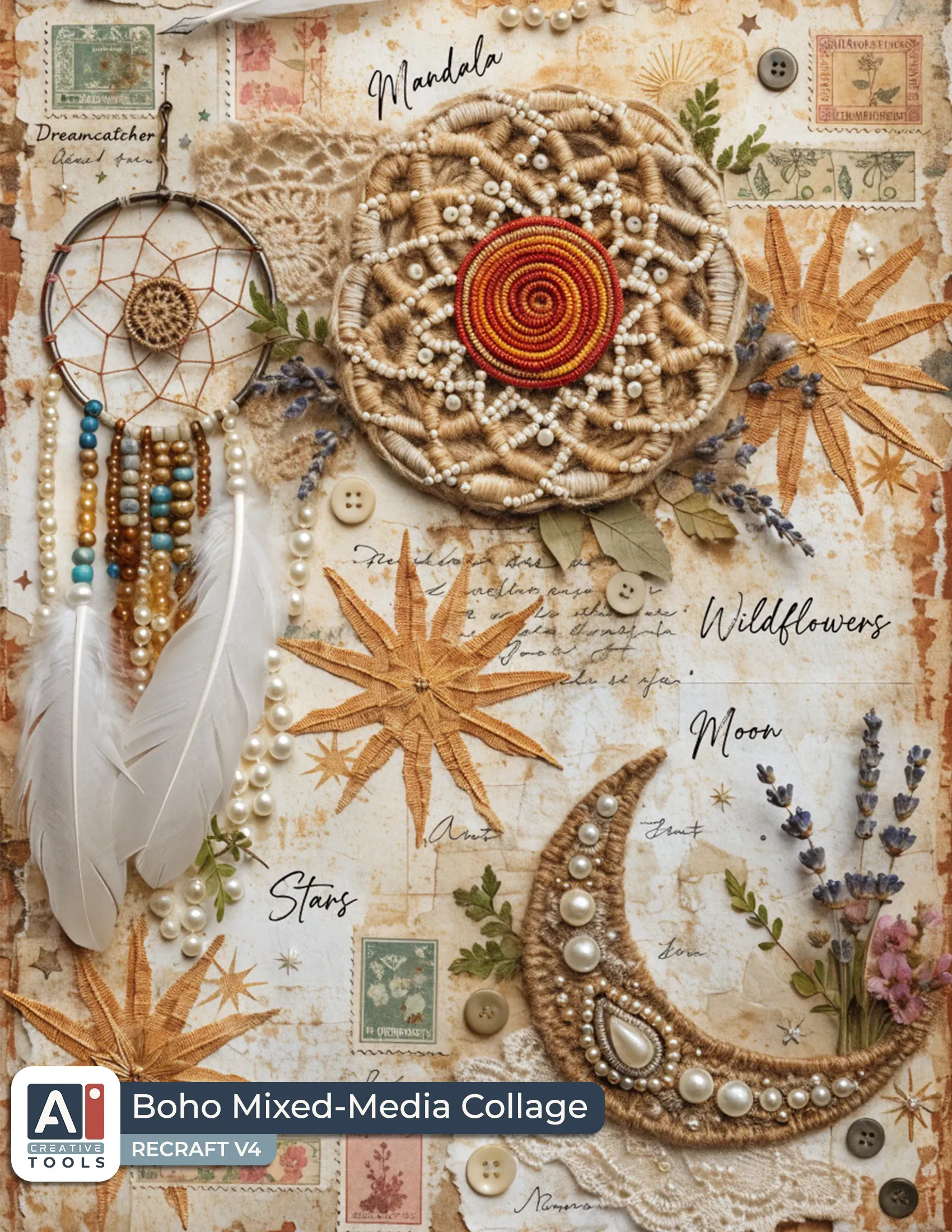
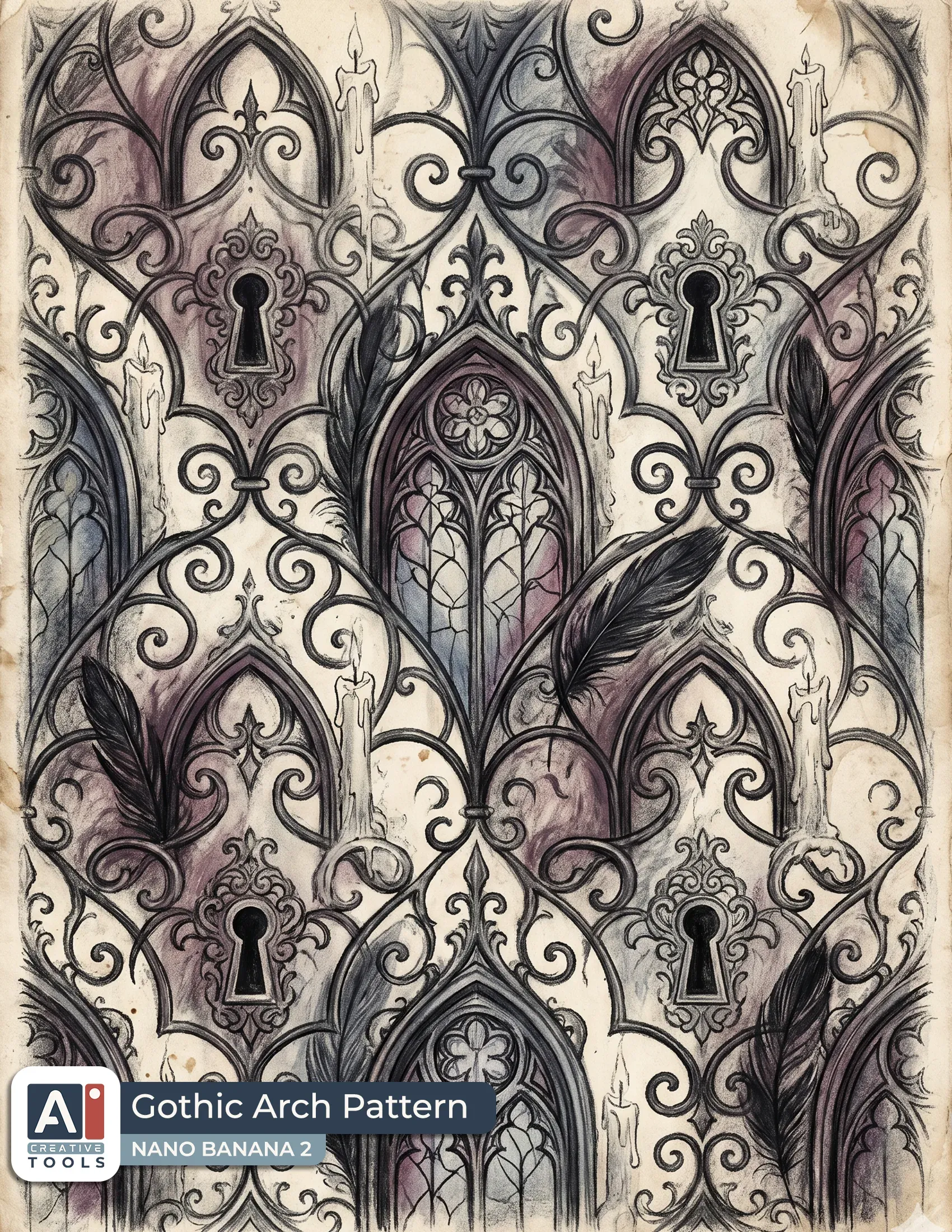
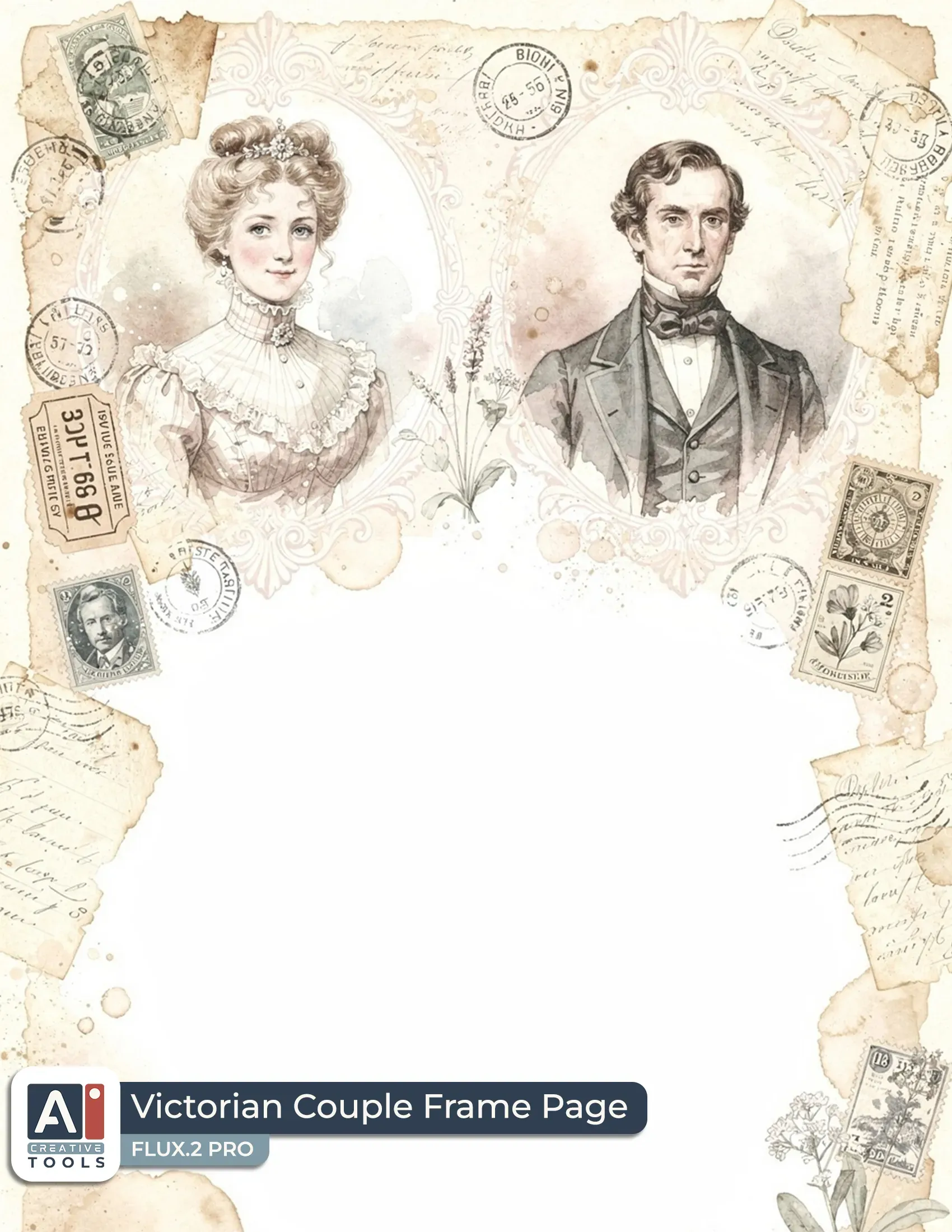
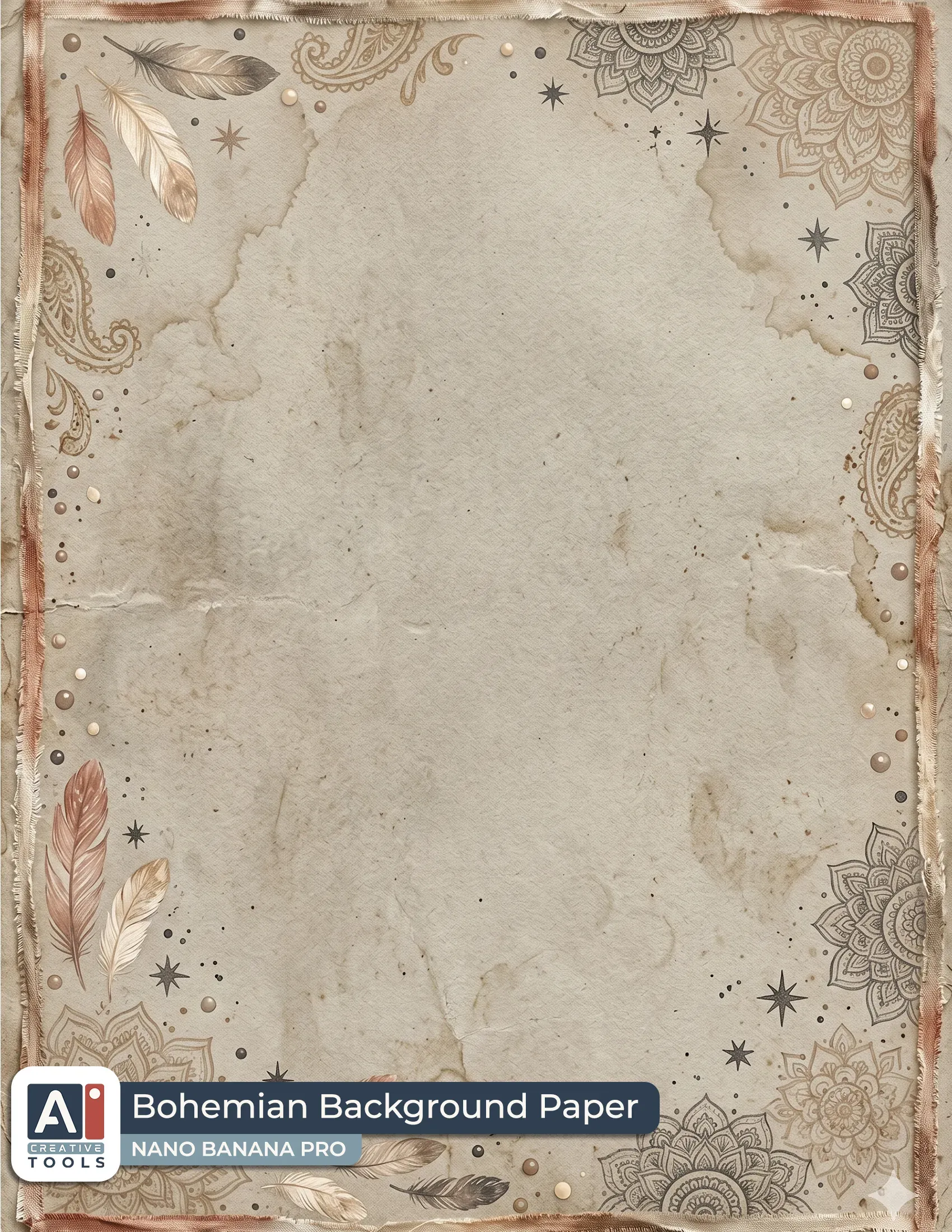
Here are some examples made with prompts from this builder. Each image has a short title, and you'll find all the prompts in the block below the gallery - so you can read them comfortably and copy any you like.
Swipe to view more
- Botanical journal page, Nano Banana: Create an image of a shabby chic junk journal page filling the frame, featuring an ornate pressed flower bouquet arranged within a subtle grid-based collage of scattered old photographs and vintage ephemera. The composition feels layered and handmade, with the bouquet as the main focal point, surrounded by softly overlapping photo fragments, faded paper scraps, and delicate journal textures that echo a carefully organized collage base. Use a matte color palette of faded cream, dusty rose, muted sage, parchment beige, and soft brown, with gentle age-worn contrast. Add scattered ink splatter across the page, along with tea-stained paper, foxing speckles, worn edges, and a gentle antique patina. Keep the overall look shabby chic, romantic, and slightly distressed, with an airy vintage balance. Aspect ratio 3:4.
- Retro damask pattern, Midjourney: Retro seamless pattern in delicate damask art style, flat design, scattered sketched doodles woven through ornate repeating motifs, bright color palette over an aged paper background, soft vignette effect, graceful vintage symmetry, tea-stained parchment texture with subtle foxing, faded ink linework, airy open spacing, elegant nostalgic surface, decorative junk journal wallpaper pattern, seamless all-over repeat --ar 17:22 --tile --v 8.1
- Apothecary bottle ephemera, Nano Banana: Create an image of an intricate potion bottle ephemera piece in clipart format, isolated on a clean white background with the entire object fully contained and ready to cut out. The bottle should have an ornate apothecary silhouette with a faceted glass body, curled stopper, brass filigree collar, and delicate embossed label panel. Fill the illustration with rich decorative details such as tiny starburst engravings, hand-painted highlights, aged paper label scraps, a wax seal charm, suspended herb sprigs, and a few glimmering droplets inside the glass. Use a warm vintage palette of gold, rust, cream, amber, and chocolate, with softly distressed edges, subtle antique patina, and fine engraved linework that feels hand-drawn and collectible. Keep the design elegant, detailed, and centered within a 3:4 aspect ratio.
- Vintage scrollwork border, Flux: An elegant dark academia decorative corner element in hand-drawn clipart style, isolated on a clean white background with the full corner fully contained for easy cutting. The design features layered scrollwork, delicate botanical flourishes, and scholarly ornament in aged sepia, deep brown, and muted black ink. Fine linework gives it a refined vintage feel, with subtle distressed texture, antique patina, and graceful curved accents that make it feel like a classic journal embellishment.
- Shabby chic frame, ChatGPT: Create an image of a shabby chic decorative frame in expressive oil pastel art style, presented as a single isolated element on a clean white background with the entire frame fully contained and cuttable. The frame should feel soft, romantic, and gently worn, with layered scalloped edges, delicate floral flourishes, and a graceful vintage silhouette. Use creamy ivory, blush pink, muted rose, faded sage, and warm beige tones, with visible pastel blending, smudged pigment, and velvety grain. Give the surface an aged, handcrafted look with subtle distressing, light foxing, and frayed-looking decorative details that enhance the shabby chic charm. Keep the 3D design effect subtle but present through raised layered paper-like depth, soft shadowing within the ornamented border, and a slightly dimensional mixed-media feel. Aspect ratio 3:4.
- Tarot journal page, Recraft: A mystical mixed media collage layout in art nouveau style, presented as a single full-page composition filling the frame with no journal binding or open-book context. Pristine tarot card imagery emerges from a multilayered paper background of aged cream, faded burgundy, olive, dusty gold, and warm brown, with elegant flowing lines, ornate borders, and symbolic flourishes. The collage feels refined yet antique, with distressed paper edges, soft foxing speckles, tea-stained undertones, and layered vintage fragments arranged with graceful overlap. Subtle glow accents lend an enchanted atmosphere while preserving a realistic mixed-media look, as if cut paper, printed ephemera, and delicate gilded details have been assembled into a spellbinding journal page.
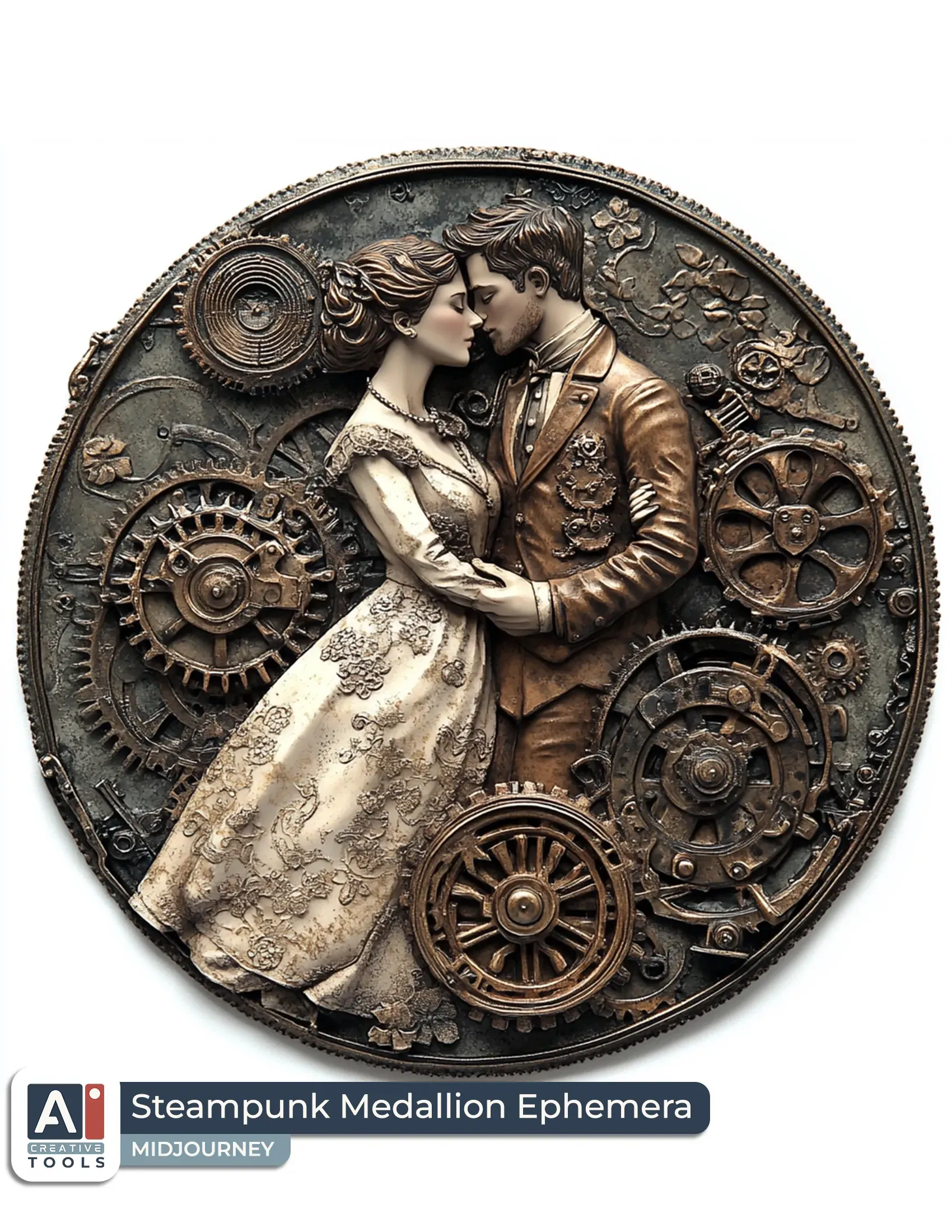
- Steampunk medallion ephemera, Midjourney: Steampunk ephemera piece in 1800s Victorian art style, 3D mixed media design, elegant couple posed together with scattered clock gears and ornate mechanical accents, metal textures prominent across brass filigree, rivets, and engraved surfaces, rich warm palette of bronze, copper, and deep sepia, subtly aged with distressed patina and light foxing, isolated on a clean white background, complete cutout with safe margins, refined antique charm, layered collage feel, intricate Victorian detail, soft worn edges --v 6.1
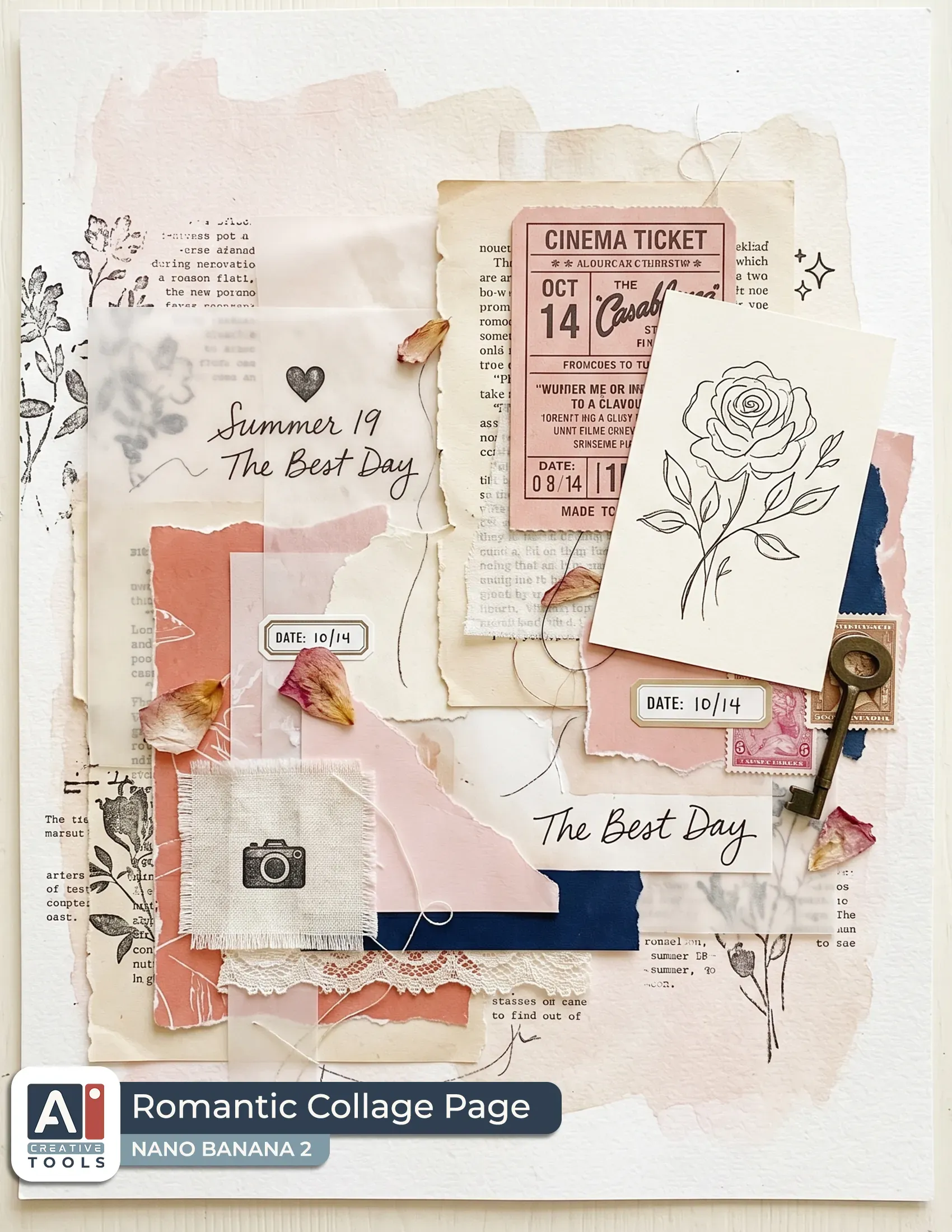
- Romantic collage page, Nano Banana: Create a romantic mixed media collage layout as a single page filling the frame, combining modern scrapbook styling with soft vintage charm in a layered arrangement of paper scraps, translucent washes, torn edges, and neatly placed ephemera. Build the composition around date-inspired accents such as a cinema ticket stub and a small card featuring a hand-drawn flower, with subtle emoji motifs woven into the collage as playful graphic details. Use a gentle palette of blush pink, cream, warm beige, muted coral, and charcoal ink, with a few clean contemporary touches for contrast. Include overlapping paper textures, faint adhesive marks, stamped edges, handwritten date labels, and delicate frayed fragments that give the page a curated journal feel. Keep the layout airy yet richly layered, with the romantic elements drifting across the page in an elegant, modern mixed media balance. Aspect ratio 3:4.
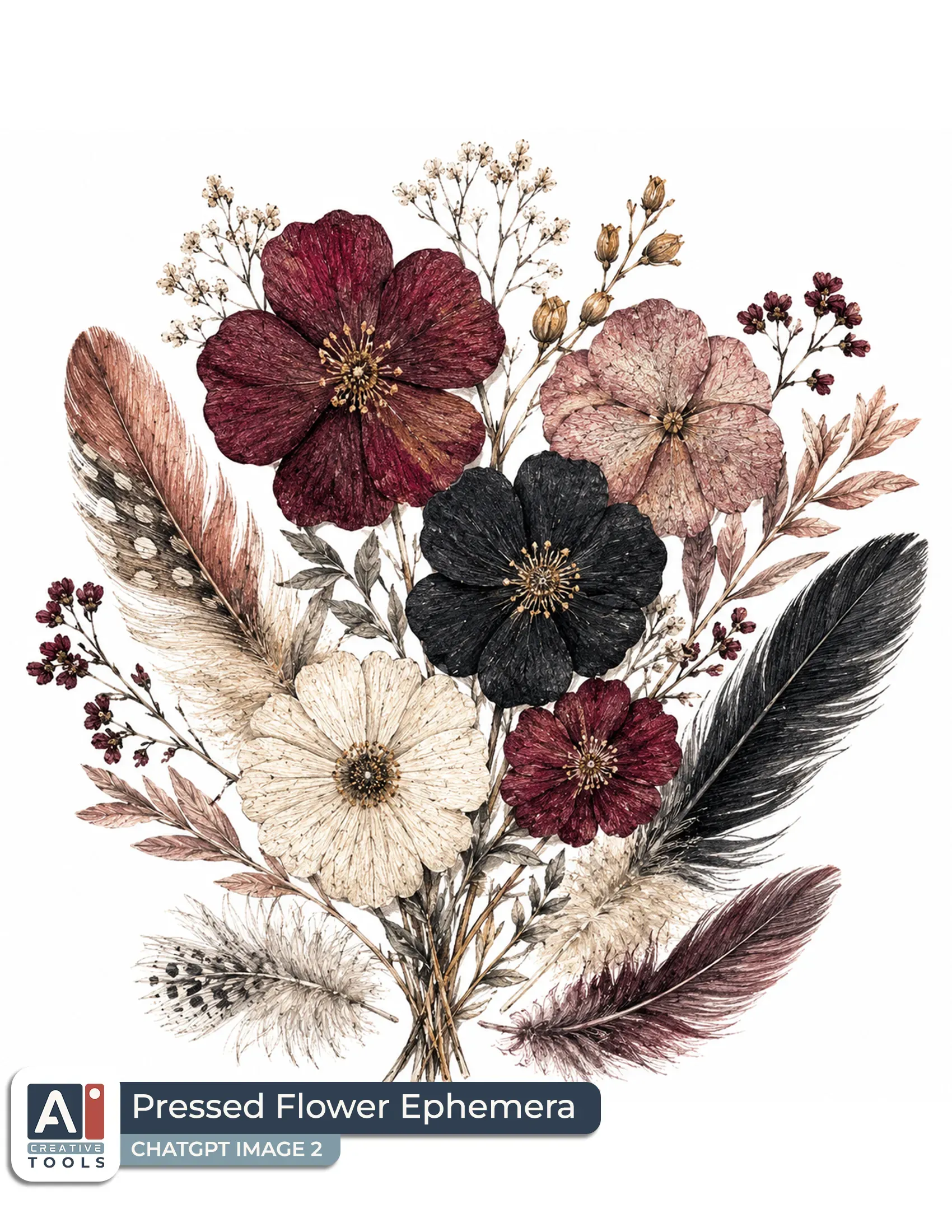
- Pressed flower ephemera, ChatGPT: Create a botanical ephemera piece in colored pencil art style, shown as a single clipart element isolated on a clean white background with the full bouquet contained within the frame. The composition features a pressed flower bouquet arranged with graceful, slightly asymmetrical stems, surrounded by a few scattered feathers that arc gently around the arrangement. Use deep burgundy, black, rose gold, ash, and ivory in a refined muted palette, with layered pencil shading, delicate hand-drawn texture, and soft botanical detailing that feels elegant and vintage-inspired. Give the flowers flattened pressed-petal shapes, subtle natural vein marks, and lightly distressed antique charm, while the feathers remain airy and feathery with fine drawn barbs and soft tonal gradients. Keep the overall look crisp, decorative, and junk-journal friendly, with clean cutout edges and plenty of white space around the element. Aspect ratio 1:1.
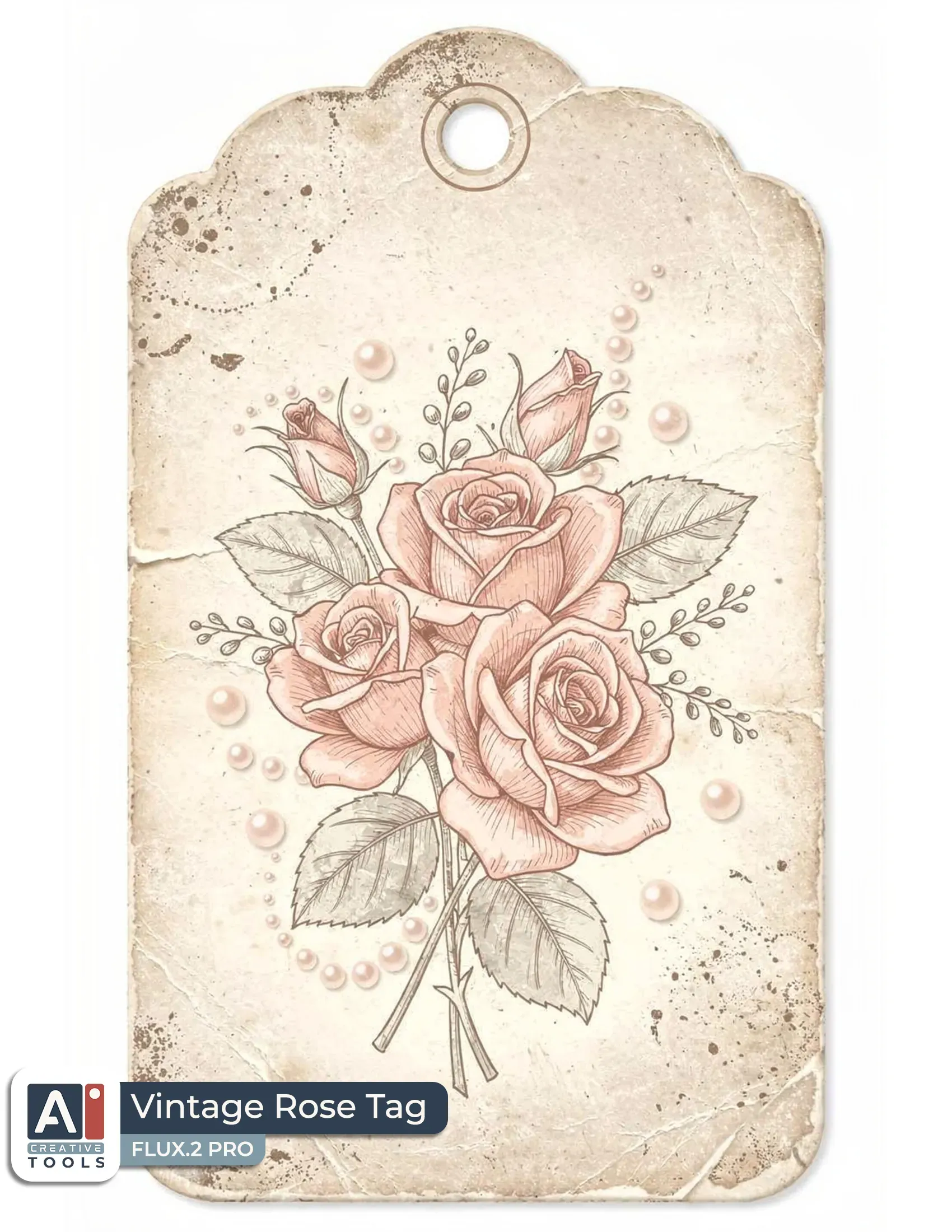
- Vintage rose tag, Flux: A shabby chic rose arrangement tag in clipart style, isolated on a clean white background, with a graceful floral cluster of soft blush roses and scattered pearls arranged within a classic tag silhouette. The piece has faded edges, a gently distressed vintage patina, and delicate worn detailing that gives it an antique junk journal charm. Muted rose pink, creamy ivory, and soft gray tones create an elegant romantic palette, with fine illustrated texture and a neatly contained cutout shape.
- Boho mixed-media collage, Recraft: A single bohemian scrapbook page filling the frame, in a layered junk journal collage style with a warm earthy palette of rust, terracotta, faded teal, mustard, and aged ivory. The composition features a woven mandala, a dreamcatcher with delicate feathers, a crescent moon, sunburst motifs, tiny stars, vintage postage stamps, and scattered pressed wildflowers arranged across torn paper scraps and washi tape strips. Handwritten labels name the elements in mixed vintage script and typewriter text, including “Mandala,” “Dreamcatcher,” “Moon,” “Stars,” and “Wildflowers.” Tea-stained paper textures, foxing speckles, frayed edges, faded ink, and antique patina give the page a worn handcrafted feel, while subtle lace, bead, and textile accents add a soulful bohemian charm. No journal binding or open-book context visible.
- Gothic arch pattern, Nano Banana: Create an image of a gothic background paper in charcoal and ink art style, a single page filling the frame with an elegant allover composition on a deep ivory background. Layer intricate cathedral-inspired motifs across the surface, including wrought iron curls, pointed arches, stained glass tracery, ornate keyholes, candle wax drips, and subtle raven-feather ornamentation, arranged as a decorative paper design rather than a scene. Use a dusky palette translated through smoky shading, with ink black, muted plum, slate blue, and tarnished silver accents softened by pale parchment negative space. Give the artwork visible dry-brush texture, softly blended tones, and lightly distressed antique character with faint foxing and weathered patina. Keep the layout balanced, richly detailed, and suitable as decorative junk journal paper. Aspect ratio 3:4. Do not include any text or letters.
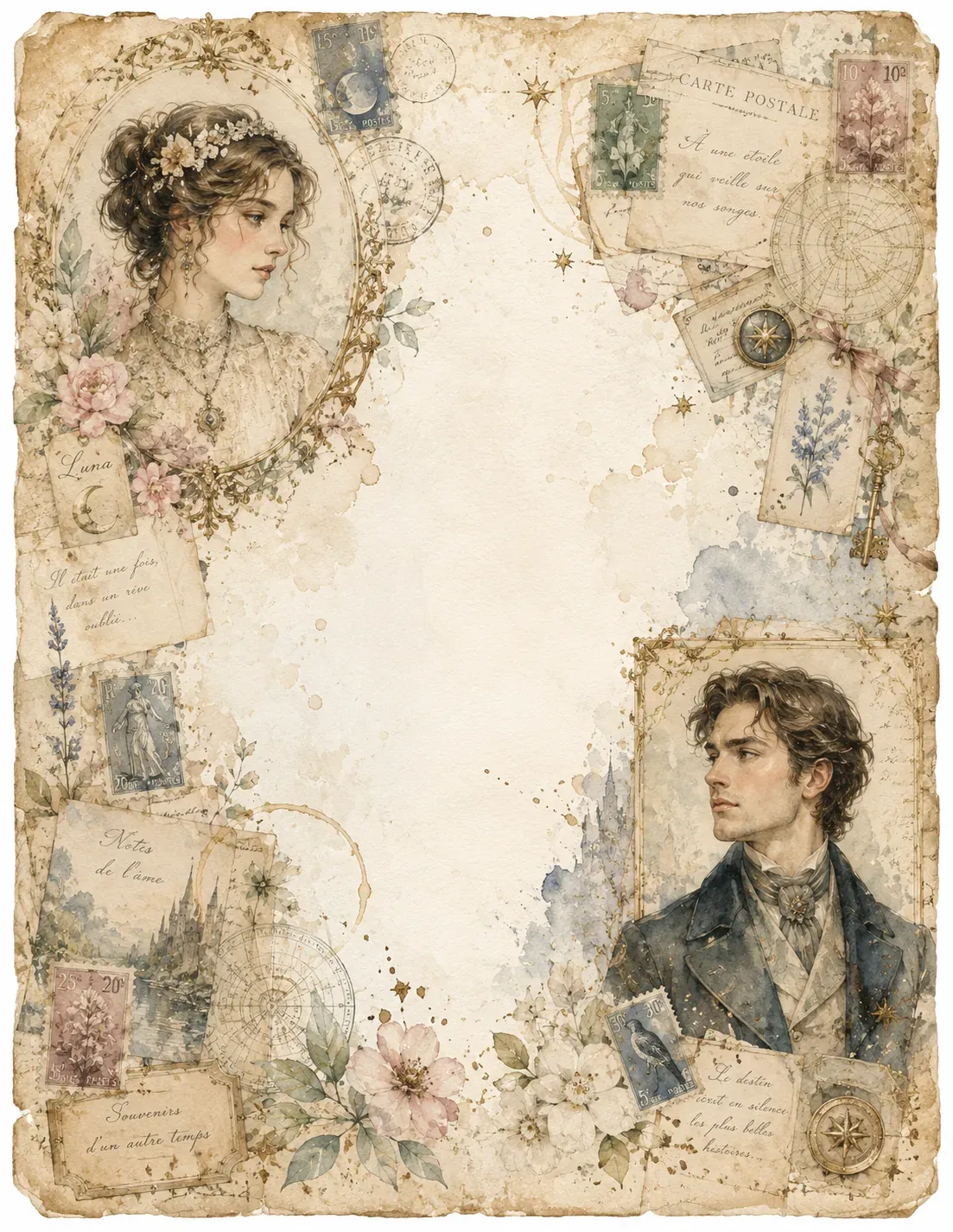
- Victorian couple frame page, Flux: Mystical scrapbook page in a delicate watercolor art style, featuring an ornate lady portrait and an elegant gentleman portrait side by side, surrounded by scattered postage stamps and vintage ephemera on a clean white background. A blank center area remains open for journaling, while soft coffee stain aging, faint foxing, and tea-washed edges give the page an antique patina. The palette stays light and airy, with pale sepia, faded cream, misty blush, and whisper-soft gray accents.
- Bohemian background paper, Nano Banana: Create a single-page bohemian background paper filling the frame, with a clean muted taupe field and a generous blank center area left open for journaling or collage. Around the edges and in the corners, arrange a loose frame of named boho accents: delicate mandala motifs, small feather clusters, tiny starbursts, scattered bead-like dots, frayed ribbon trims, and subtle paisley flourishes. The paper should feel aged and softly worn, with coffee-stain rings, tea-stained washes, foxing speckles, and faint distressed texture across the surface. Use a muted palette of aged cream, sepia, rust, taupe, and charcoal, with the decorative elements fading gently into the background rather than overpowering it. Keep the composition airy and balanced, with vintage handmade charm and plenty of open space in the middle. Aspect ratio 3:4.
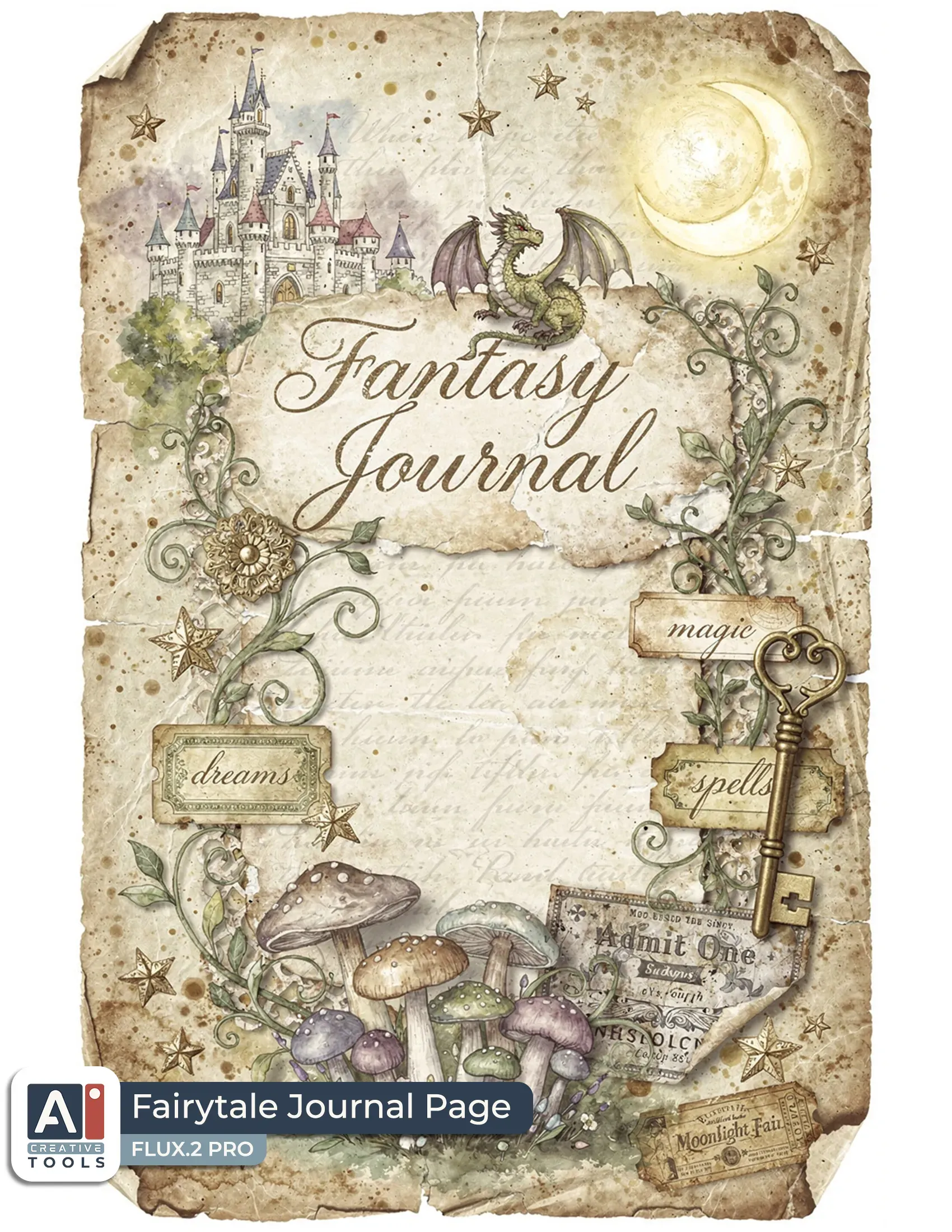
- Fairytale journal page, Flux: A single fantasy junk journal page filling the frame, styled as a whimsical vintage scrapbook collage with an aged parchment base, tea-stained edges, soft foxing speckles, and faded sepia ink. The page layers an enchanted castle, a crescent moon, a tiny dragon, a key, mushrooms, ornate stars, and curling vines around a handwritten heading in weathered cursive, “Fantasy Journal,” with small labeled accents and ticket scraps. Muted gold, moss green, dusty lilac, and aged ivory create a magical antique paper charm.
AI tools - what we tested, and our current pick
The Junk Journal Prompt Builder creates prompts, not images, so you bring your own AI image generator. Here are the tools we've tested it with, and the versions we used: ChatGPT Image 2, Nano Banana 2 and Nano Banana Pro, Midjourney v 6.1, v 7 and v 8.1, Ideogram 3, Flux.2 Pro, Leonardo’s Lucid Origin, Recraft V4, and Seedream 4.5.
Below are the tools in our order of preference for junk journals:

Recraft

ChatGPT

Nano Banana

Flux

Midjourney

Ideogram

Leonardo

Seedream
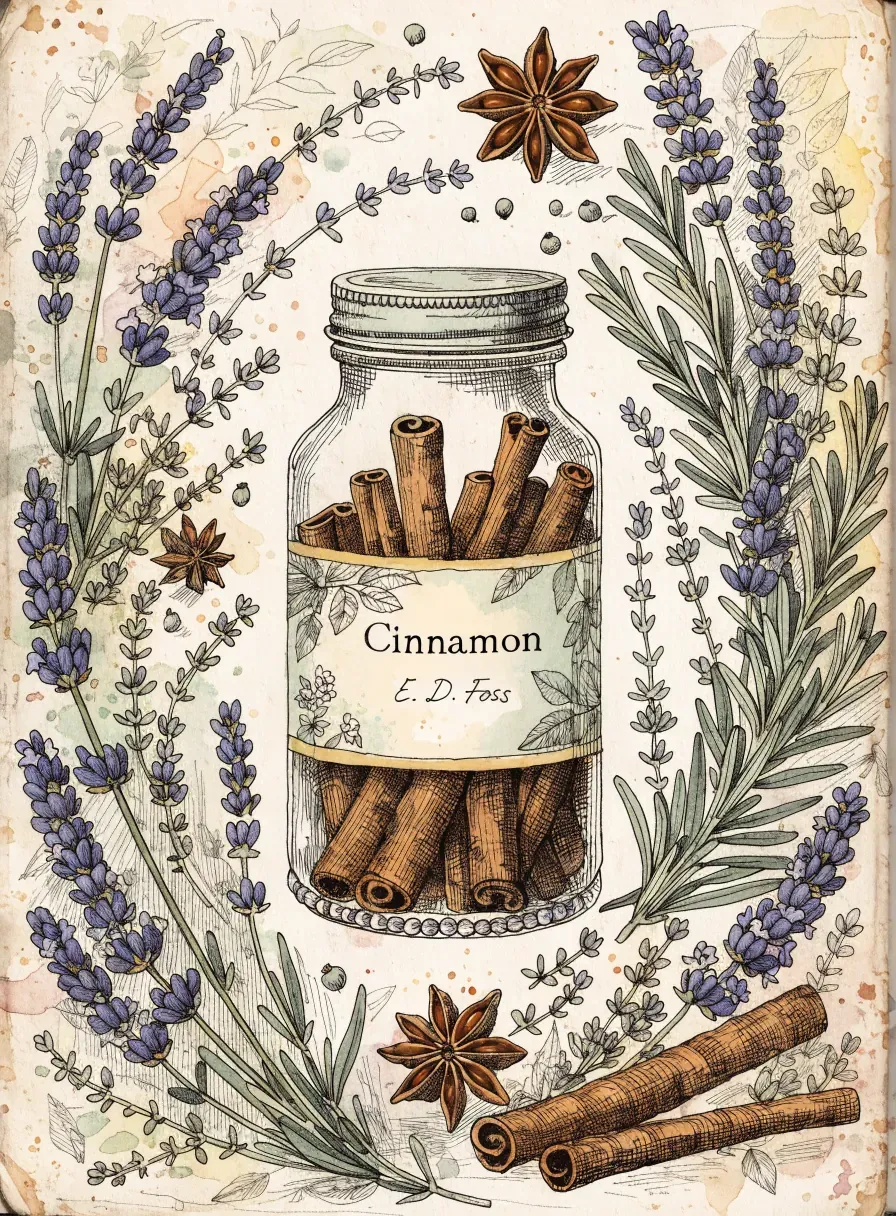
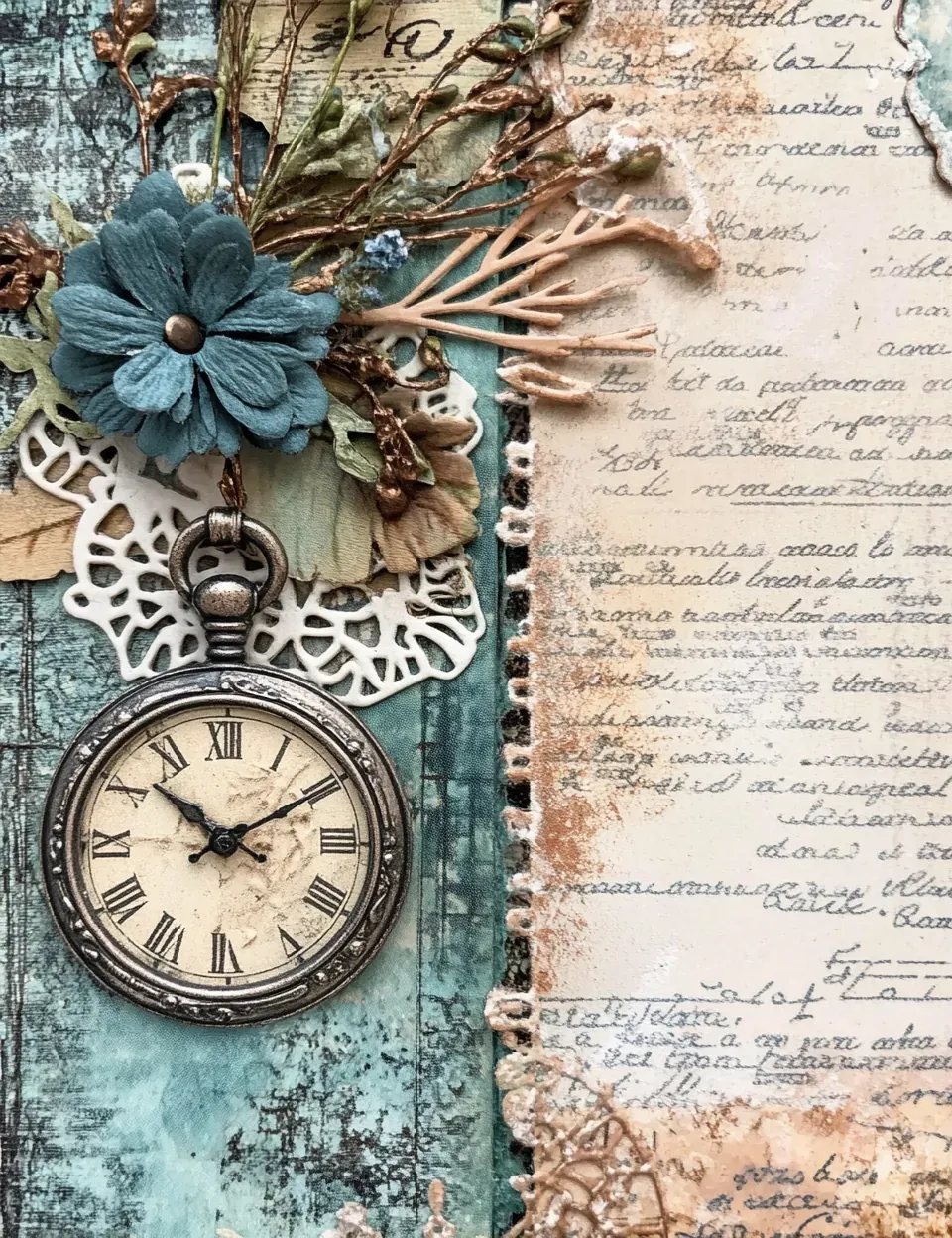
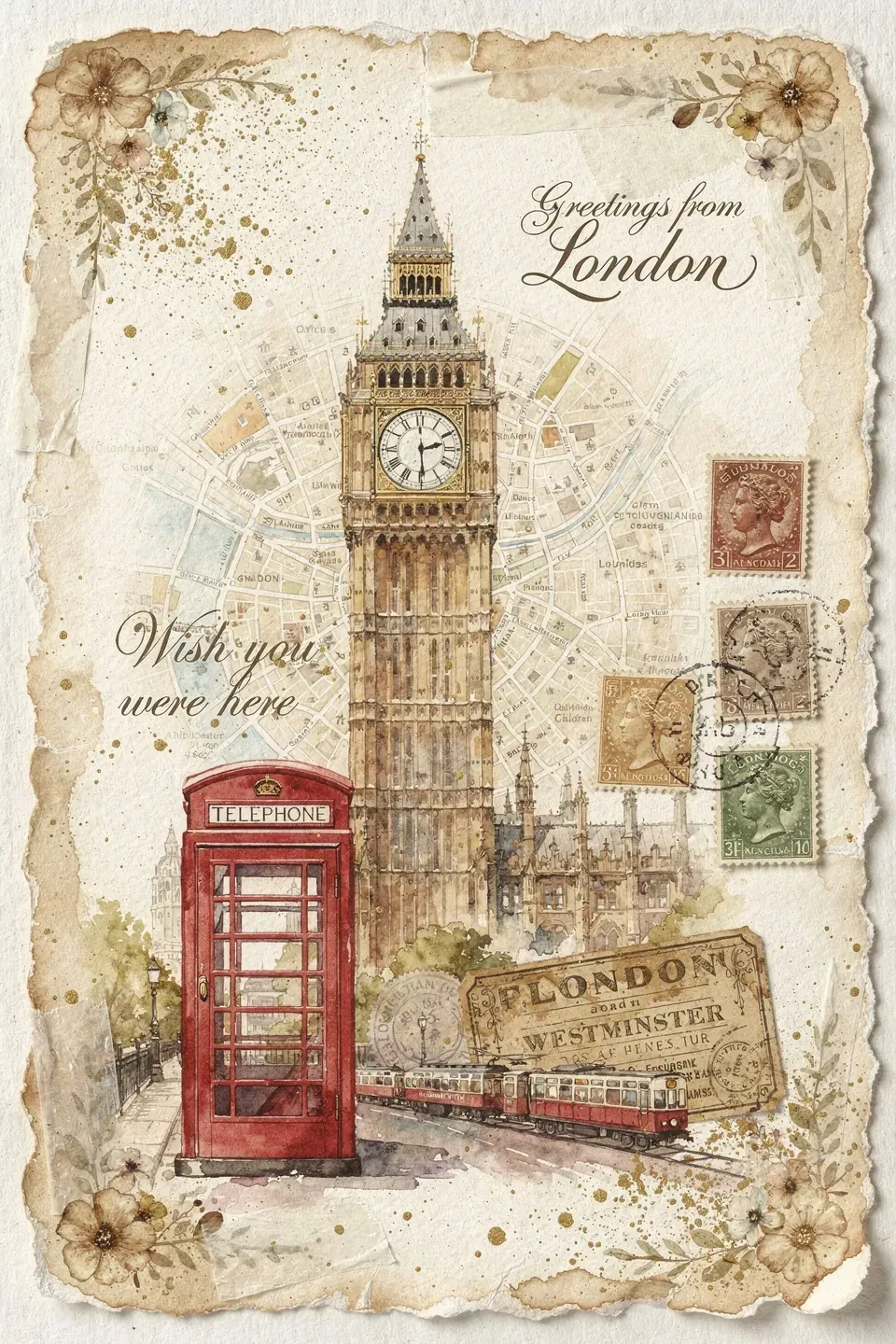
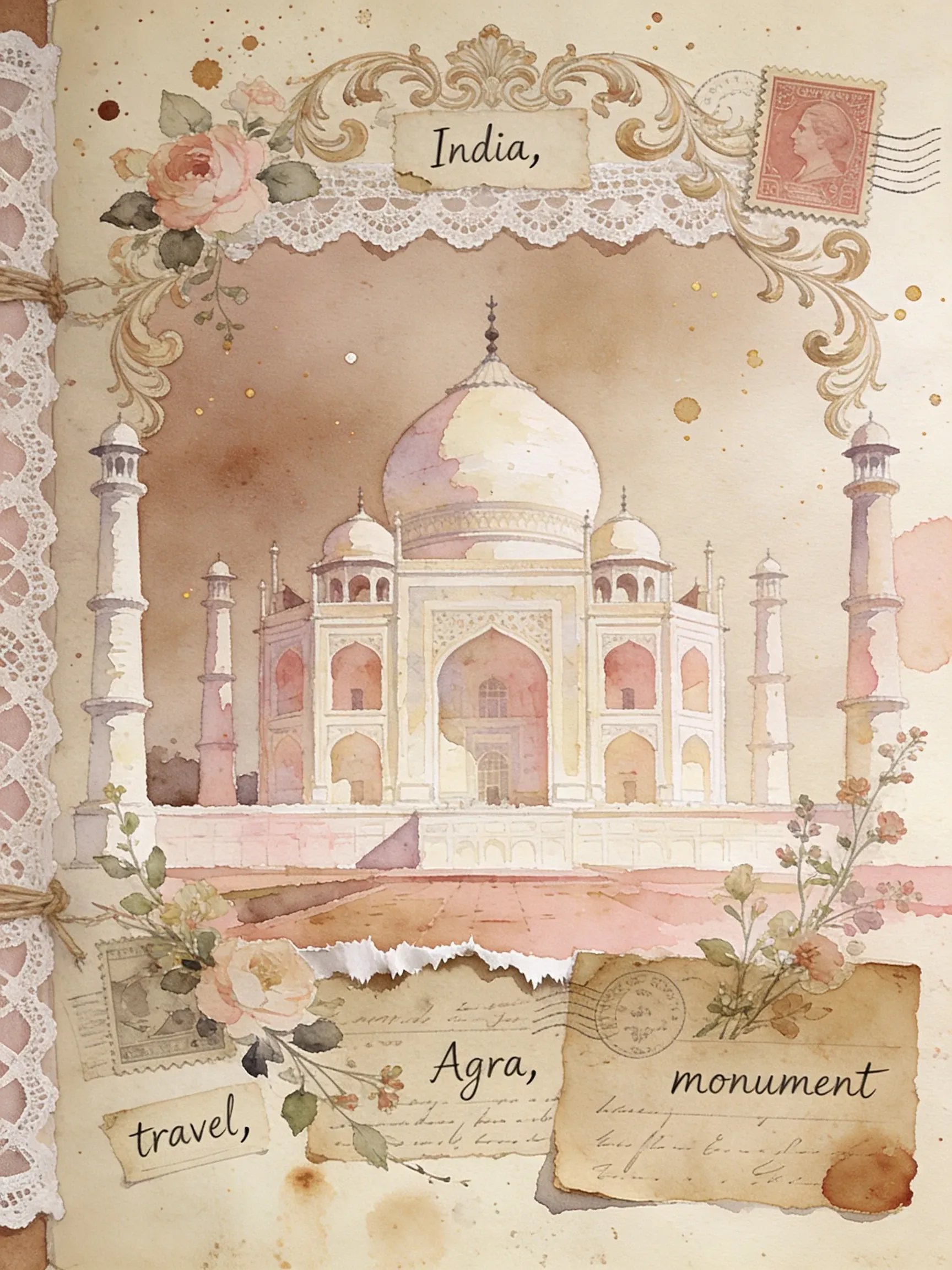
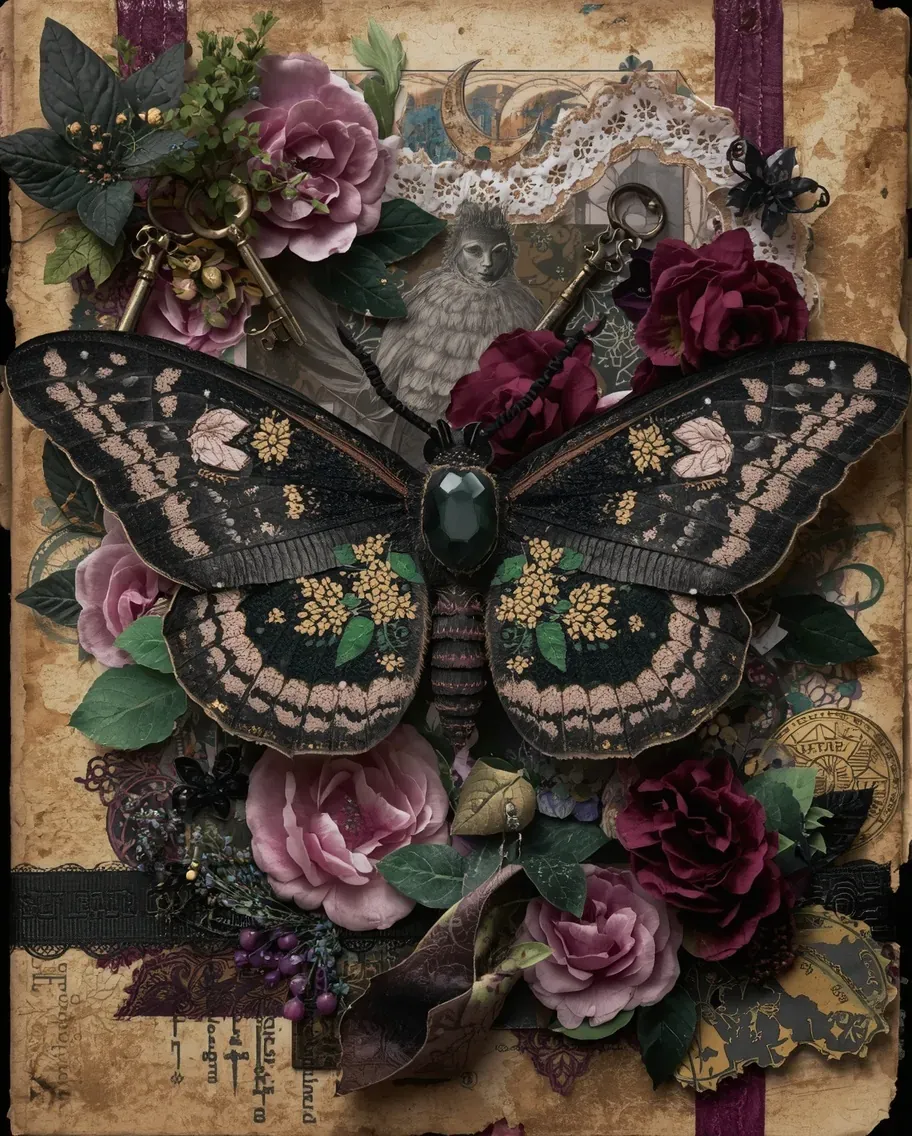
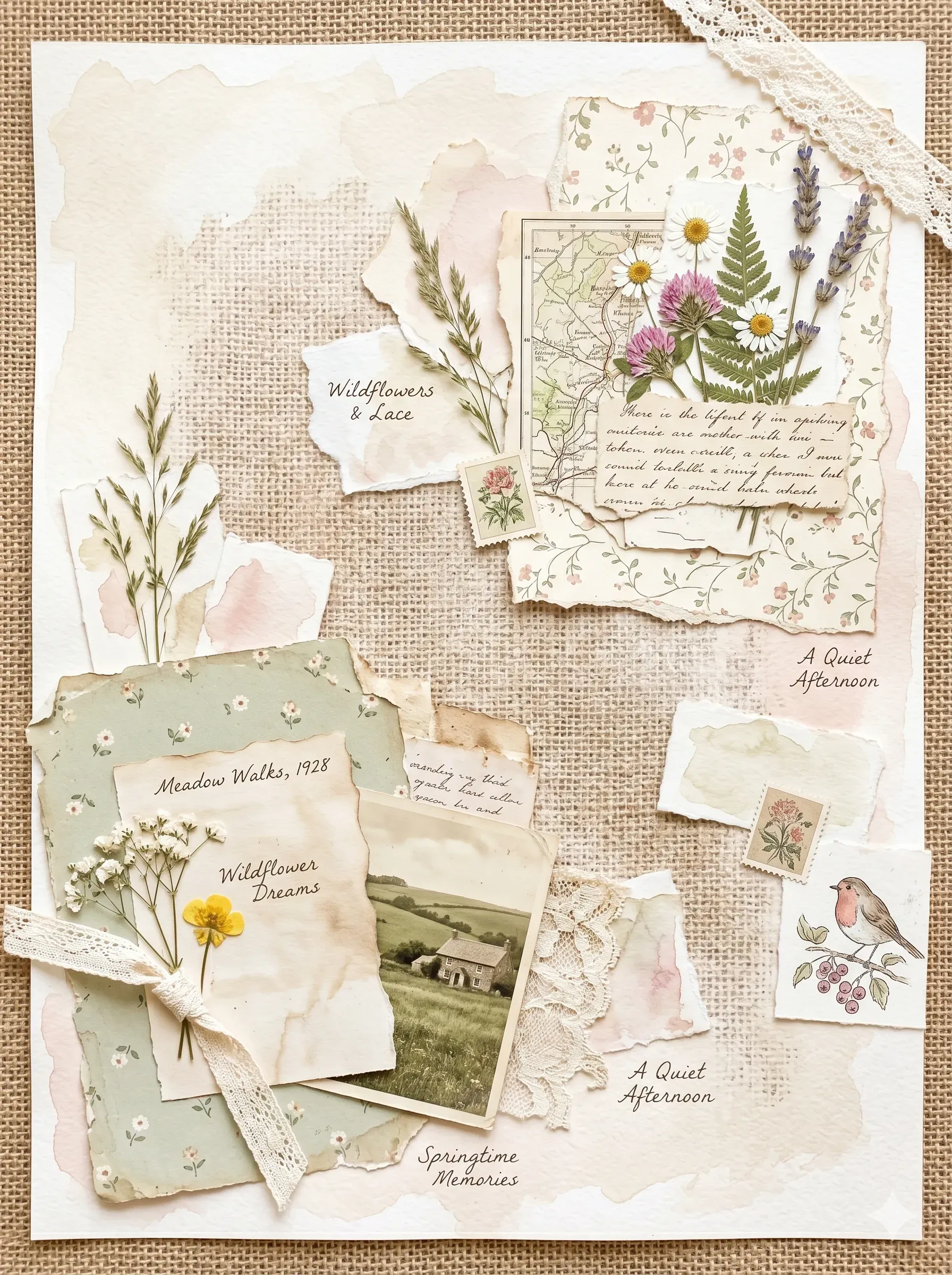
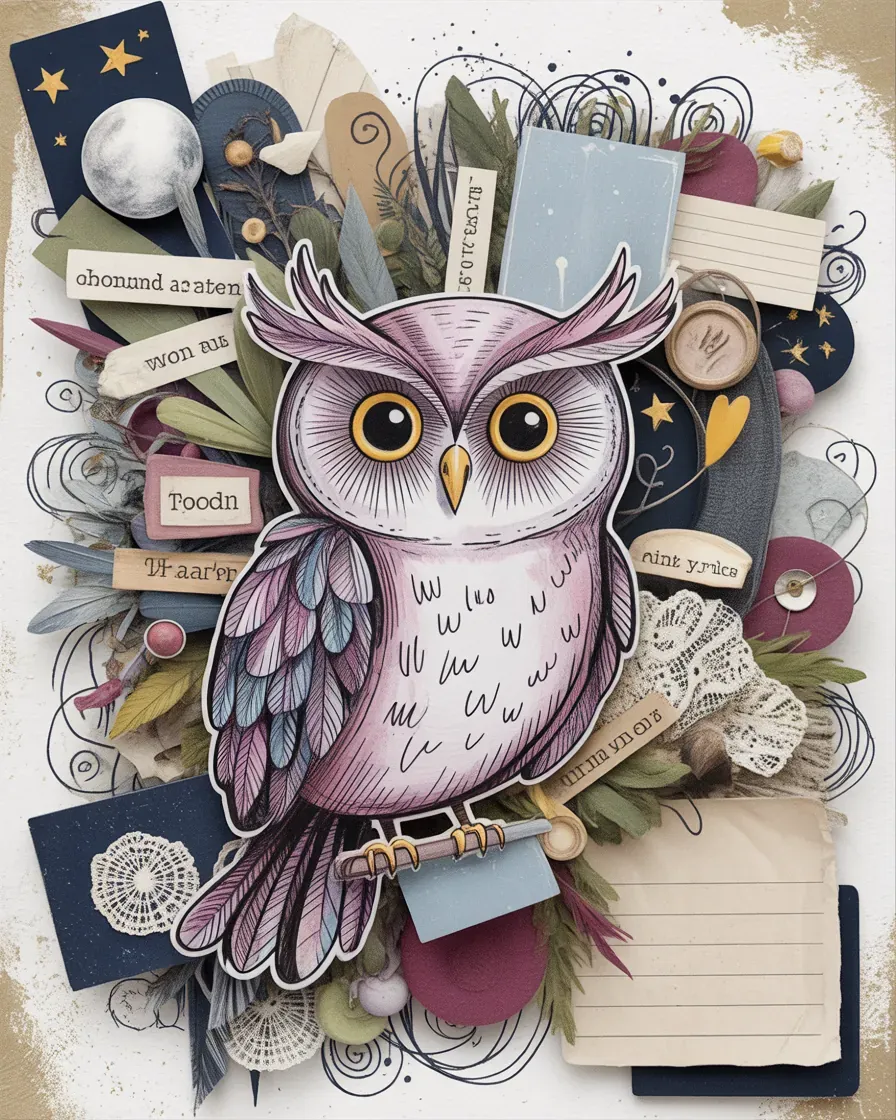
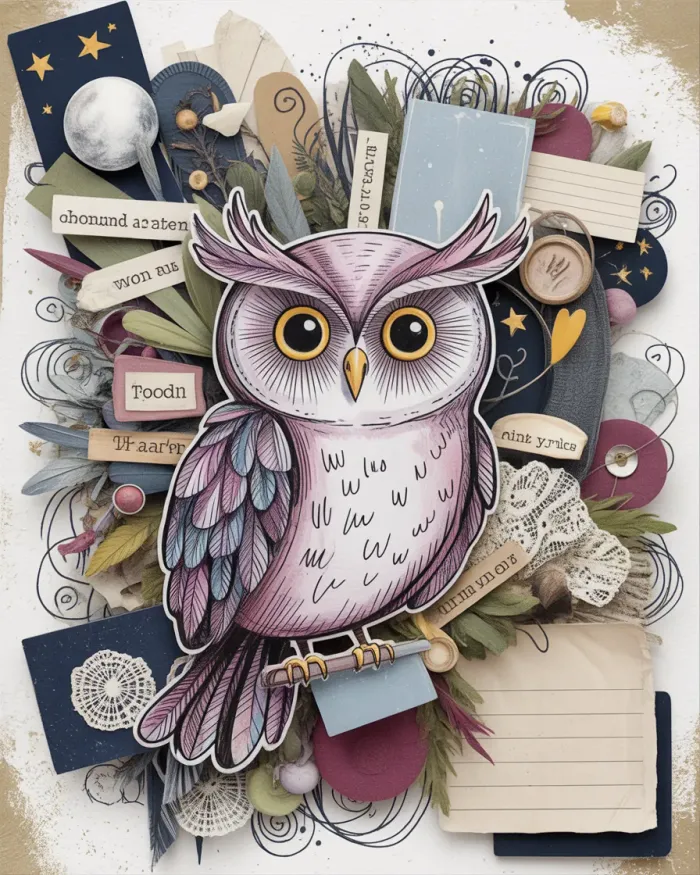
Our favorite for junk journals right now is Recraft - it handles the aged, textured look beautifully and places text well on the page. The other tools each bring their own strengths and weaknesses to this aesthetic, which we cover in detail in our dedicated article: What AI Tool to Pick for Junk Journals. Here are some outcomes from different AI tools (much more examples in the article):
ChatGPT
Recraft
Midjourney
Flux
Seedream
Leonardo
Nano Banana
Ideogram
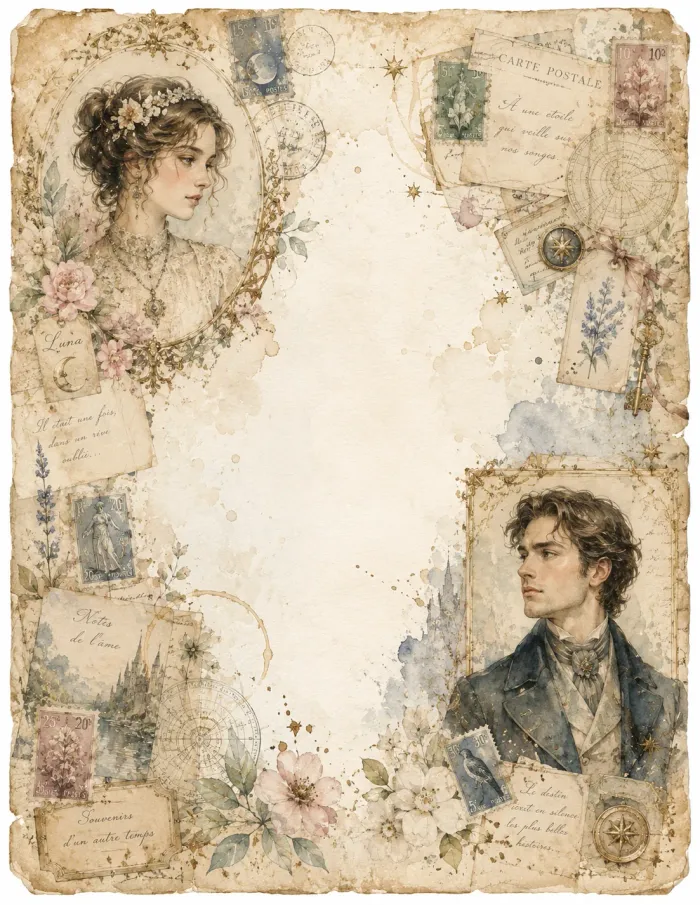
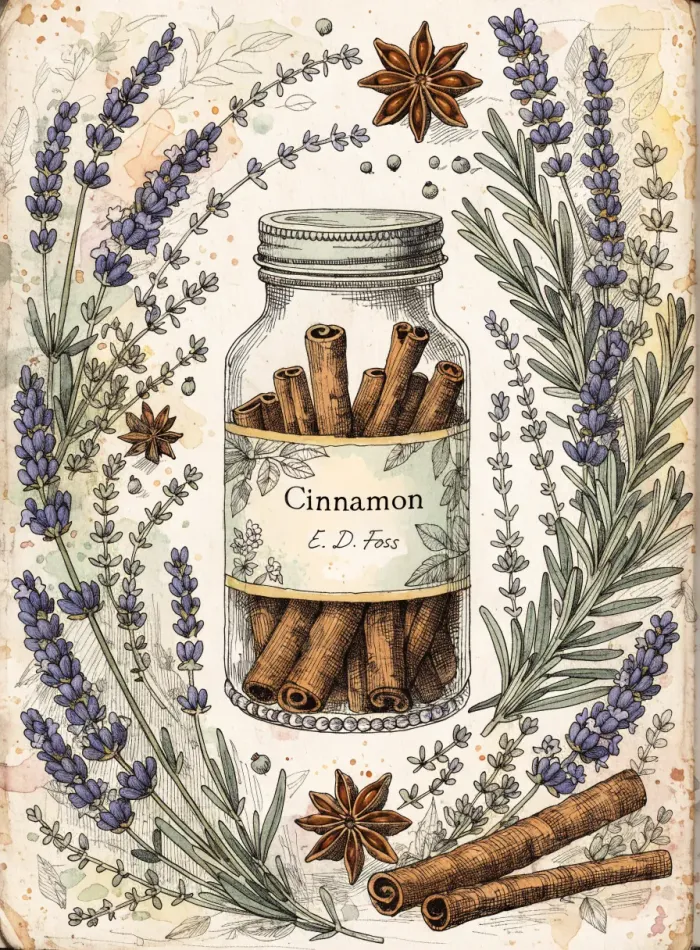
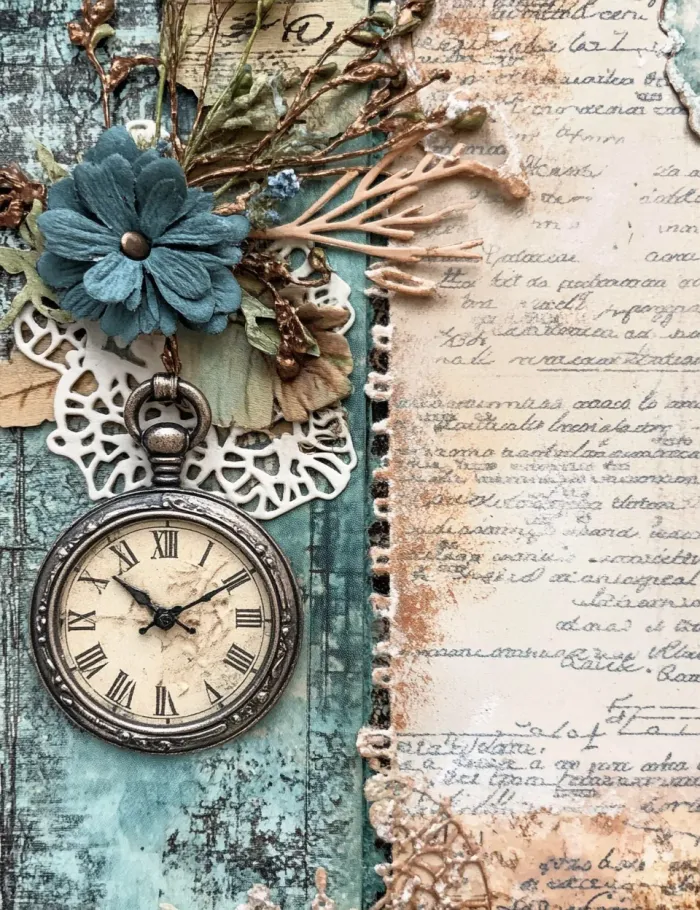
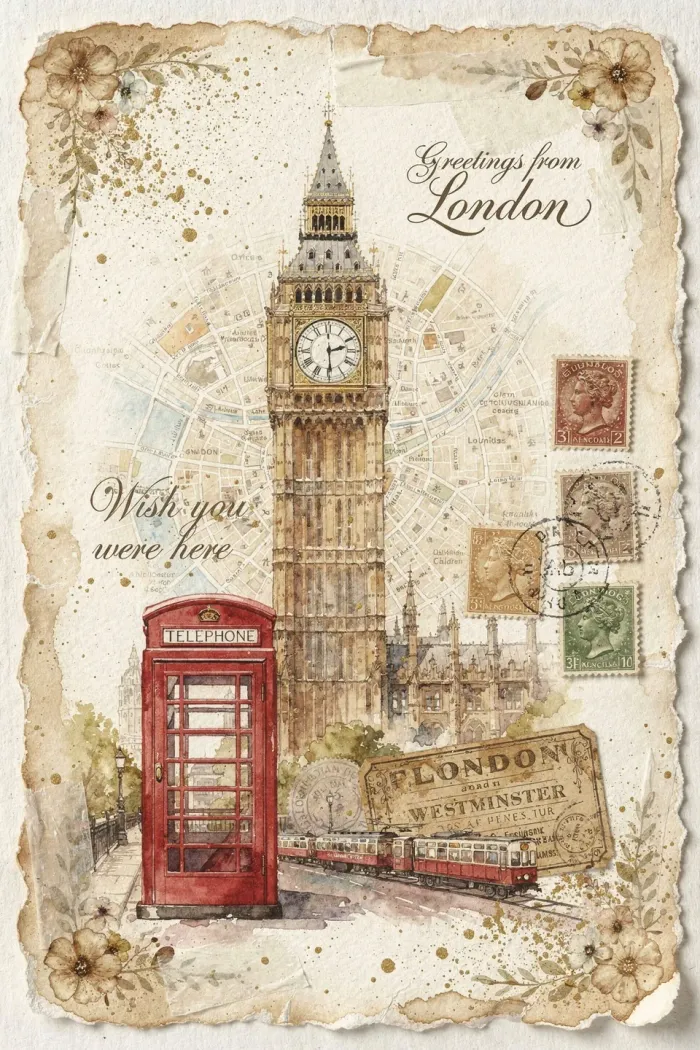
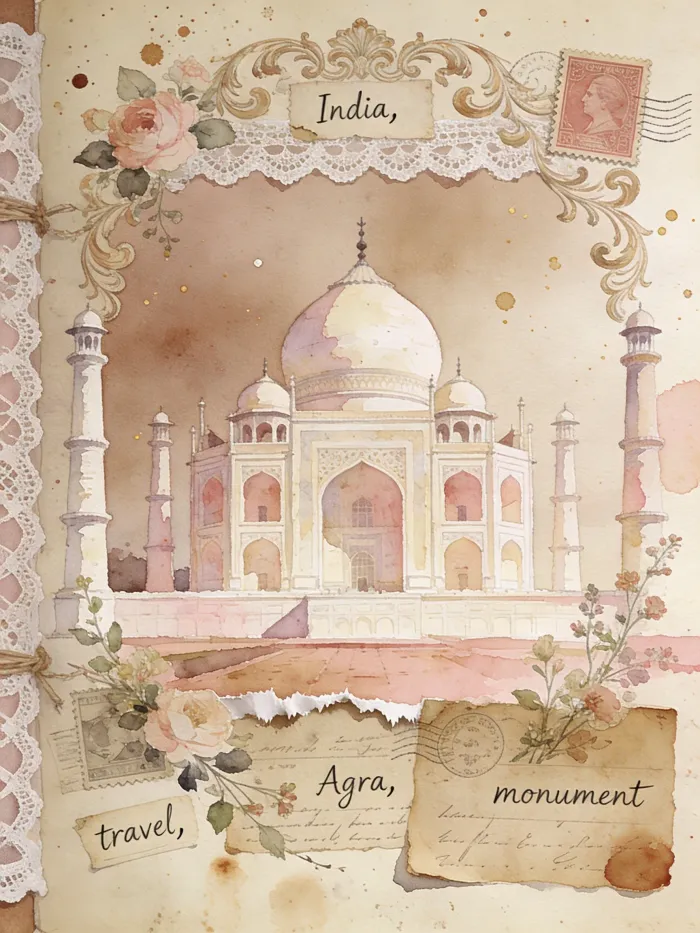
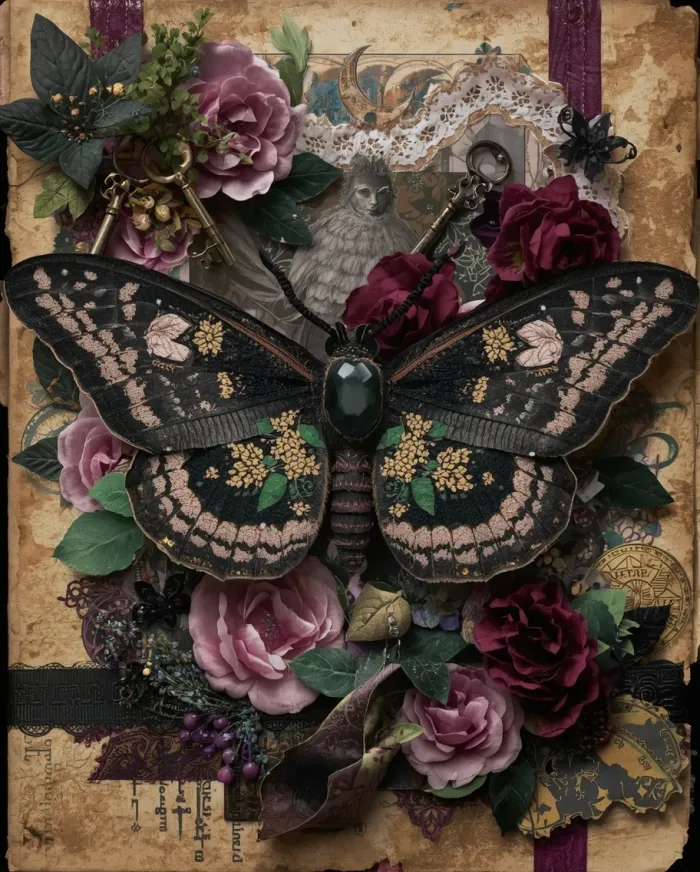
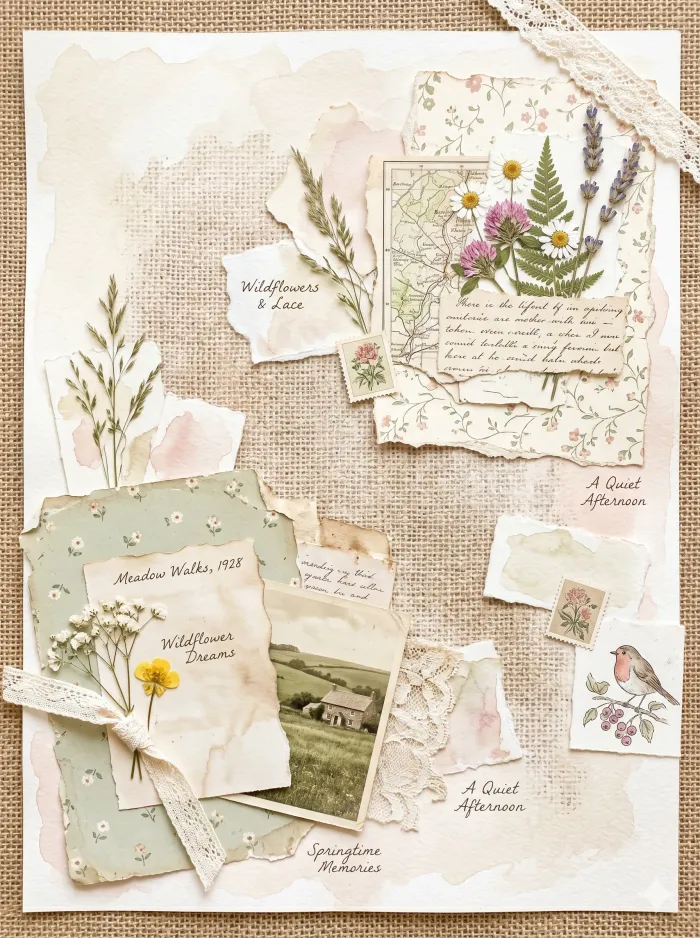
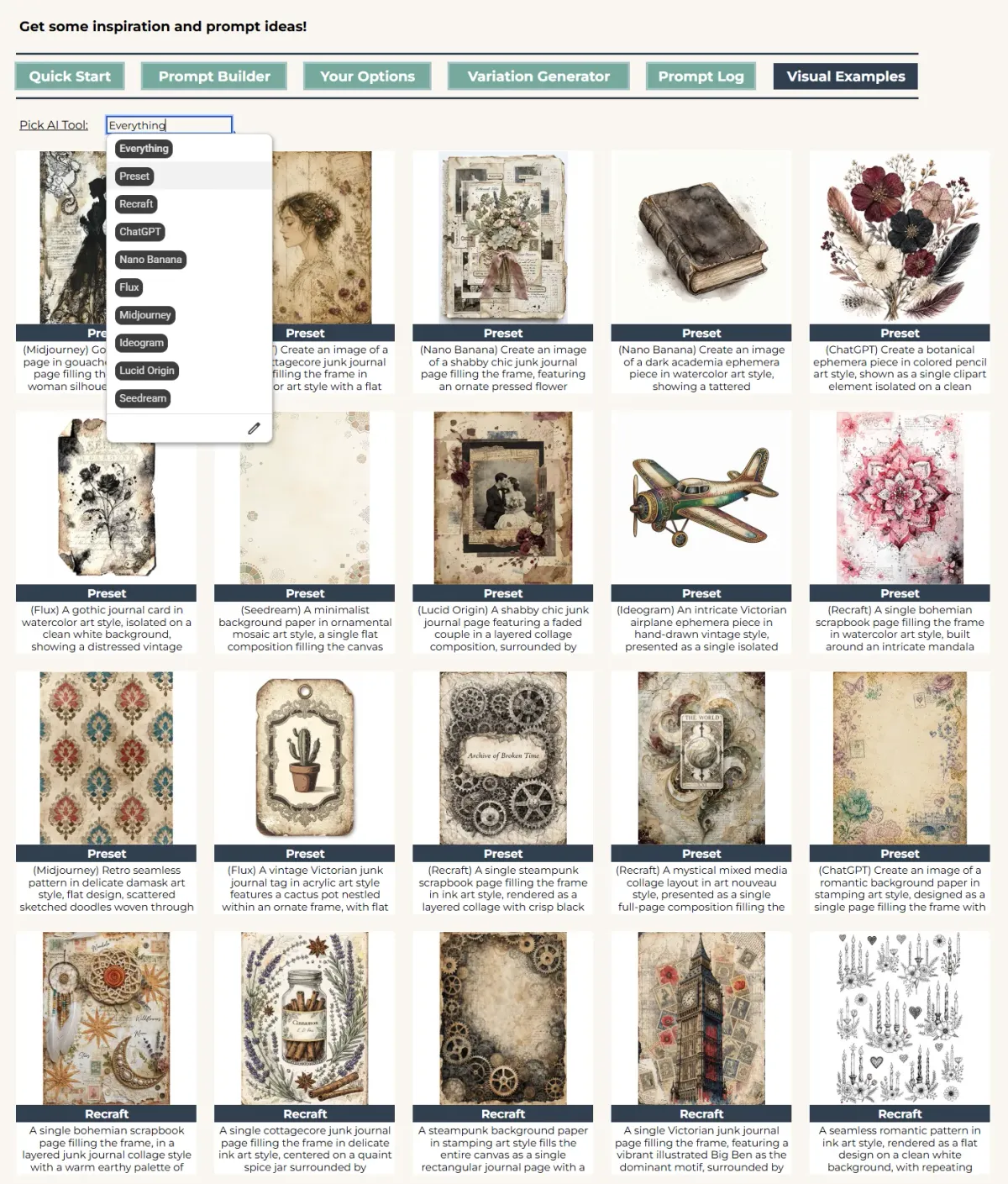
And all the examples are always there when you work with the Prompt Builder - each one has its own Visual Examples sheet, packed with example outcomes for each AI tool we tested it with. For junk journals it's especially handy: this is the aesthetic where tools differ the most - some nail the aged, distressed, layered look, others stay too clean - so seeing real results side by side is the fastest way to find your tool before you spend a single credit. The screenshot below shows the preview of the Visual Examples sheet to give you the impression.
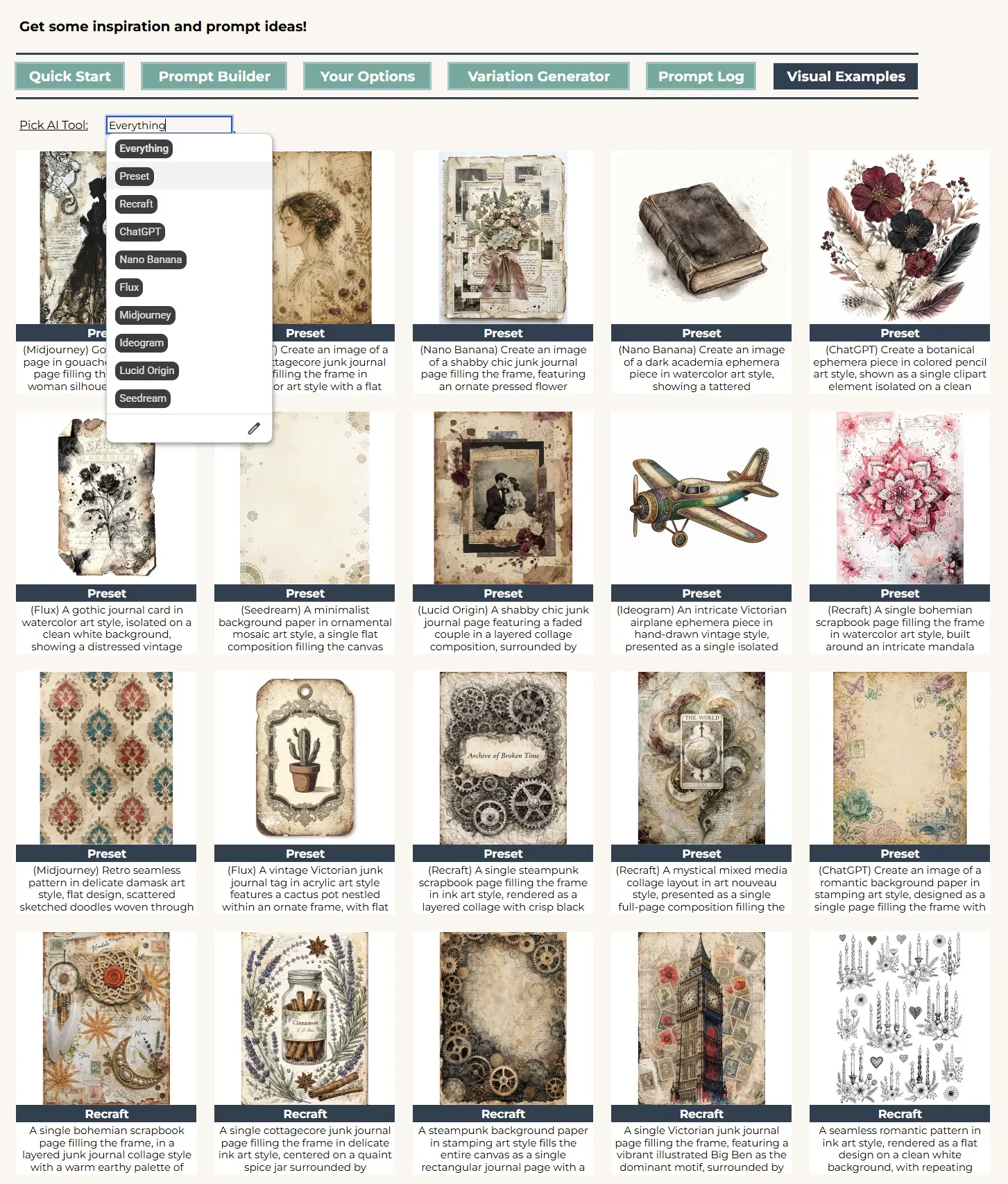
Visual Examples sheet
How the builder is organized
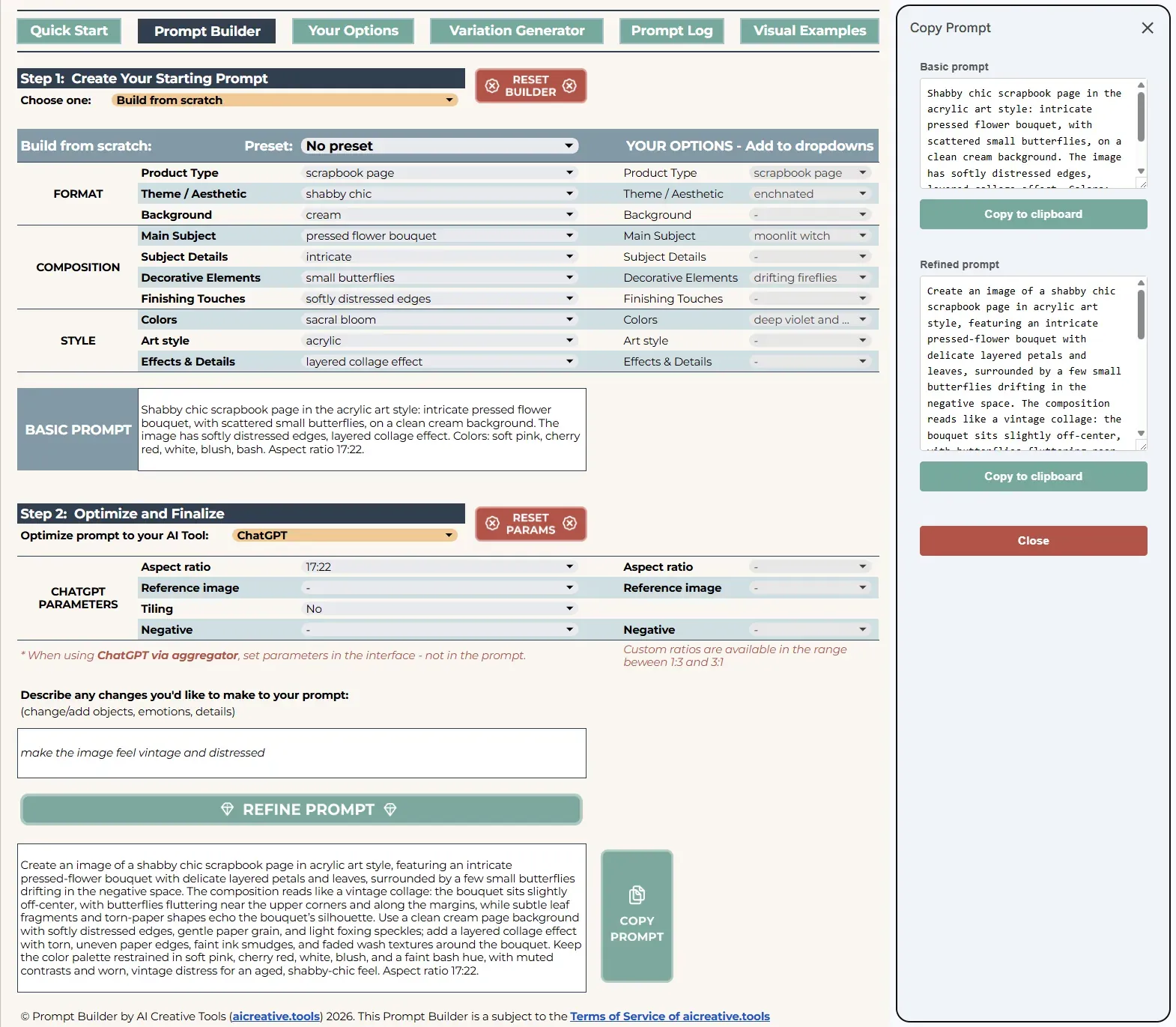
Here's a quick tour of the builder, so you know where everything we mention lives. The dropdowns are grouped into three sections: Format, Composition, and Style.
Junk Journal Builder Overview
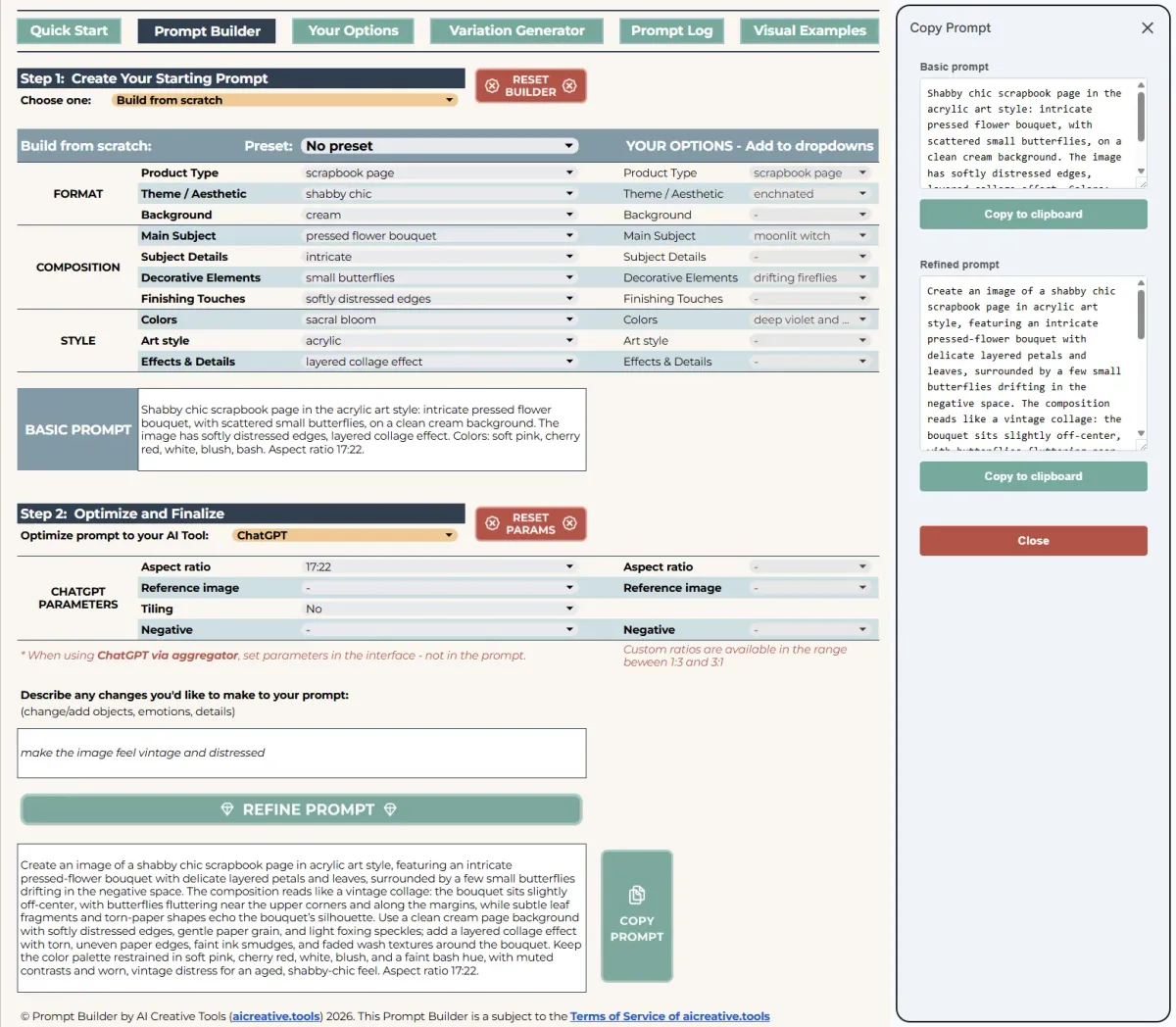
Format is your main section - this is where you tell the AI what you're making. The theme comes first, then the product type, and the background follows them both.
Composition is where you place things. Here you'll find the main subject and its details (the details come before the subject in the prompt, and won't appear if no subject is selected). Below that are decorative elements, which scatter around your main subject - you can also use them on their own. And finishing touches add subtle effects to the background or the edges.
Style is the look. It holds Colors, Art style, and Effects & Details. In Colors, keep an eye on the Moodboards - we reach for these all the time. The art styles are split into techniques, historic styles, and art movements, and we usually recommend adding at least one technique. Just avoid contradictory mixes, like a watercolor style together with a layered composition - not every AI follows that well. And Effects & Details is a little treasure chest, which the next section puts to work.
There are also Parameters, your shortcut to the aspect ratio and to negative prompting.
Getting good junk journal results
The junk journal look - semi-realistic, distressed, layered - is one of the trickier styles for AI to get right. The good news: the builder gives you the right levers, and a few small habits make a big difference. Here's what we recommend.
Start with the basics. As a bare minimum, always pick a digital product type and a theme. From there you can go straight to Refine - just don't forget to pick your AI tool first - or add a few more selections to shape the result.
For full-canvas pages, our goal is a usable, printable page with as little cropping as possible. To steer the AI away from angled photos and interior mockups, "full page composition" from Effects & Details often helps. Adding a background, on the other hand, isn't always a good idea here - it can push the AI toward a mockup layout.
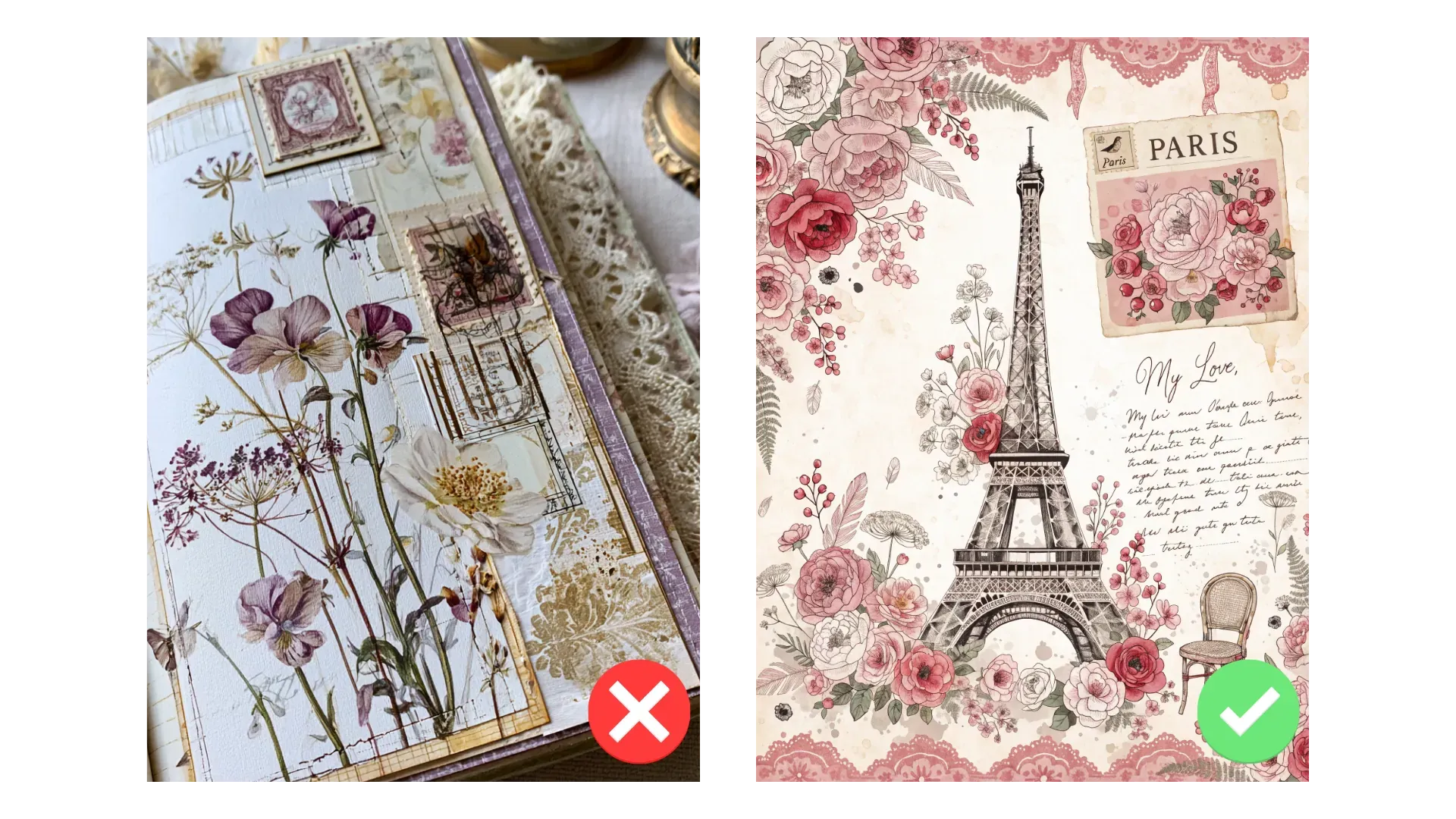
For isolated elements, pick a white or other clean background, and optionally the Clipart format from Effects & Details.
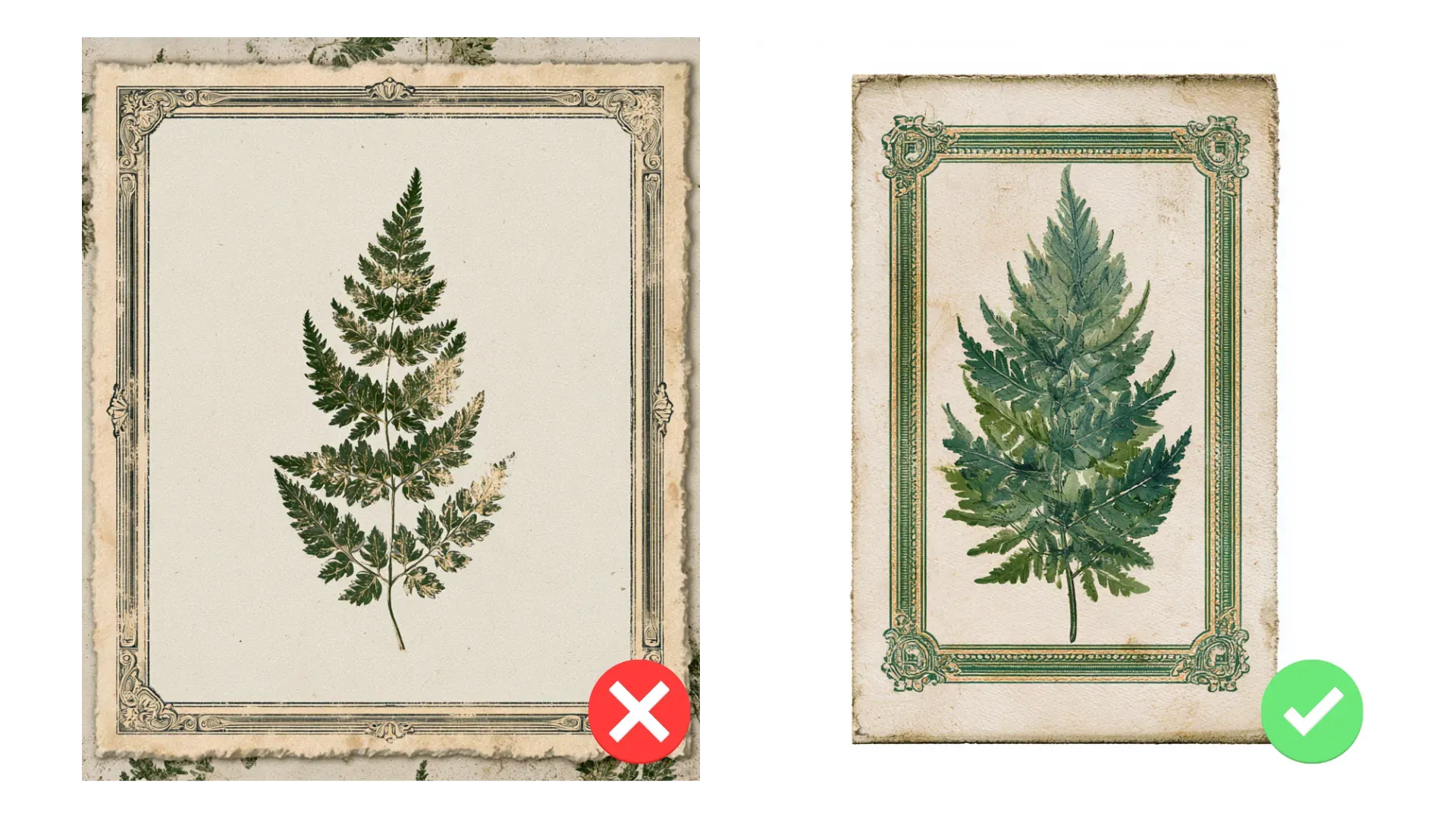
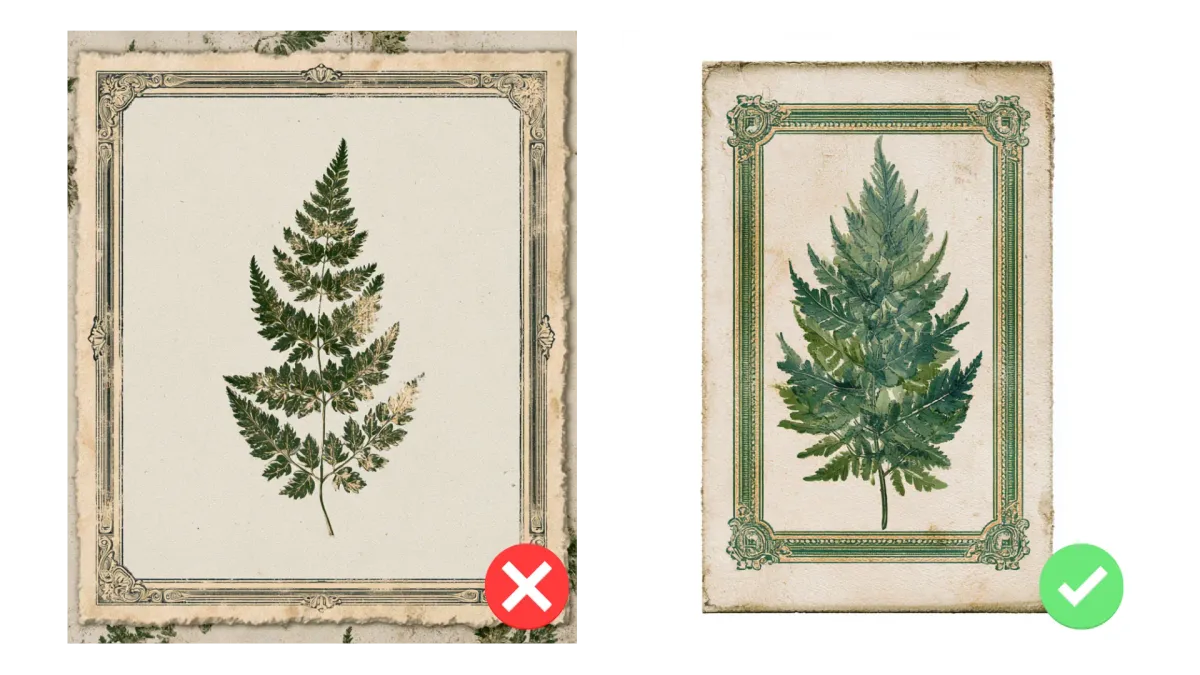
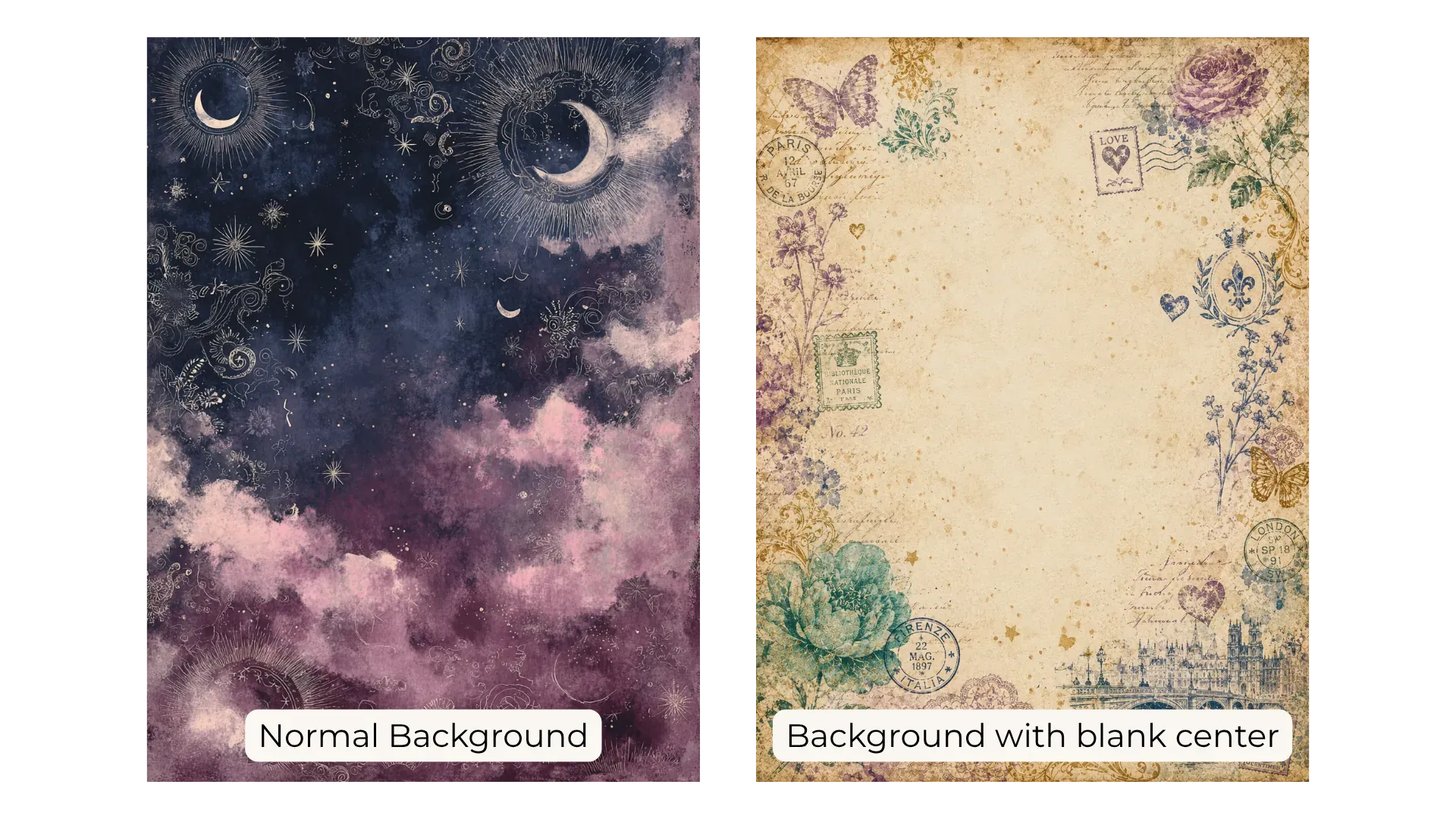
For background paper, add "blank center area" from Effects & Details, so you have room to place your own content later.
To get the distressed, semi-realistic look that junk journals live on, add "realistic look" or "heavily distressed" - especially helpful if your tool tends toward clean, flat output.
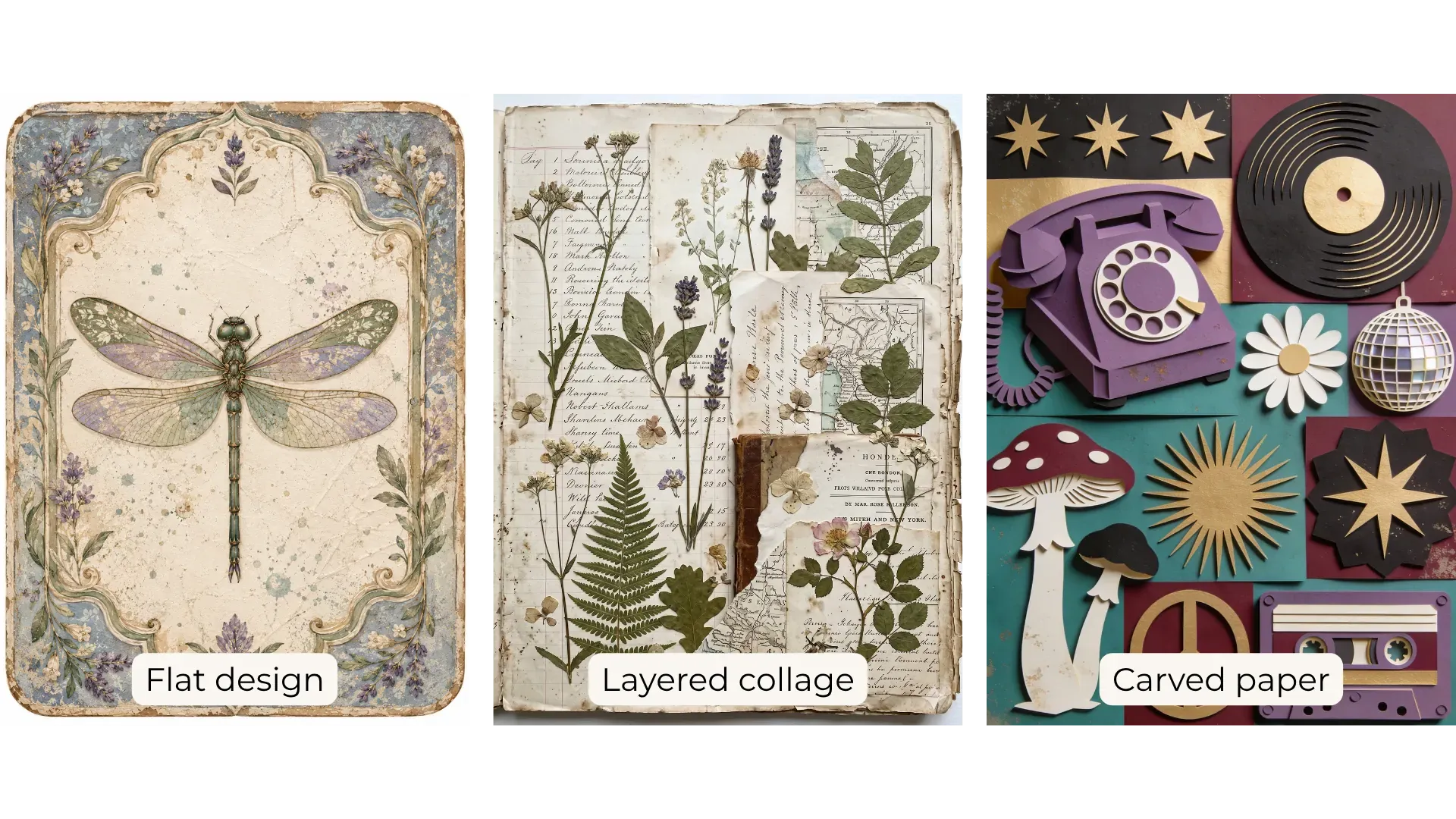
For flat illustrations, add "flat design." For a 3D feel, try "3D design," "layered collage," or even "carved paper" if it suits the piece.
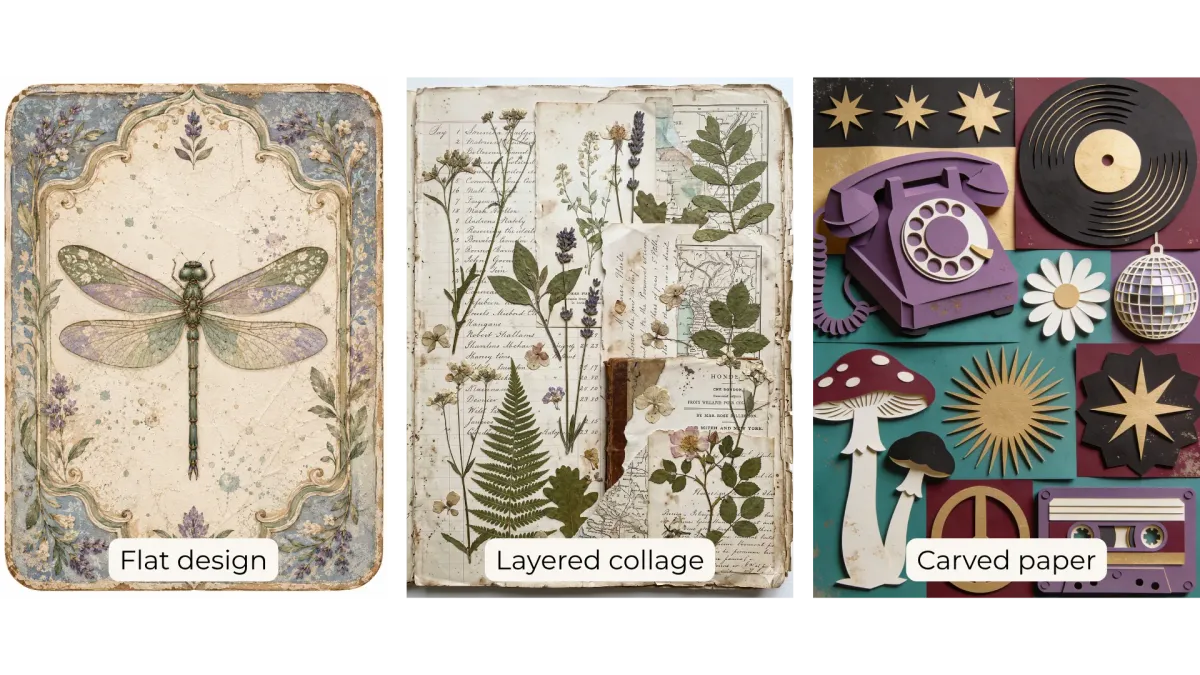
If the result is missing something, add your notes to the "Describe any changes" field - for example, "add more elements to the bottom of the page." A small tip: use "more" words rather than "less" - they're clearer to the AI. So instead of "less dark," say "lighter."
Don't be shy to repeat yourself. If your AI is stubborn, stacking related cues in one prompt - "heavily distressed," "shabby chic style," "the edges are slightly worn" - will only help. Just avoid using the exact same term twice; that does nothing. And remember some tools simply have limits with this style, and prompting can't always fix that.
Want to go deeper? Our Prompt Builder guide covers several types of workflows, and What AI Tool to Pick for Junk Journals compares all the tools for this aesthetic.
Happy journaling
That's the Junk Journal Builder. Pick a theme, choose your tool, and start building. We hope it makes your next pages a pleasure to create.
All images in this guide were made with prompts from the Junk Journal Prompt Builder.