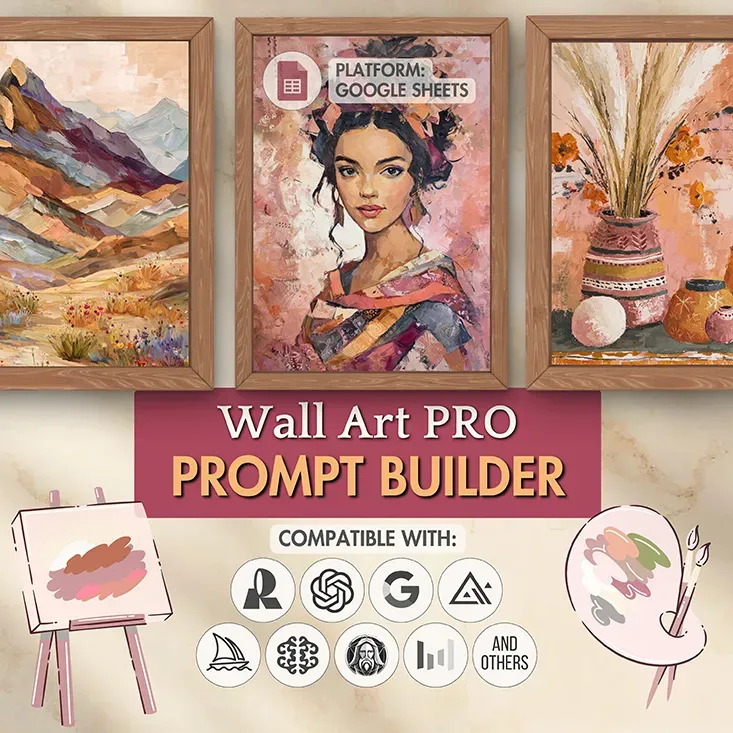
Heads up! This guide is for the newest version of the Prompt Builder. Bought an older PRO version? You can upgrade for free: open the download instruction you already have and click the link inside. It opens your original builder, where you’ll find the link to the new version.
Something not working? Write to us and we’ll send you the link directly.
Welcome, print sellers and wall-decor makers. What follows is the Wall Art Prompt Builder in full - what it produces, the generators it works nicely with, and how to steer a prompt toward the painting or artwork you had in mind.
We stay inside the Wall Art Builder the whole way through. New to Prompt Builders as a whole - how the dropdowns, buttons, and sheets connect? Start with our Prompt Builder guide first. Prefer to watch? The same walkthrough is on our YouTube channel:
Video version of this guide
Table of contents:
What you can create with the Wall Art Builder
The Wall Art Prompt Builder is made for full-canvas pieces - the whole image, corner to corner, rather than a single cut-out element. It writes prompts for paintings, artworks, illustrations, drawings, photographs, and typography designs, classic or modern, whichever way you like to work.
Every dropdown is a starting point, never a boundary. When a term you pictured isn't on the list, add it via Your Options table or Your Options sheet - it stays put after you reset the builder, so your own vocabulary builds up over time. We really do want you to use that.
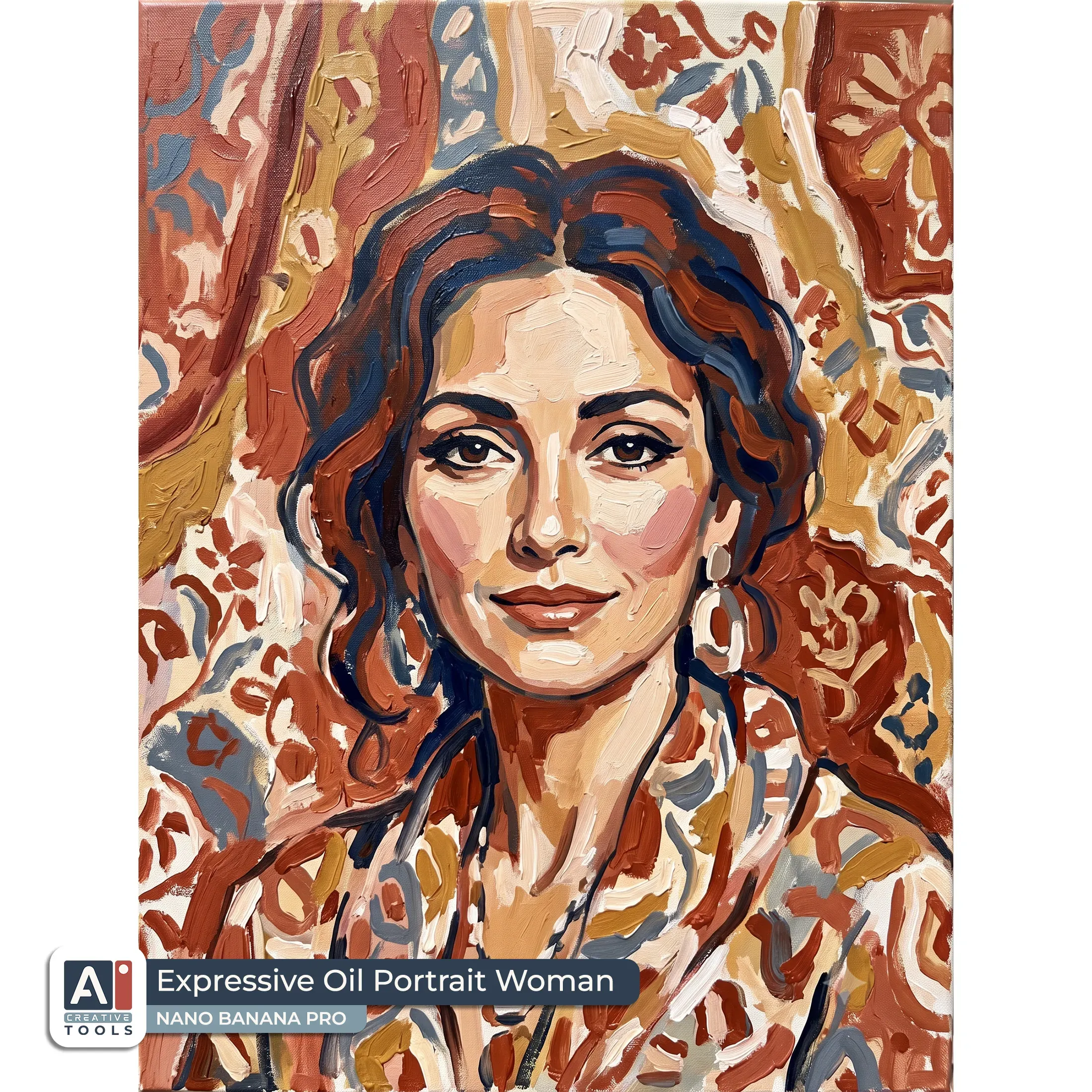
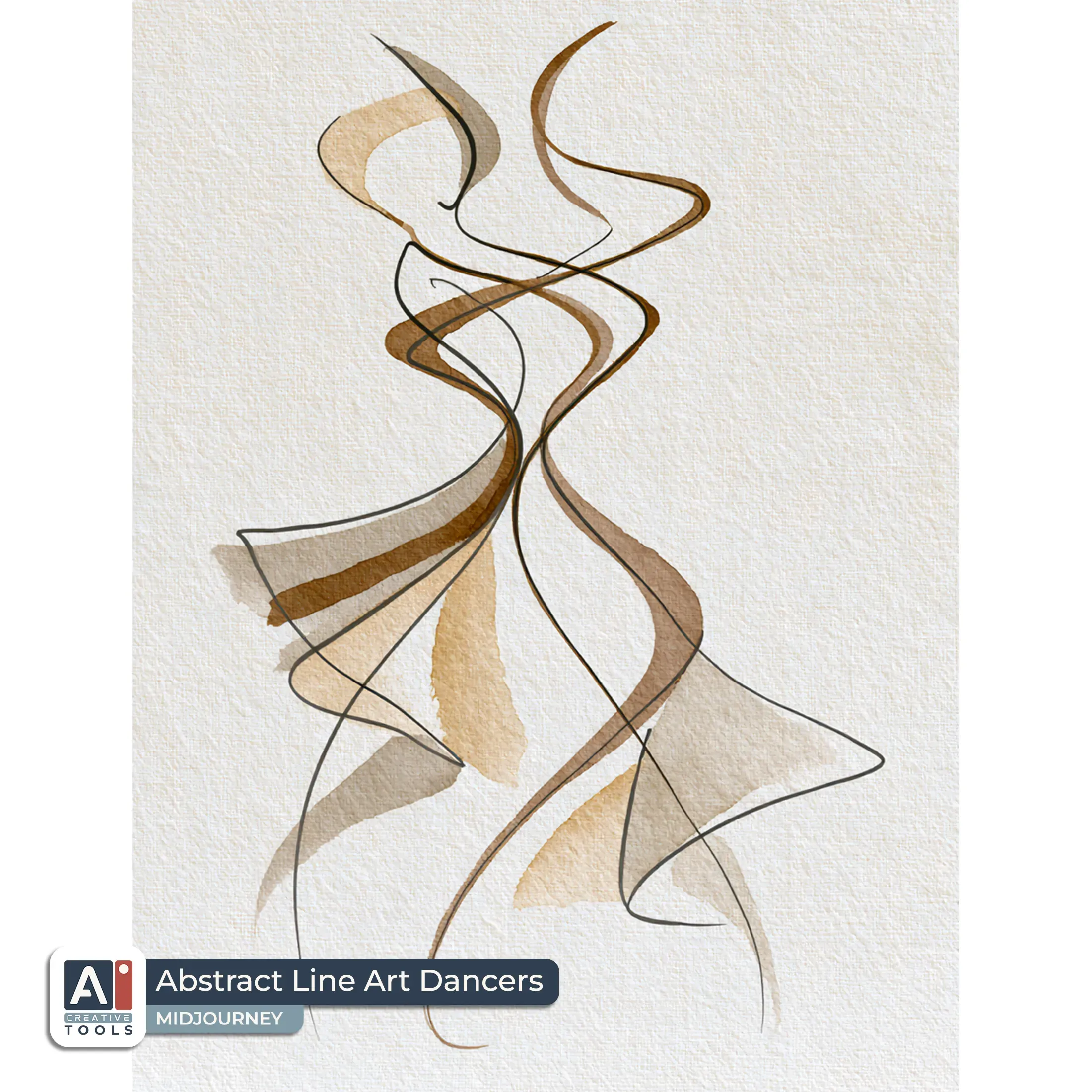
Below are a few pieces built from this builder's prompts. Each carries a short title, and the full prompt waits in the block just beneath the gallery, yours to read slowly or copy as you please.
Swipe to view more
- Expressive Oil Portrait Woman (Nano Banana): Create an image of a modern, Matisse-inspired painting showing an elegant woman in a close-up portrait. The composition fills the whole frame edge to edge, with bold shapes and strong, confident brushstrokes defining her silhouette and expression while loose, decorative color fields ripple behind her like painted upholstery. Render her features with simplified, expressive contours and a touch of playful abstraction, creating a nostalgic mood that feels intimate and timeless. Use a warm palette dominated by terracotta, burnt sienna, honey ochre, and soft cream, with small accents of muted rose for gentle warmth in the skin tones. Let the surface show visible canvas grain and paint ridges, with uneven, tactile strokes that catch the light across the full canvas. Aspect ratio 3:4.
- Abstract Line Art Dancers (Midjourney): Oatmeal and almond one line art painting, full-bleed vertical composition in a single continuous sweeping gesture, pair of dancers locked in fluid motion, mirrored posture with interlaced arms and flowing skirts forming elegant rhythm across the canvas, minimal linework like ink on linen paper with soft, matte texture, muted warm palette of oatmeal, almond, camel, linen, and fawn, subtle tonal variation in the line weight, gentle negative space breathing, serene gallery-style line art, soft natural lighting, crisp edges --ar 3:4 --profile ioim2bl --v 8.1
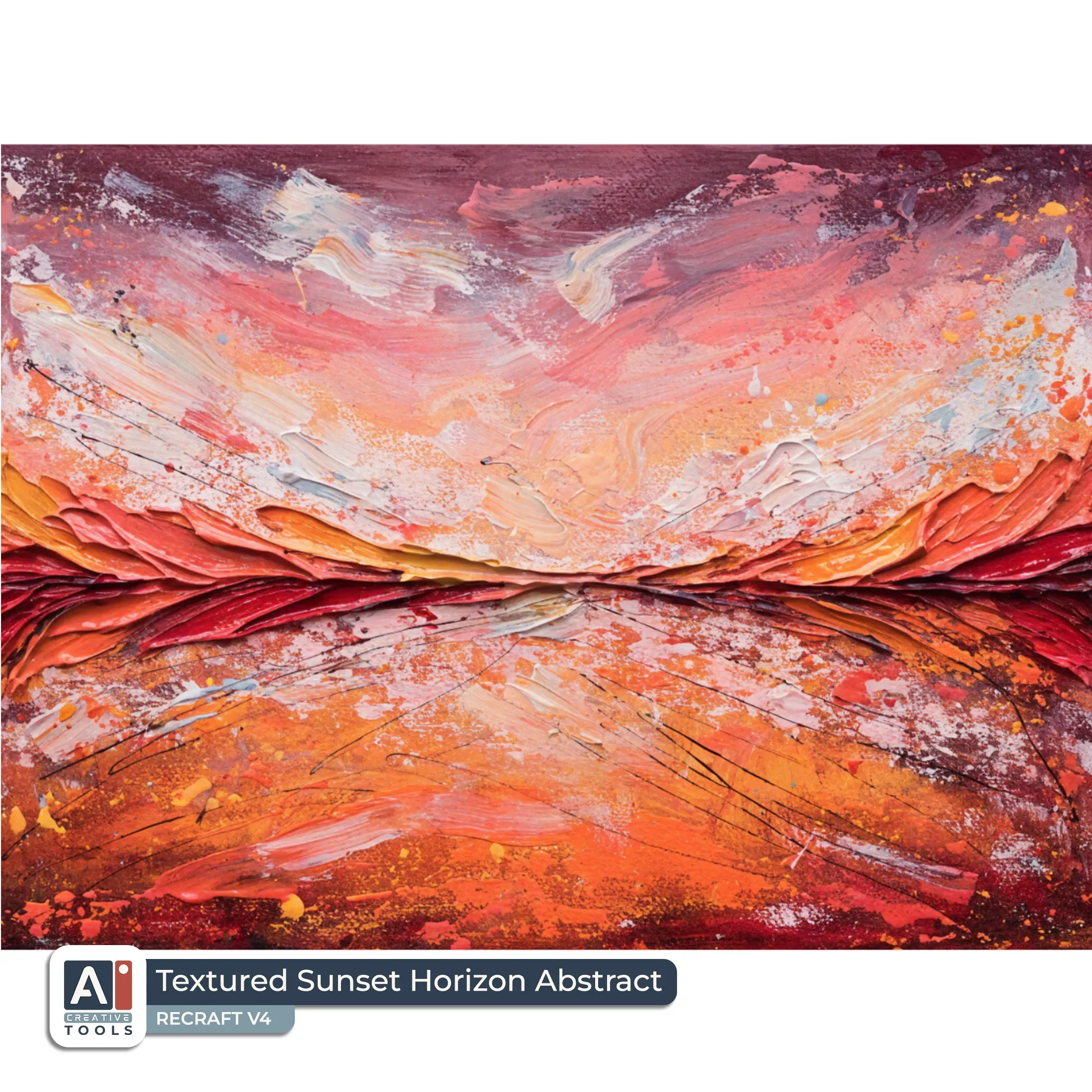
- Textured Sunset Horizon Abstract (Recraft): Acrylic artwork with a full-bleed landscape defined by a thick sunset horizon that spans the entire frame, scraped into bold warm bands that create visible ridges and movement. Above the horizon, layered skies fade from soft plum into dusty rose and peach, with gentle gradients that feel airy despite the heavy texture. Near the horizon, marigold and coral bands glow with higher intensity, layered like paint ribbons and partially streaked with angular scraping lines. The composition reads as a horizon landscape with a luminous banding effect, the lower half carrying the richest warmth and the upper half drifting into cooler haze. Glossy-wet acrylic sheen meets matte chalky areas, with subtle speckled canvas grain peeking through the scraped grooves.
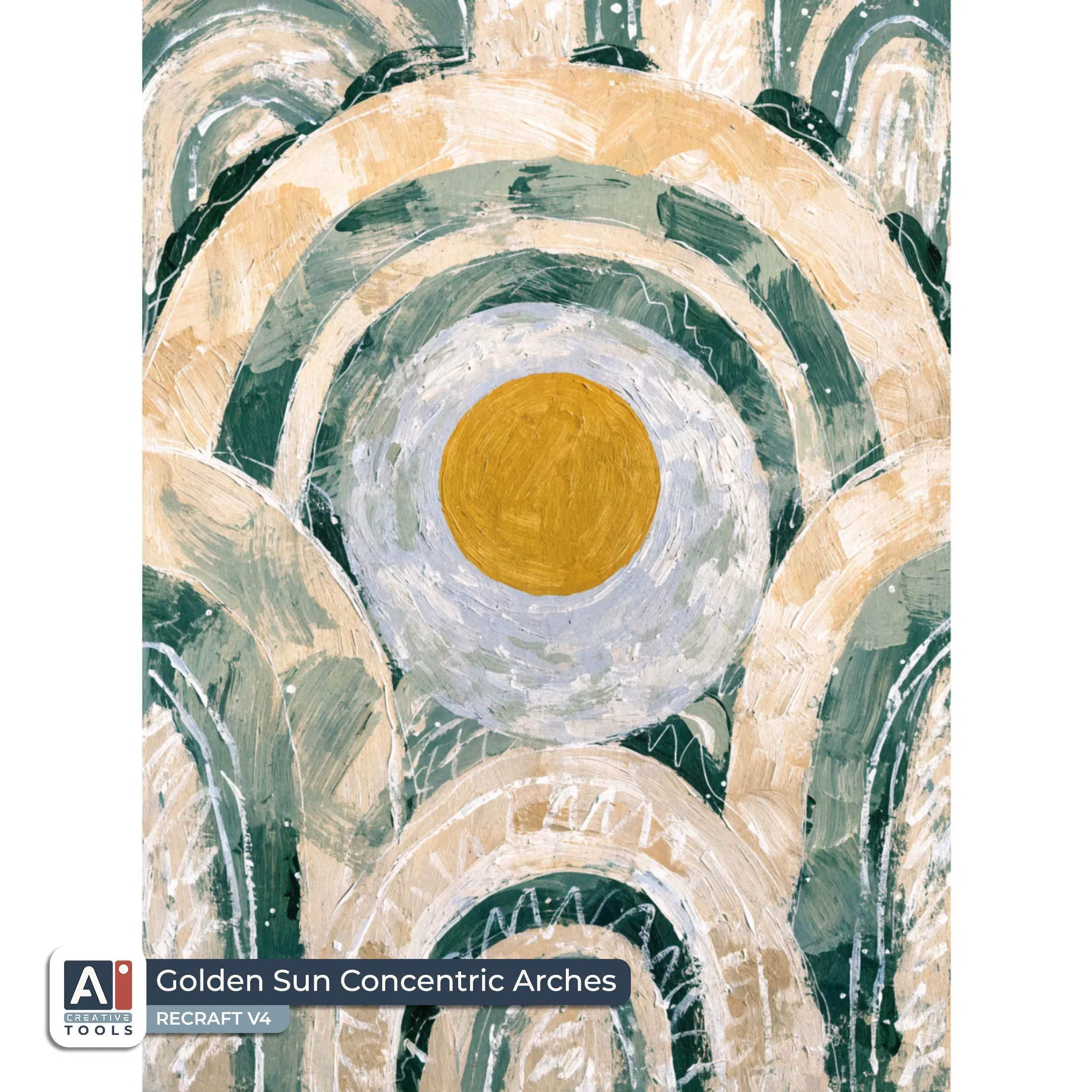
- Golden Sun Concentric Arches (Recraft): A bohemian painting inspired by Henri Matisse, filling the canvas edge to edge with a rhythmic layout of nested arches and playful asymmetry. Layered arches frame a tranquil sun and moon motif, the sun in soft yellow-gold and the moon in pale, smoky lavender, both echoed by simplified shapes and expressive cut-paper like forms. A warm sage-and-cream palette dominates, with creamy off-whites flowing through the negative space while muted sage forms create depth and motion. The composition feels decorative and joyful, with flat, bold color blocks, gentle outlines, and subtle painterly grain that gives each shape a handmade character. Abstract patterning and flowing arcs suggest rhythm without crowding the scene.
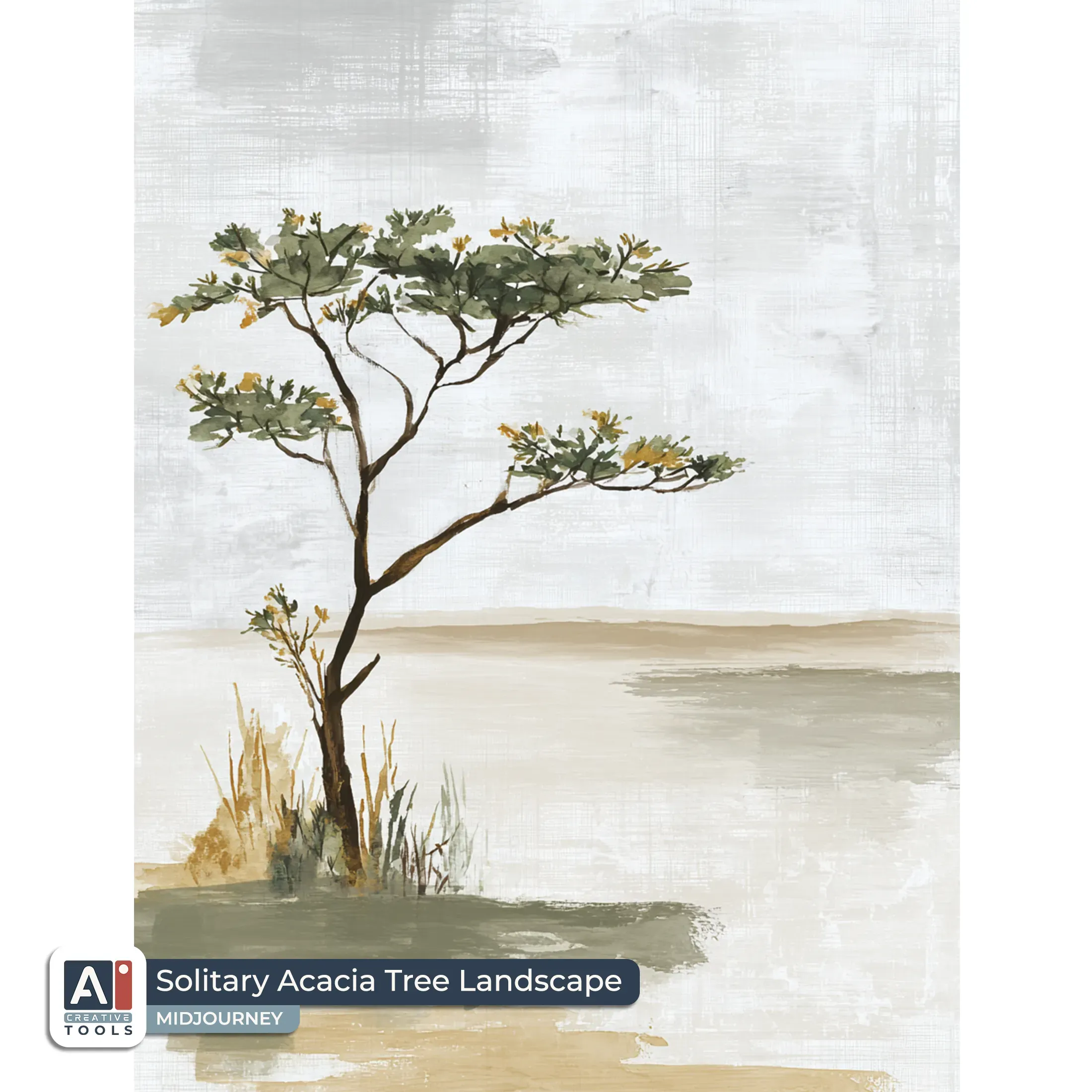
- Solitary Acacia Tree Landscape (Midjourney): Japandi minimal painting, lone bonsai silhouette against quiet emptiness, full-bleed composition running to all four edges, thin horizon band and vertical stems forming elegant restraint, subtle grid-like background with soft horizontal striations like Agnes Martin, sage-green washes and cream negative space, muted brush texture with dry matte finish, gentle atmospheric haze, slow gradations and airy spacing, delicate ink-like edges on the bonsai, calm monochrome palette of sage and cream, serene contemplative mood, refined negative space --ar 3:4 --profile ioim2bl --v 7
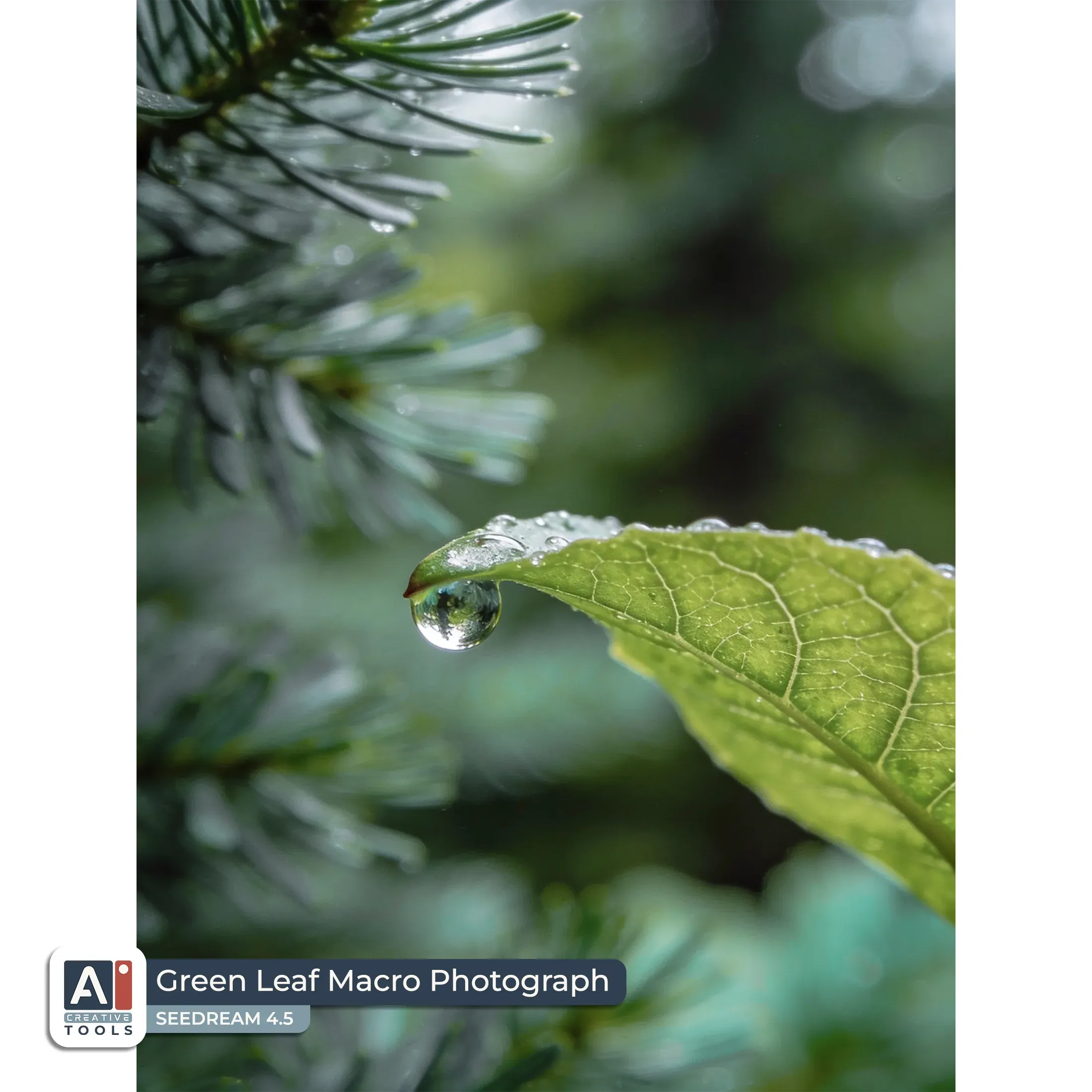
- Green Leaf Macro Photograph (Seedream): A photorealistic macro scene filling the frame edge to edge, showing a single droplet of water suspended on the very tip of a fresh leaf. The leaf surface is richly detailed with natural veins and a soft dew sheen, while the droplet acts like a tiny lens, crisply reflecting a blurred background of forest greens. Surrounding foliage fades into gentle bokeh, suggesting depth and morning stillness. The color palette is pine green, mossy olive, eucalyptus gray-green, and celadon highlights, with cool, natural daylight and high dynamic clarity. Fine photographic sharpness with subtle film-like grain and smooth bokeh.
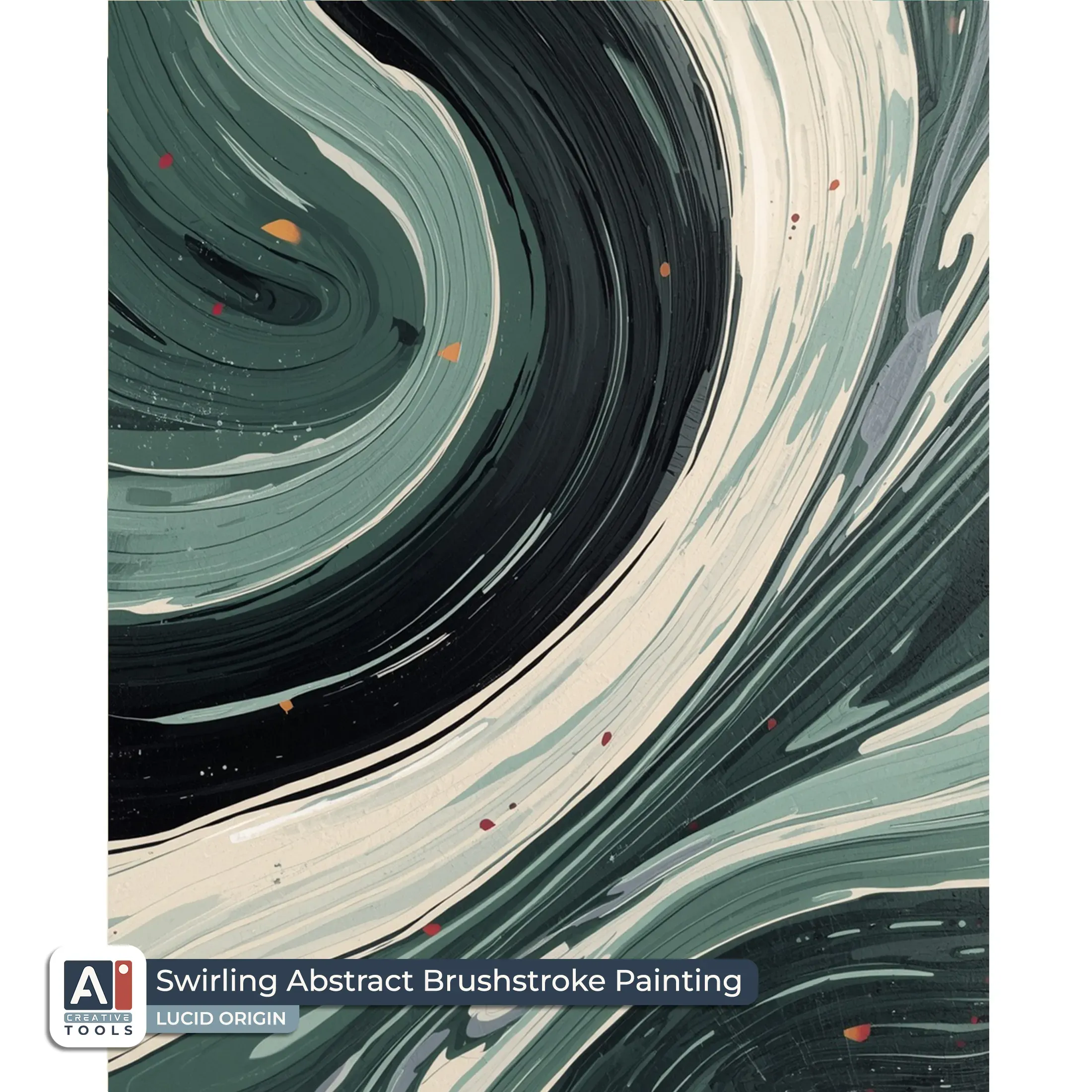
- Swirling Abstract Brushstroke Painting (Lucid Origin): A vibrant abstract-expressionist acrylic artwork inspired by Wassily Kandinsky, full-bleed across the entire canvas with a dynamic night-sky composition built from thick swirling brushwork. Luminous curves and arcs spiral outward like gravitational ribbons, forming layered motion from the center toward the edges, with small geometric bursts and soft, drifting accents scattered between bolder strokes. The palette stays restrained and calming in sage-and-cream, with creamy highlights against deeper muted sage fields and occasional darker soot-like shadows for depth. Matte acrylic texture with visible ridges, energetic layering, and gentle halo-like overlaps creates a serene, hypnotic nighttime rhythm.
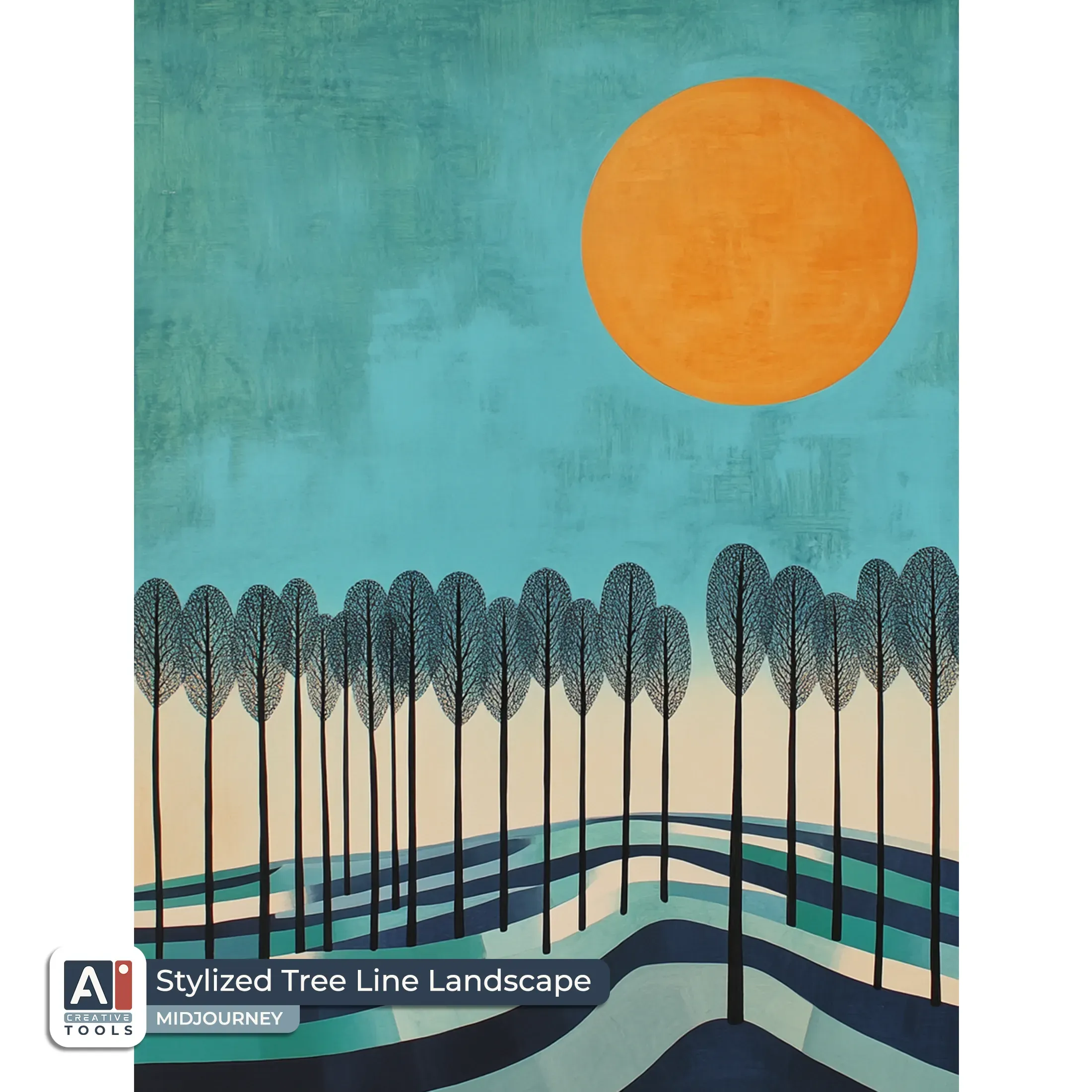
- Stylized Tree Line Landscape (Midjourney): Mid-century modern Bauhaus art painting, full-bleed composition filling the canvas to every edge, geometric landscape with stylized rows of slender modernist trees receding into the distance, crisp vertical trunks forming rhythm, horizontal bands of cool blue sky and slate planes, minimal sun-disc geometry, linear shadows and simplified ground grid, color palette of cool blue, jade, and plum noir with muted off-white accents, matte watercolor-gouache texture over smooth paint fields, bold Bauhaus composition, clean edges, subtle grain, high-contrast modernist atmosphere --ar 3:4 --v 6.1
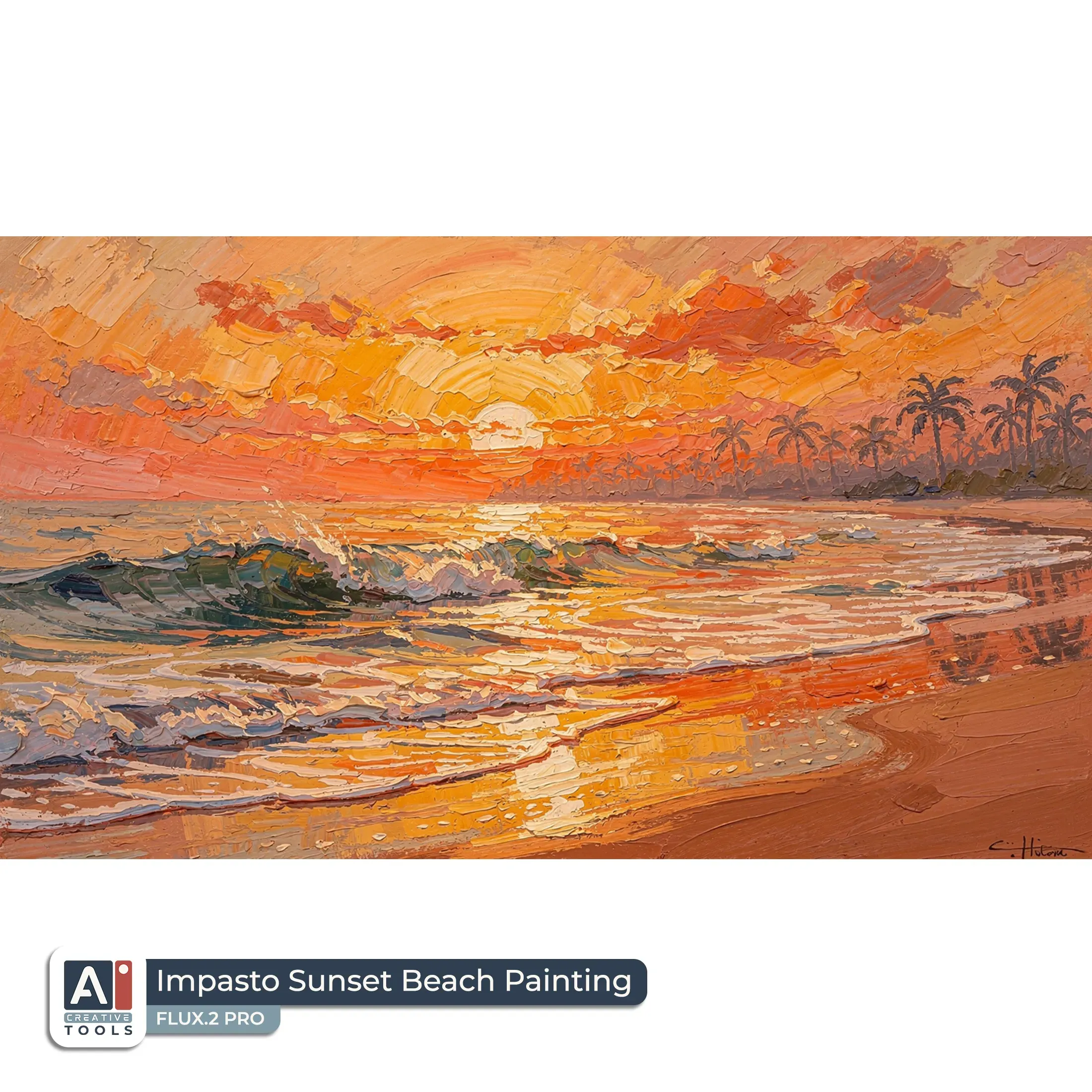
- Impasto Sunset Beach Painting (Flux): A full-bleed tropical beach landscape in an expressionist oil painting style inspired by David Hockney, with a glowing sunset sky sweeping across the upper half and warm light spilling toward the shoreline. Gentle waves curl in layered, rhythmic forms in the midground, while distant palm silhouettes soften into the horizon. The surface is rich with palette knife strokes, thick impasto ridges, and vibrant color blocking. Burnt orange, coral, golden amber, and soft peach blend into luminous gradients, creating a peaceful, serene mood that radiates warmth from edge to edge.
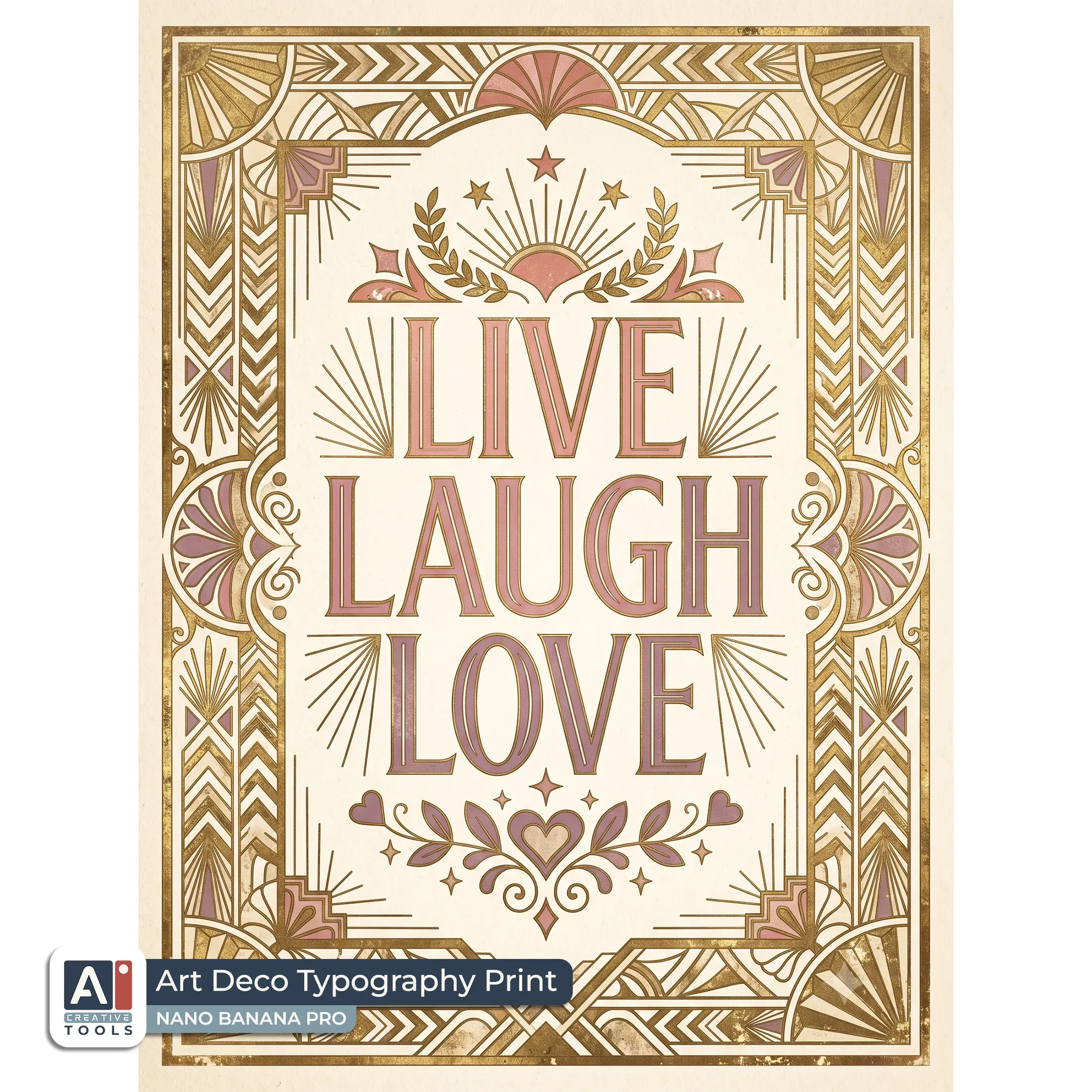
- Art Deco Typography Print (Nano Banana): Create an image of a modern typography design in an Art Deco art style, with the phrase "Live Laugh Love" dominating the composition in elegant geometric lettering. The text is arranged in a perfectly symmetrical stack, with crisp lines and stylized letterforms that feel tall and stately, while cheerful accents rise subtly above and below the words. Surround the typography with an ornate Deco border of repeated fan and chevron motifs, radiating outward in a frame-like layout that runs edge to edge across the canvas. Use a clean antique-cream background with a smooth, matte paper texture, letting the faded rose and muted mauve lettering contrast softly. Set the border in weathered gold with a lightly distressed, aged-metal look for warmth and character. Keep the overall mood uplifting, refined, and celebratory, fully filling the canvas to all four edges. Aspect ratio 3:4.
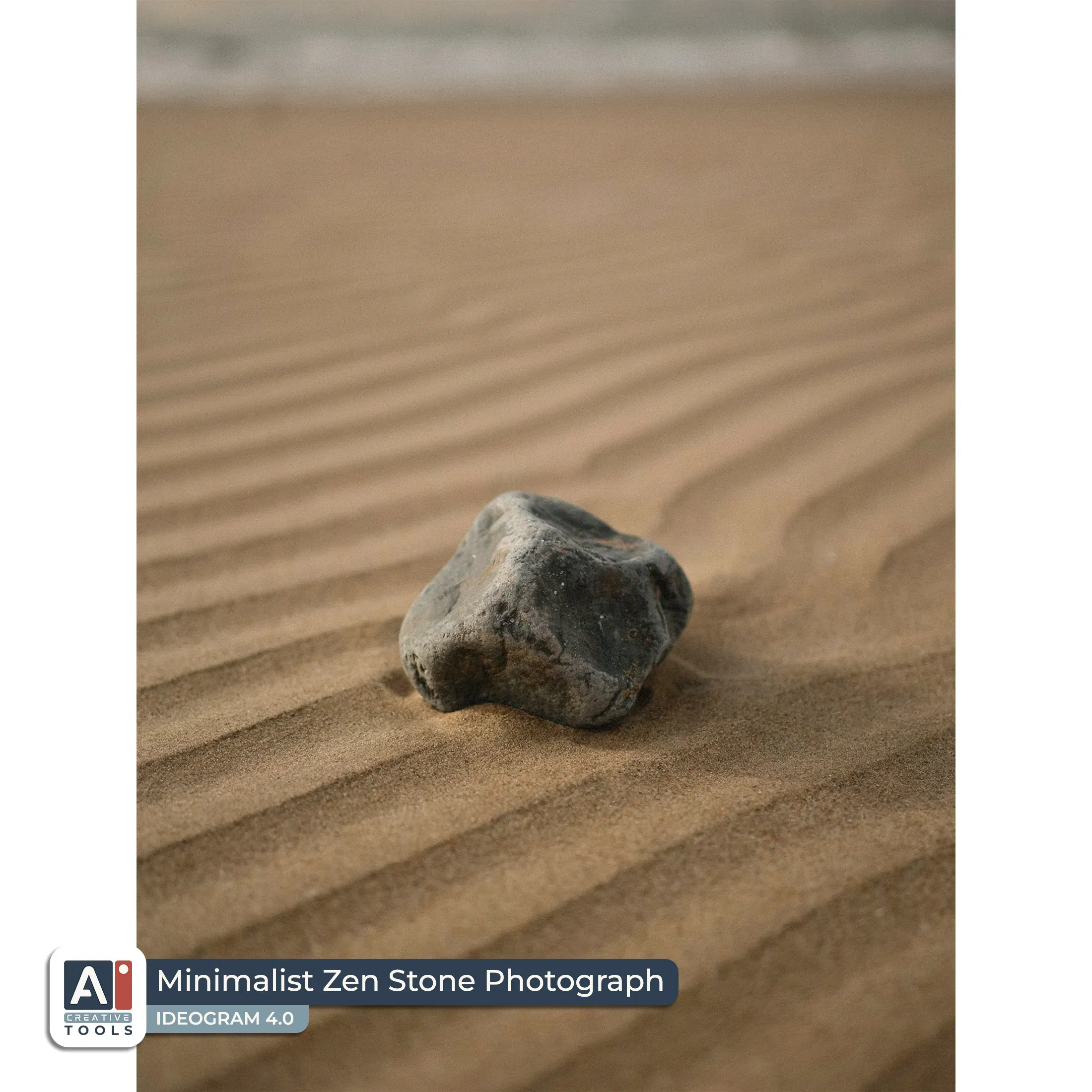
- Minimalist Zen Stone Photograph (Ideogram): A single river-worn stone balanced on rippled sand, full-bleed across the entire frame, with the stone’s rough gray-brown surface dominating the scene and tiny specular highlights catching along its edges. Ripples in the sand run in sweeping arcs around the stone, forming clean, graphic curves that guide the eye toward the horizon line that softly blurs at the top. Shot with a Franco Fontana-inspired sense of bold color separation and dynamic perspective, the sand reads in warm earthy tones-raw umber, clay, and muted ochre-while the stone contrasts in weathered slate and warm charcoal. Natural daylight feels cool and steady, with crisp shadows and subtle atmospheric haze in the distance. Photographic realism with a sleek, modern edge.
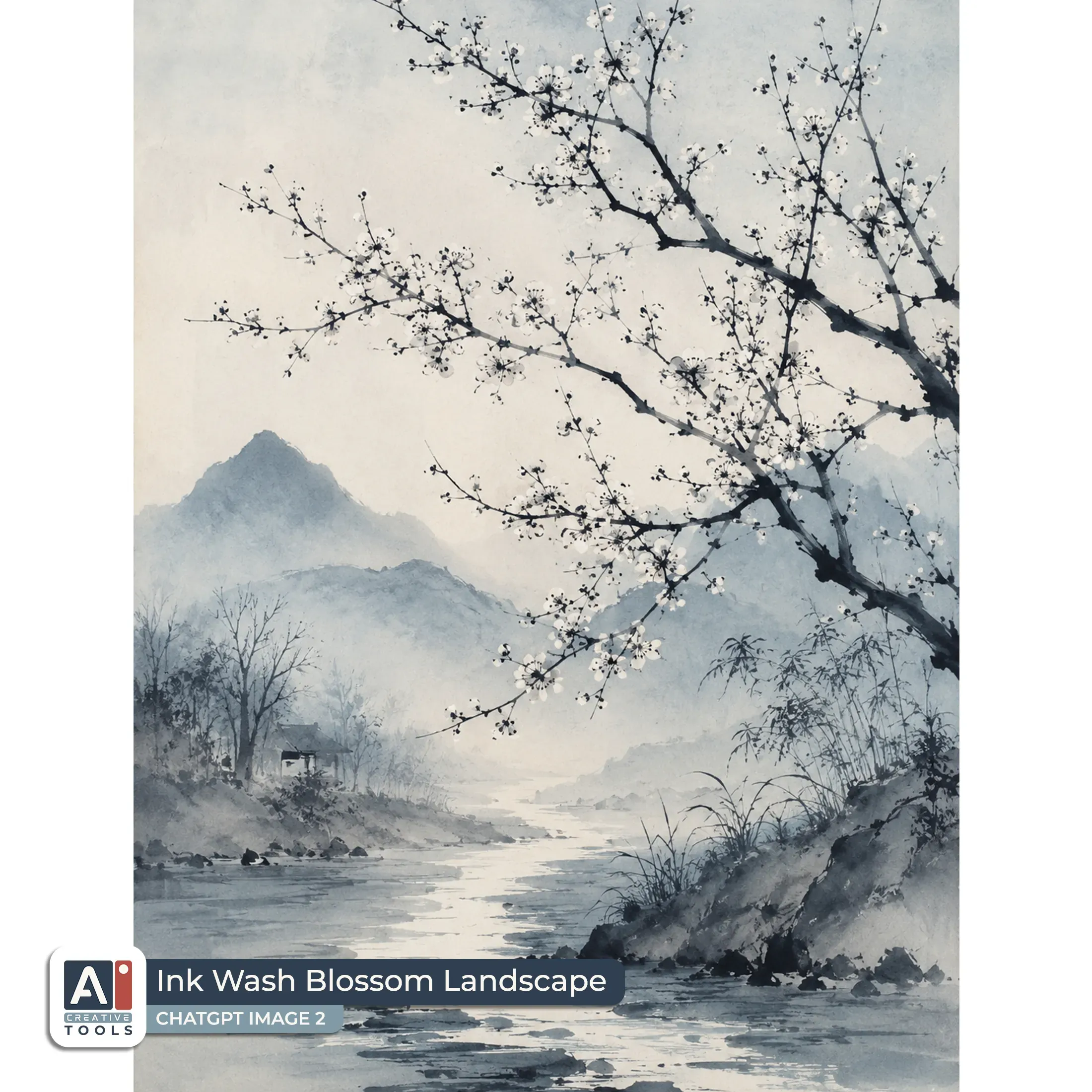
- Ink Wash Blossom Landscape (ChatGPT): Create an image of an Oriental landscape in full-bleed composition filling the whole frame, with delicate cherry blossom branches arching diagonally over a quiet stream in the foreground. A narrow ribbon of water curves from the lower edge toward the midground, reflecting soft misty light in broken, shimmering ink strokes. Behind the stream, faint layered hills fade into haze, leaving ample negative space of misty blue-grey sky and air. Render everything in sumi-e style with restrained, expressive brushwork inspired by Qi Baishi: tapered lines for twigs, sparse blossoms suggested with minimal dots and light wash, and subtle ink gradations for water and distant scenery. Use a misty blue-grey color palette with restrained black ink and pale wash highlights, creating calm, elegant atmosphere. Keep the scene airy and serene with gentle contrast. Aspect ratio 3:4.
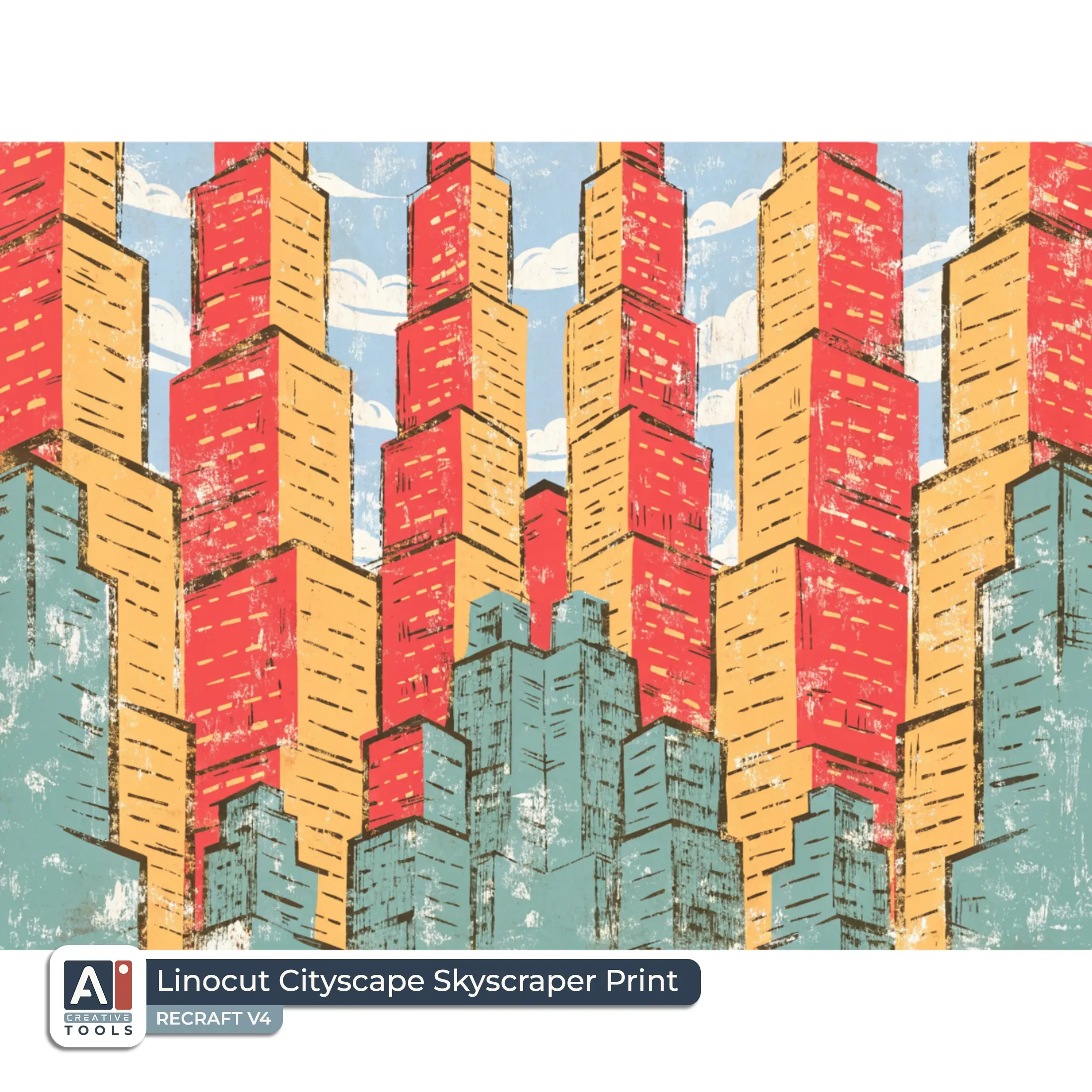
- Linocut Cityscape Skyscraper Print (Recraft): A retro mid-century modern cityscape filling the whole frame, with a skyline of flat geometric towers that stack into a crisp horizon line. Clean silhouettes and angular facades step upward in staggered layers, each building outlined with subtle darker sepia accents for clarity. Between towers, narrow sky gaps reveal a dusty blue field with minimal cloud hints rendered as simple curved bands. Warm muted coral and mustard dominate the tower blocks, while calm sage shapes add balance across the lower third and along the central cluster. Taller rectangles rise behind shorter forms, creating depth through layered color zoning rather than gradients. The overall mood is playful, orderly, and nostalgic, with a Charley Harper-inspired flat graphic look and lightly textured, screenprint-like finish across the entire canvas.
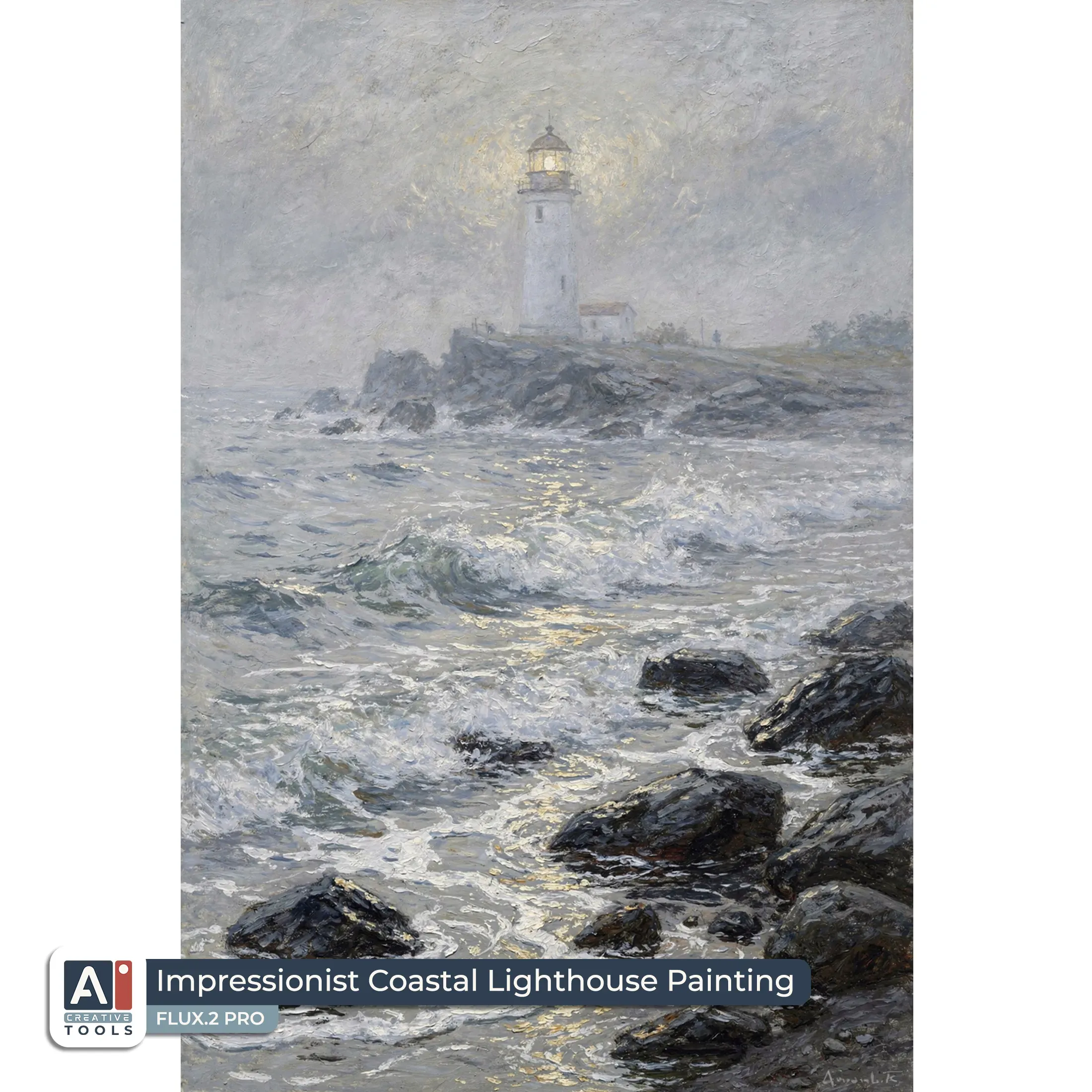
- Impressionist Coastal Lighthouse Painting (Flux): A coastal seascape painting in a luminist Claude Monet inspired style, with a lighthouse rising above a foaming rocky shore and bright foam streaks curling around dark stones in the foreground. Misty waves roll toward the viewer, receding into a soft veil of fog grey and ash, while pale birch tones and muted blue wash across the sky and water. Gentle reflected light blooms near the lighthouse, creating a luminous haze and airy atmosphere. The full-bleed composition runs to every edge, with delicate brushwork and a serene, shimmering glow.
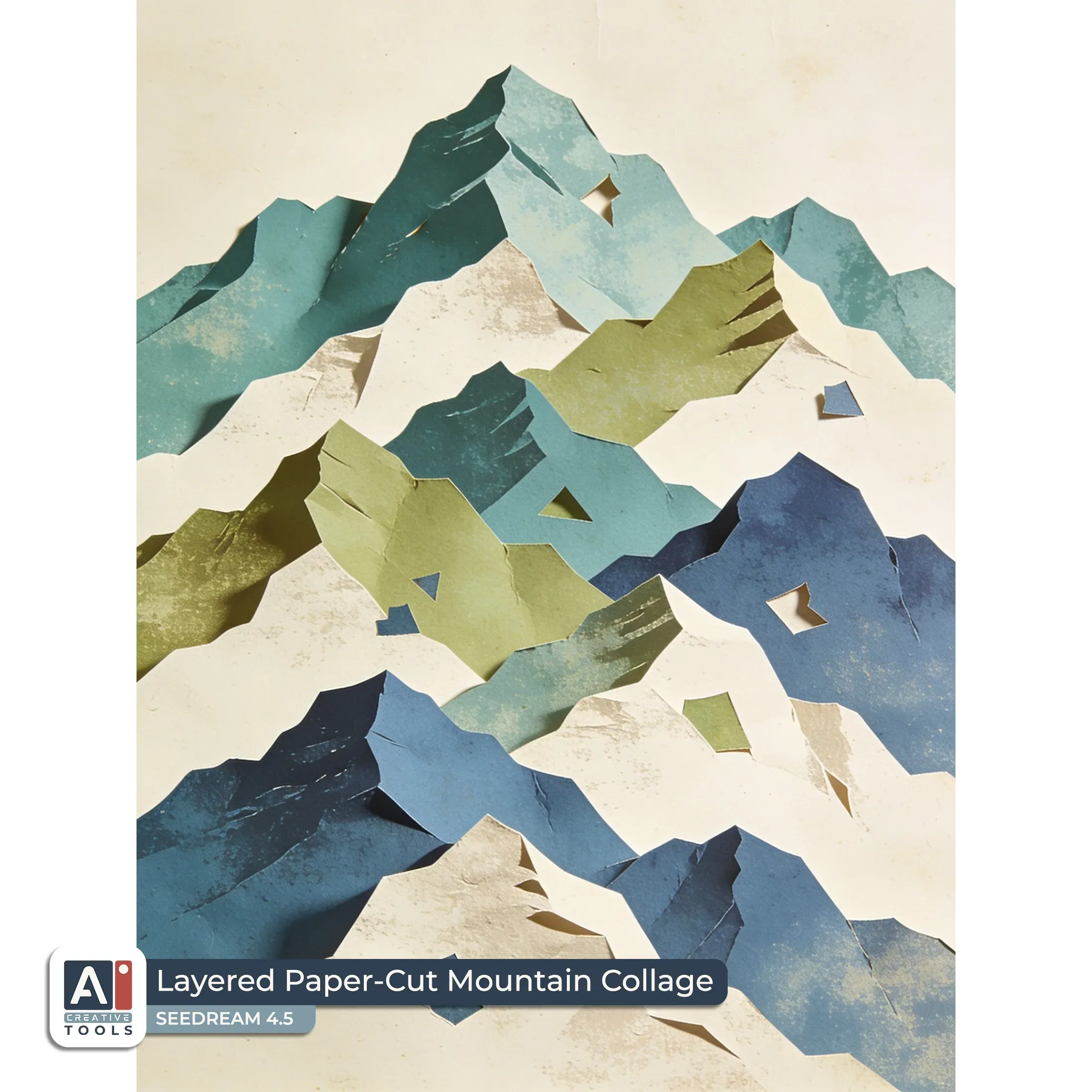
- Layered Paper-Cut Mountain Collage (Seedream): A full-bleed collage artwork with paper-cut mountains built from overlapping ridges, stacked like layered silhouettes and staggered so the peaks interlock across the entire frame. The ridgelines are cut in crisp, irregular edges with visible paper grain and subtle shadow gaps, creating a tactile, low-relief feel. In a Dada style, the composition feels playful and slightly skewed, with small mismatched shapes tucked between larger mountain layers. Sepia dominates, supported by faded teal, sage, and dusty blue accents, with muted off-white paper fields for contrast.
AI tools - what we tested, and our current pick
The builder hands you a prompt, not a finished picture, so which generator you run it through is entirely your call. These are the tools we put it through, with the versions we tested on: ChatGPT Image 2, Nano Banana 2 and Nano Banana Pro, Midjourney v 6.1, v 7 and v 8.1, Ideogram 3, Flux.2 Pro, Leonardo's Lucid Origin, Recraft V4, and Seedream 4.5.
Below they're lined up the way we'd pick them up for wall art, strongest first:

Midjourney

Recraft

Seedream

ChatGPT

Flux

Nano Banana
Leonardo

Ideogram
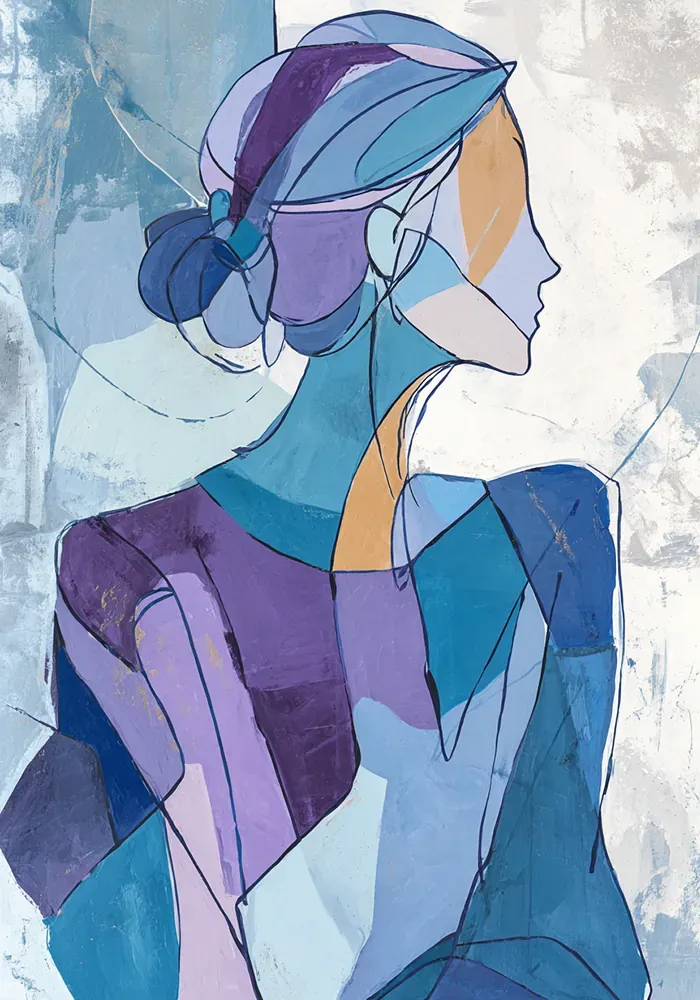
Our current top pick for wall art is Midjourney. It has a real feel for painterly work - brushwork, canvas texture, and the character. Artist-inspired directions land well here too, so an “inspired by” nod to a classic or modern name usually reads close to what you pictured. If you want to see our full AI generator comparison, it’s right here in our “What AI Tool to Pick for Wall Art” guide.
Midjourney
Nano Banana
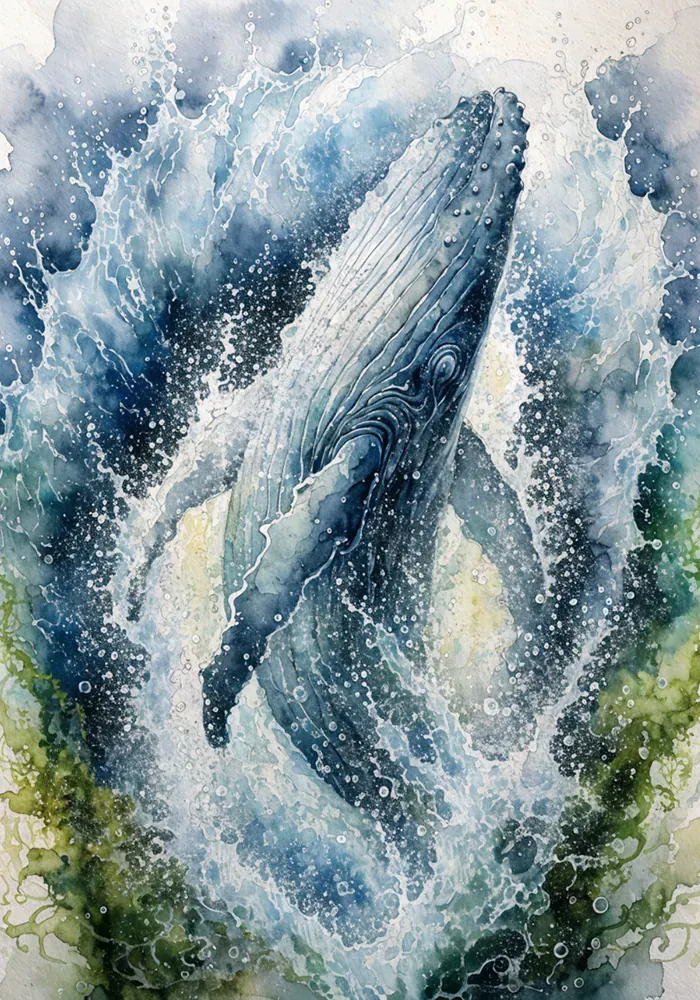
Recraft
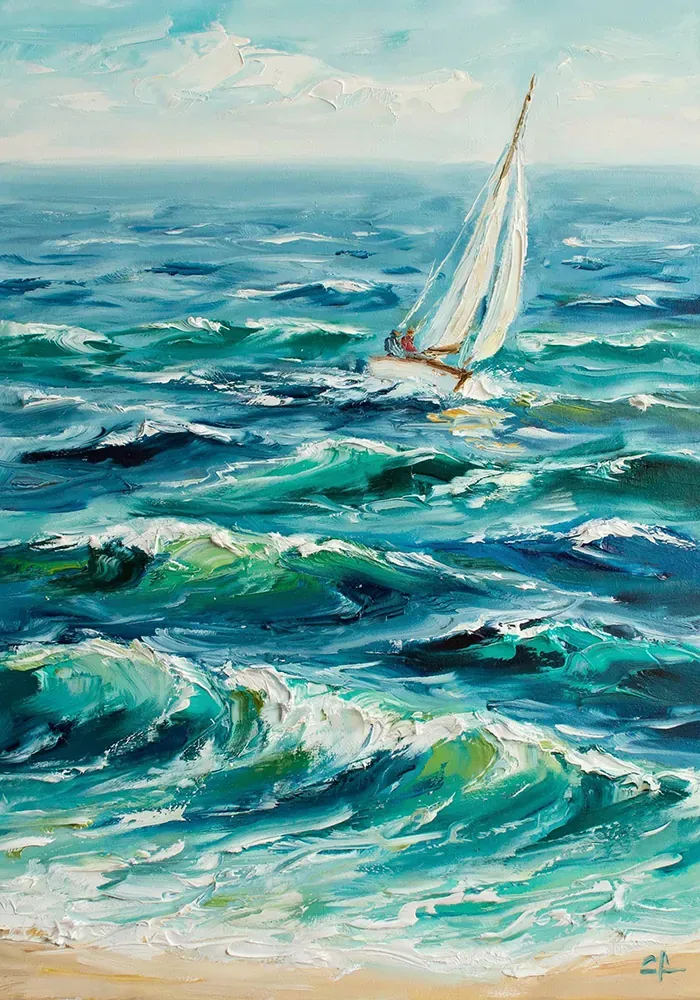
Ideogram
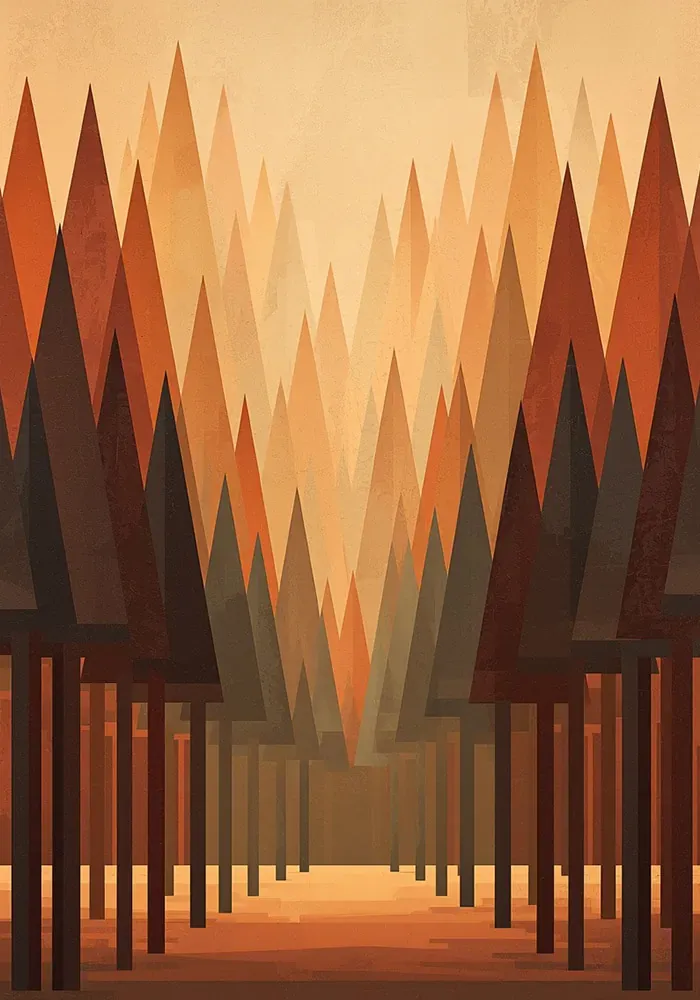
Leonardo
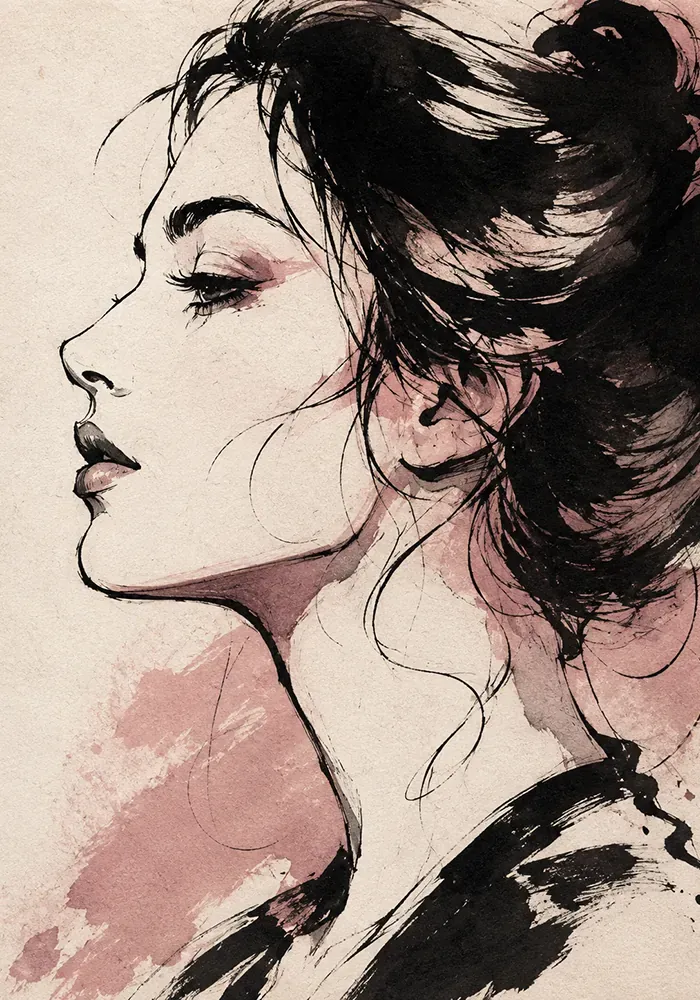
ChatGPT
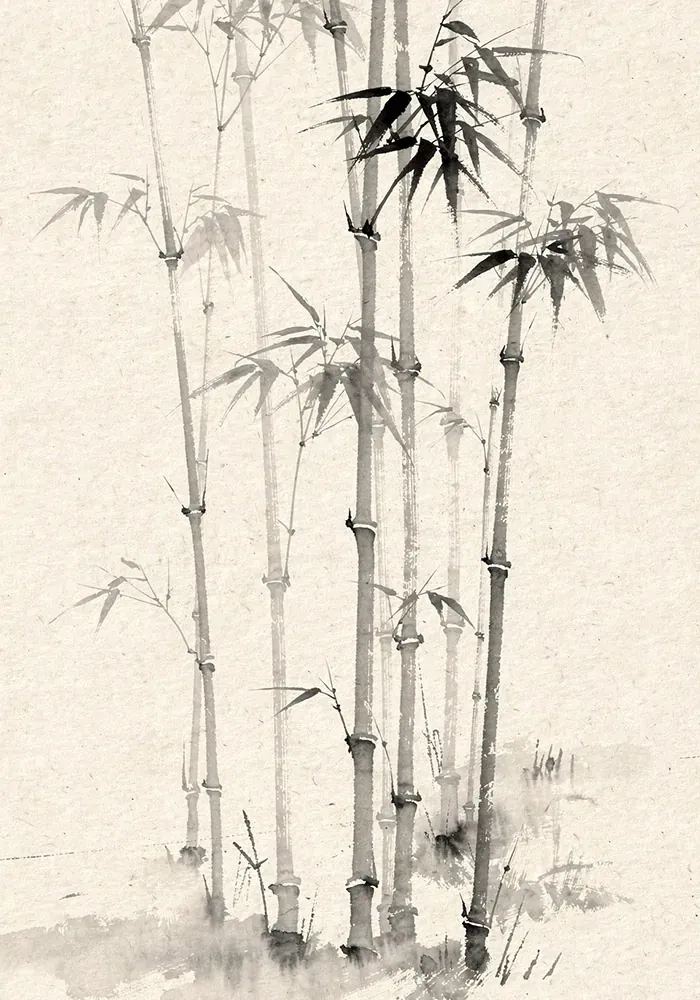
Flux
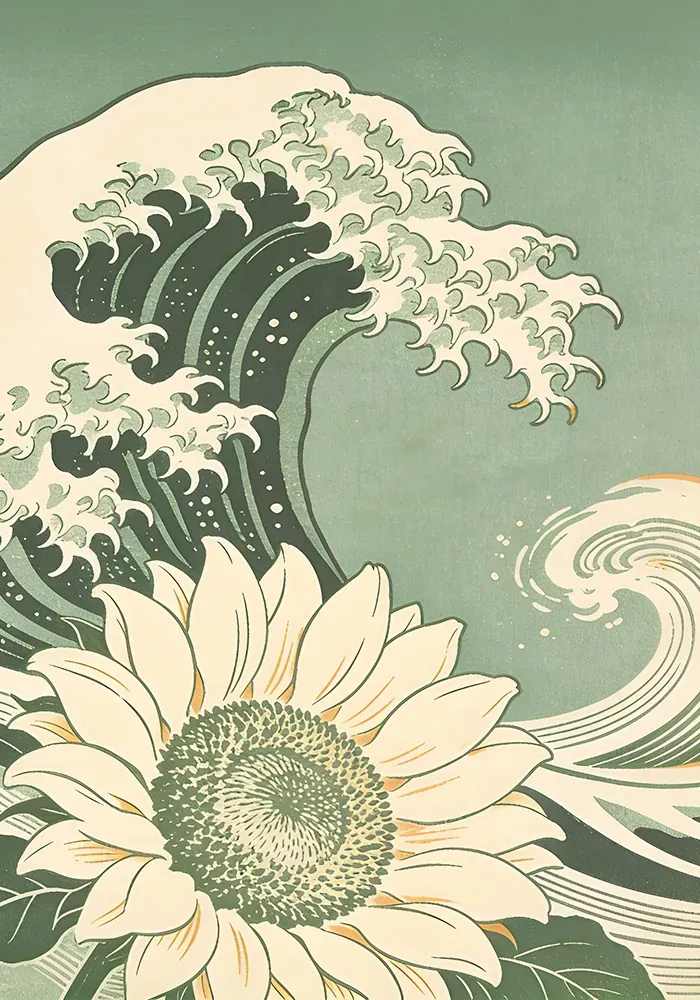
Seedream
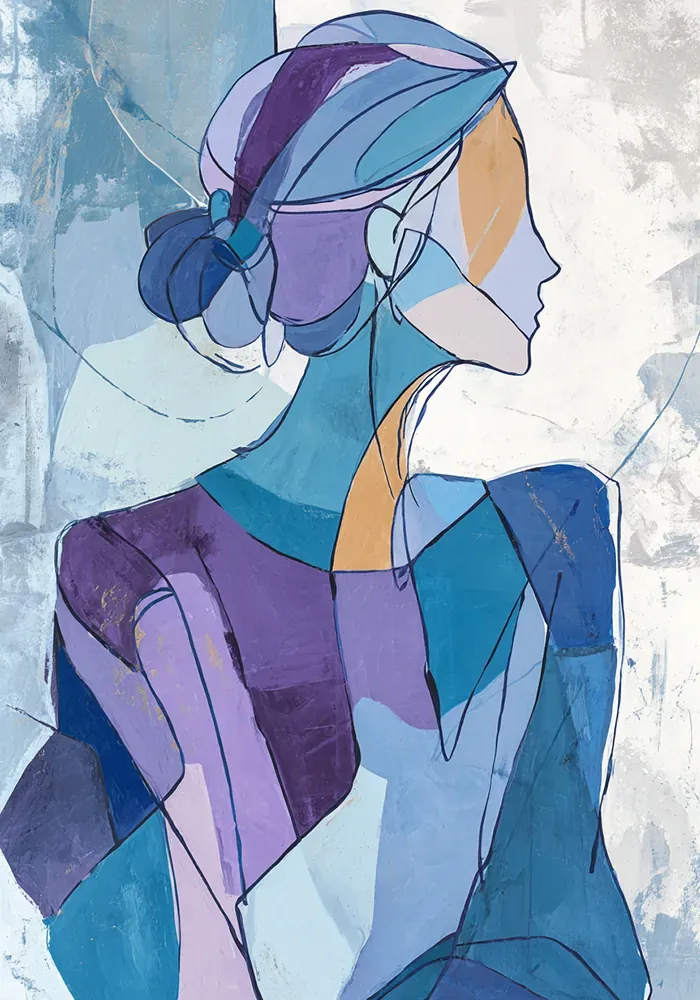
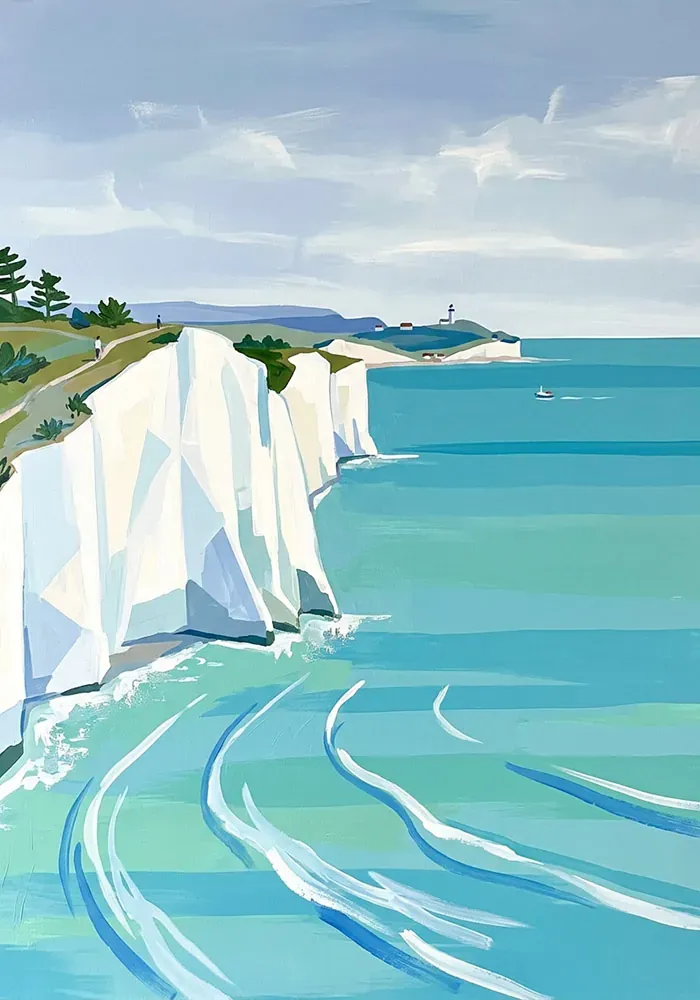
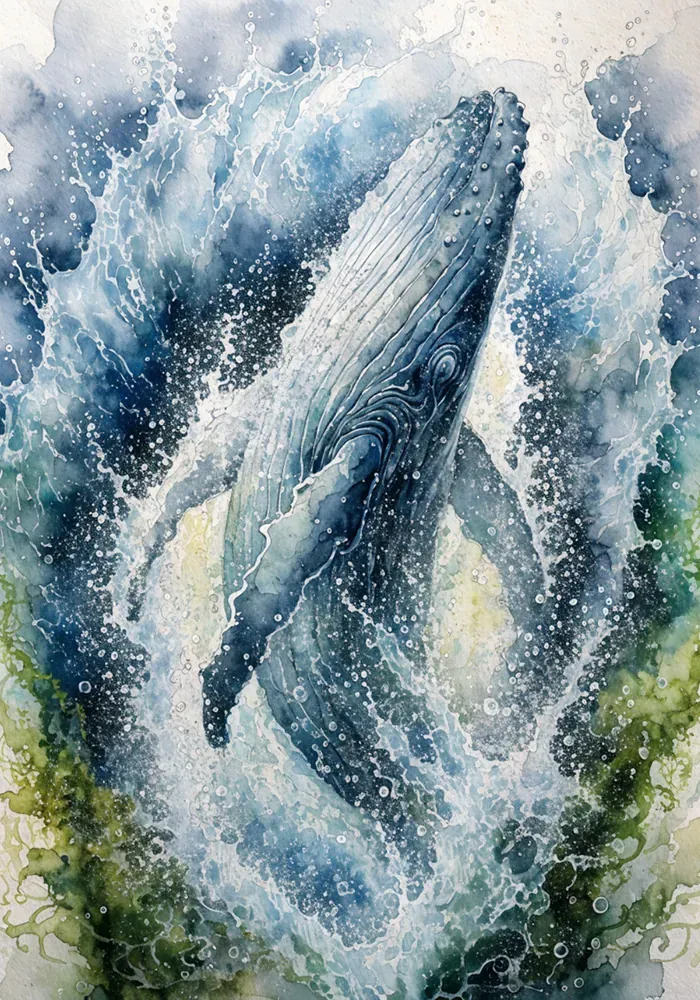
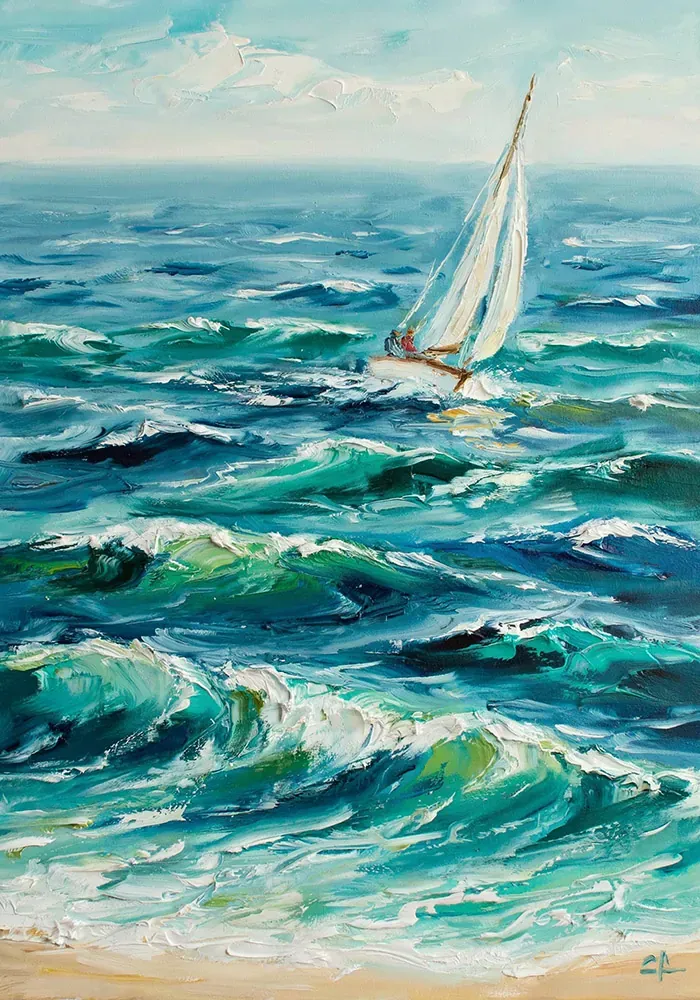
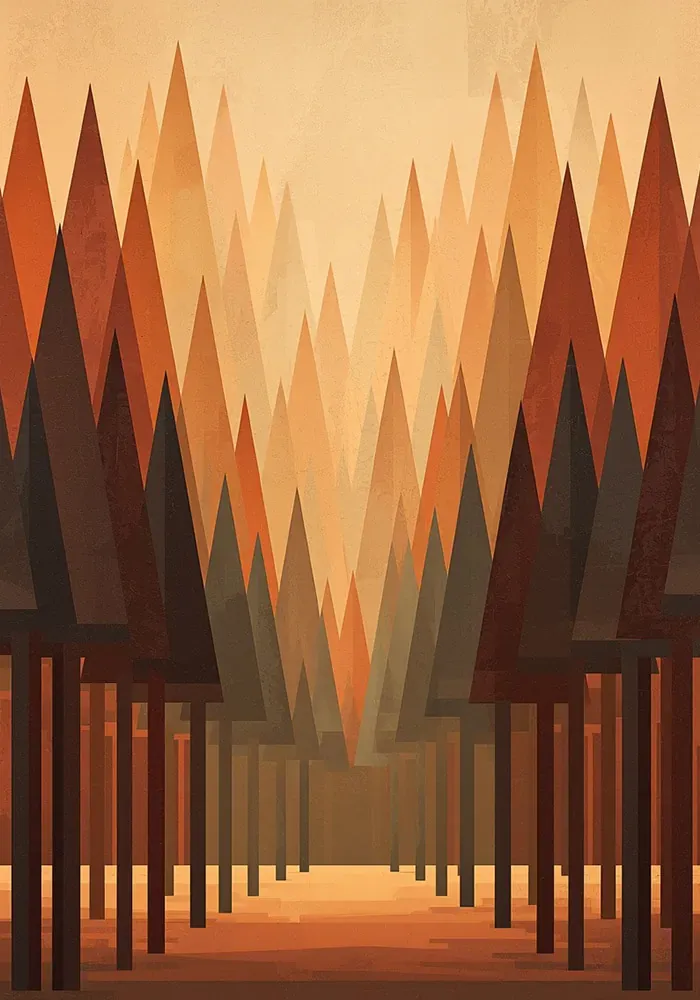
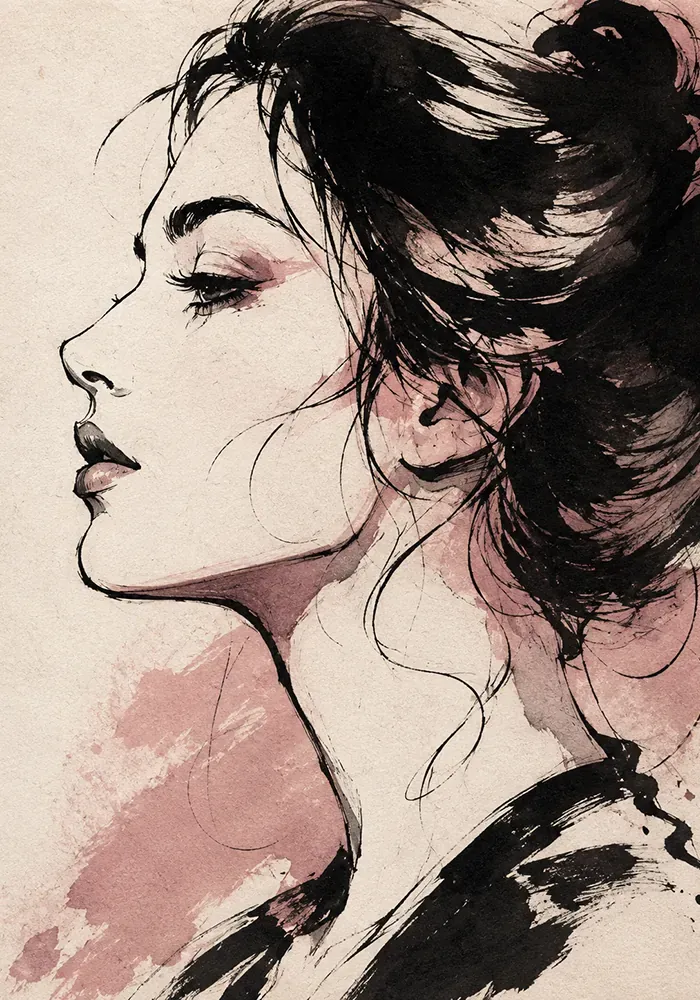
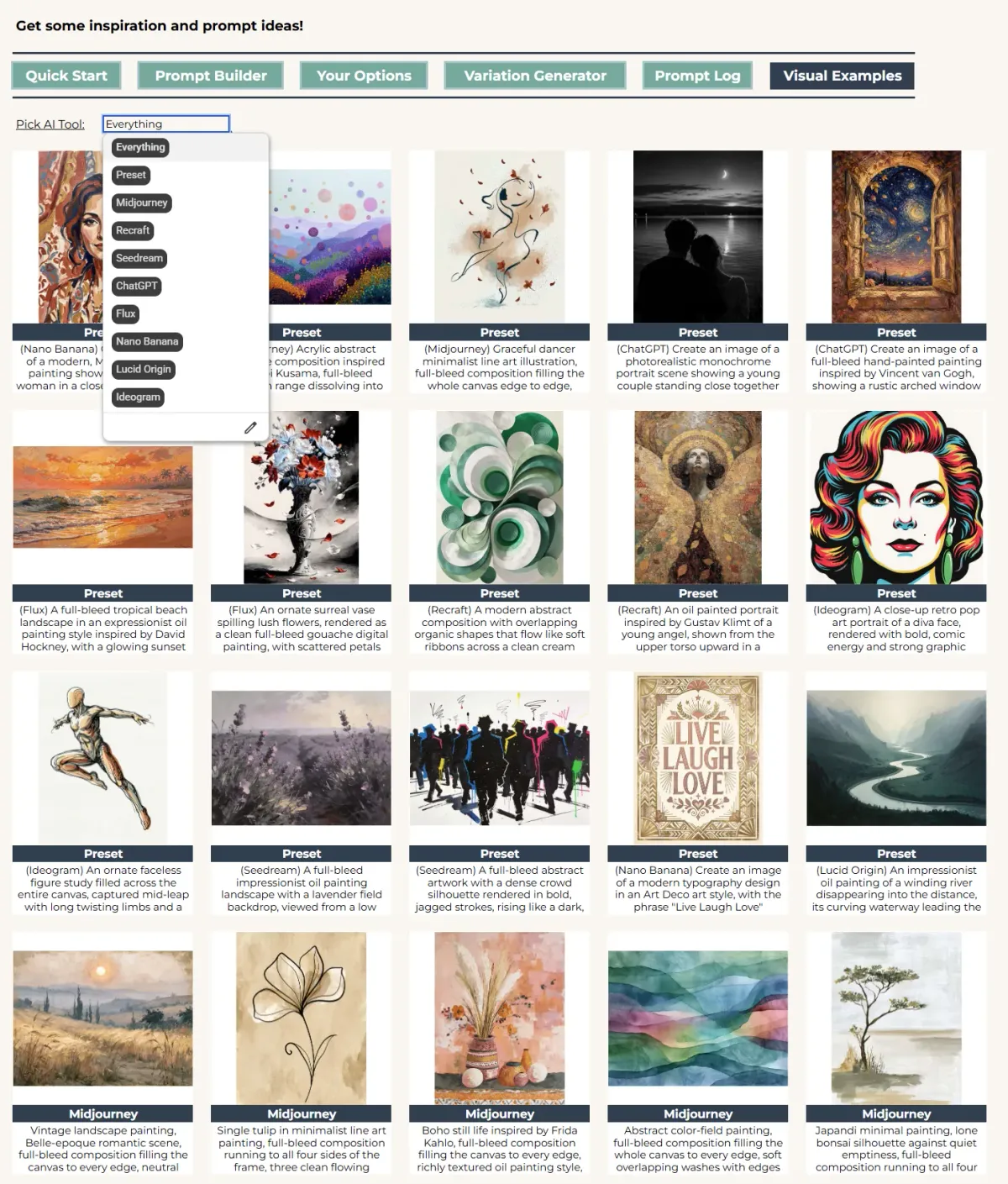
The whole catalogue with examples rides along inside the builder too. The Visual Examples sheet carries example outcomes from each tool we ran the builder through. Its dropdown lets you focus on the outcomes from one AI generator, or compare tools to each other, or take a starting prompt away to build into a project of your own. On wall art that pays off - a quick look shows how a tool treats a given style, so you can choose your direction before any credits go out the door. You can see how the Visual Examples page looks like in the screenshot below.
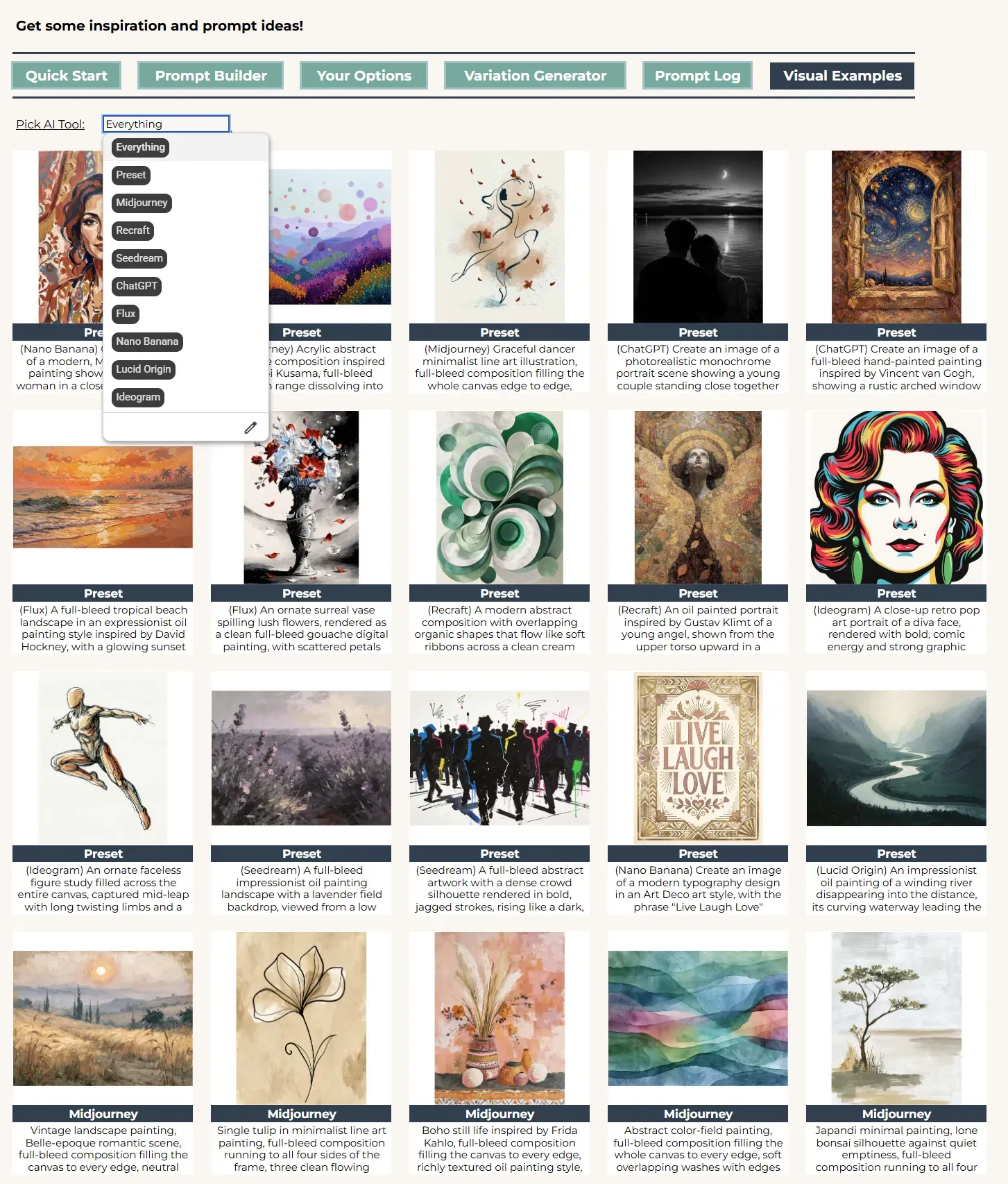
Visual Examples sheet
How the builder is organized
A short map first, so every field we mention has its place. The dropdowns gather into three sections: Format, Composition, and Style - and of the three, Format carries the most weight.
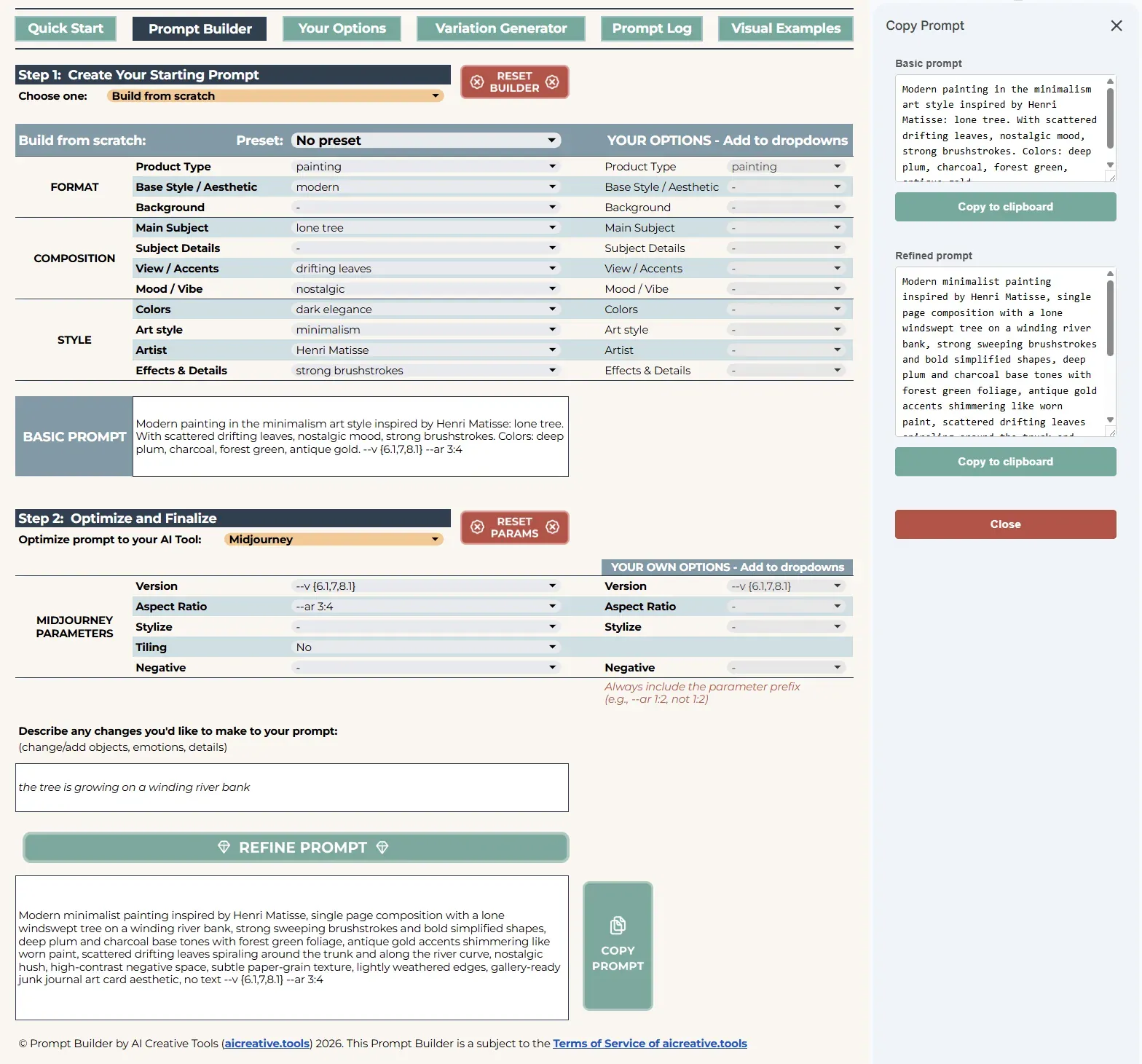
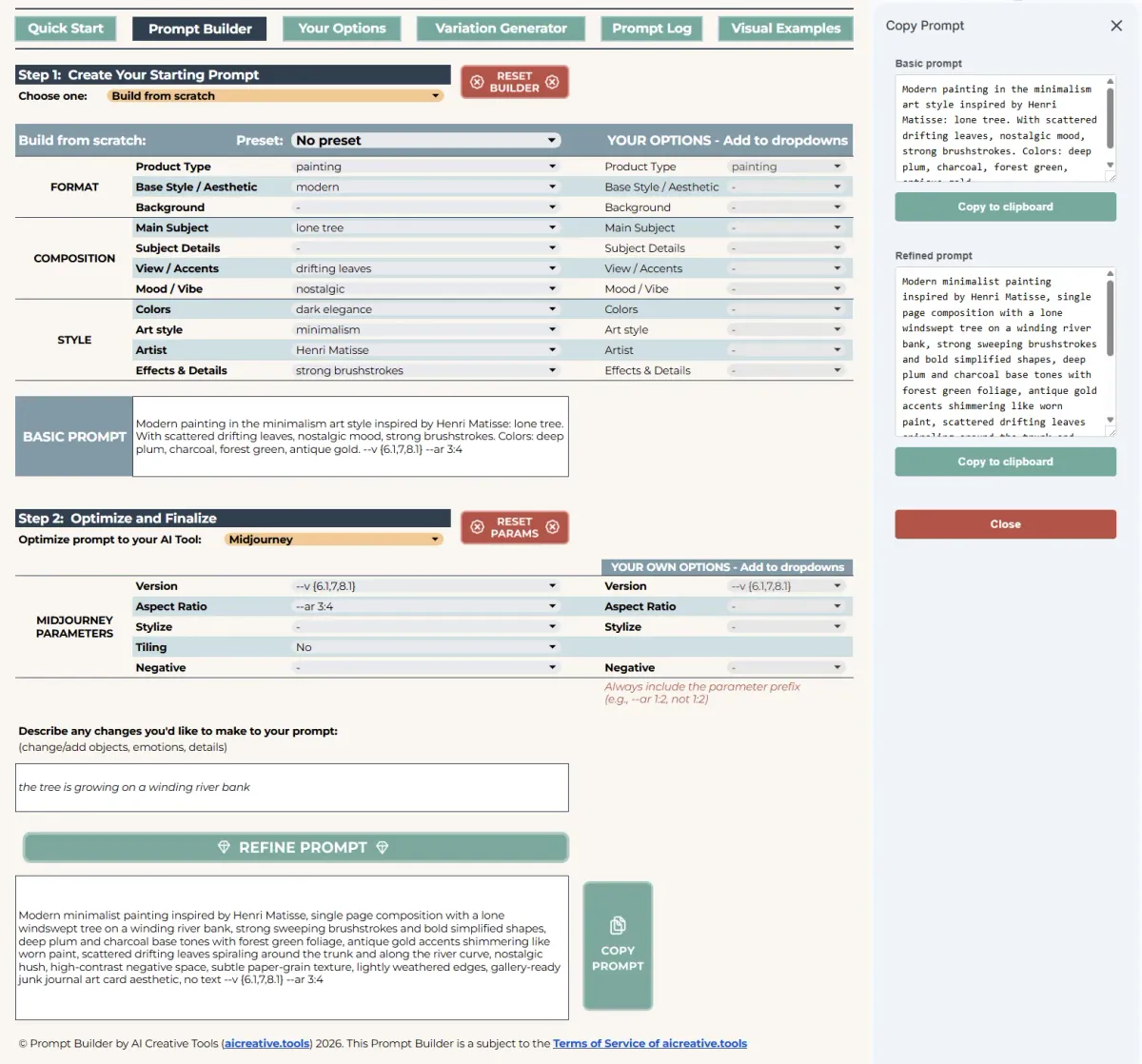
Wall Art Builder Overview
Format is where the piece takes shape. Product Type comes first, and it's the one field never to skip - your pick tells the AI what you're actually making. Everything in it is a full-canvas composition; the builder leaves isolated elements alone. Base Style / Aesthetic sits below and gathers generic, technique, and aesthetic terms in a single list. Background closes the section with solid, outdoor, and indoor options. In the finished prompt these land in a set order: base style, then product type, then background.
Composition is the subject and how it sits. Main Subject and Subject Details work as a pair - the details go ahead of the subject in the prompt, and with no main subject chosen the details fall away too. Main Subject runs wide, grouped into people, nature, animals, architecture, objects, abstract shapes for modern work, and a few typography options. Subject Details cover appearance, material, and quantity. View / Accents is one to learn well: it holds the angle you're looking from, borders and frames, scattered accents in natural and abstract flavors, and poses - so a person or any living subject gets its posture set right here. Mood / Vibe carries mood, atmosphere, and seasons when you want to place a piece in one.
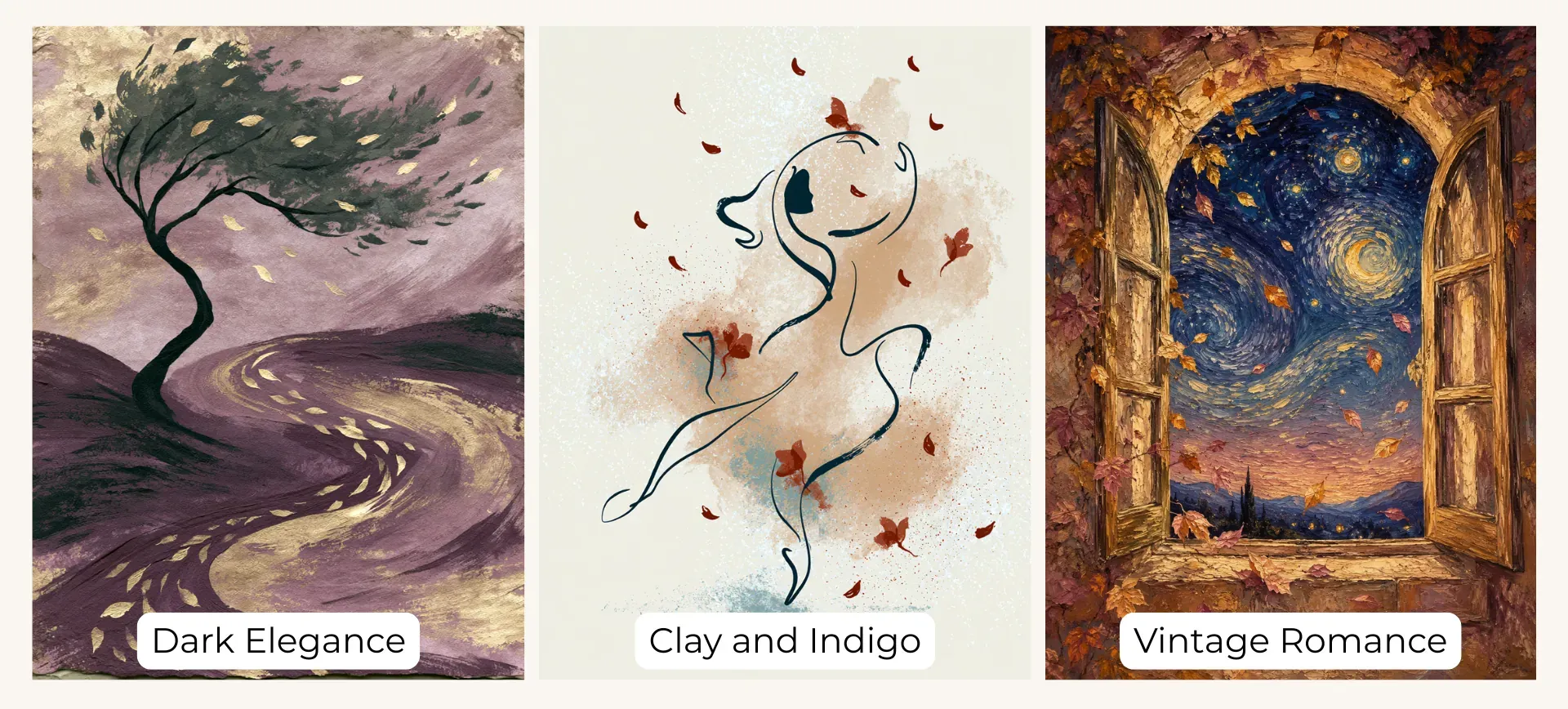
Moodboards
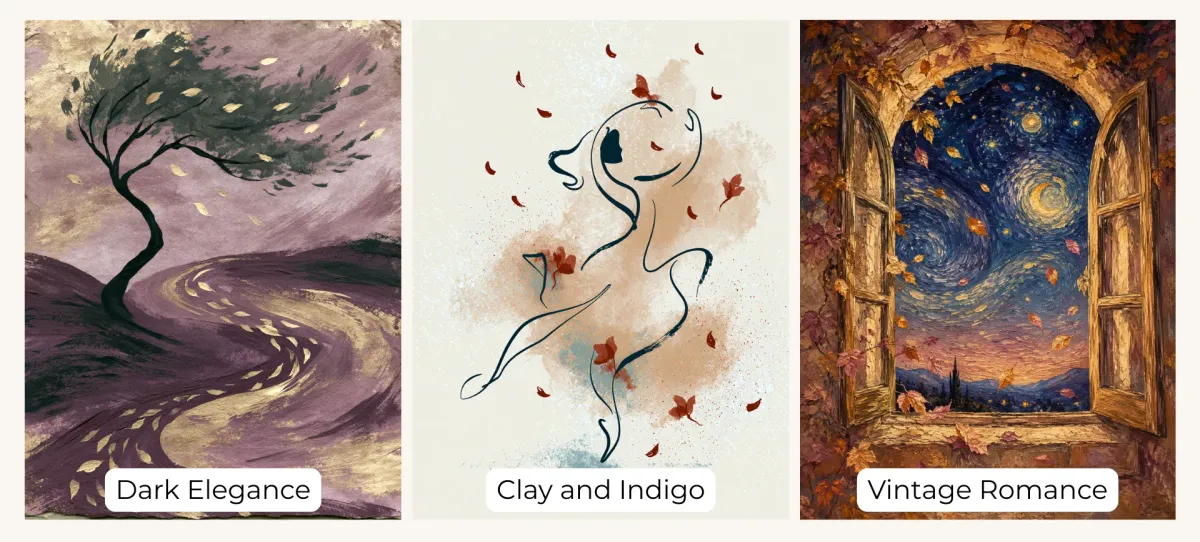
Style is the final block. Colors work as it does across our builders - generic colors, tones, monochrome options, and the Moodboards, which are ready palettes worth dropping onto a piece. Art Style reinforces your base style with art movements, sorted classic and modern. Artist does the same, classic and modern. Effects & Details fills whatever the other lists leave open: the Technique group for strong brushstrokes or fine line work, Lighting and Texture for touches like watercolor paper texture or risograin, Layout for arranging objects, and finishing terms such as intricate detail and minimal detail for when a prompt hasn't said quite enough about how detailed to go.
Tip: Worth knowing everywhere in the builder: any list can take more than one selection. Scroll to the bottom of the dropdown, click Edit, and a Data Validation Rules menu opens on the right; scroll that down, tick Allow Multiple Selections, and click Done. Base Style / Aesthetic is a fine place to start, since a technique and an aesthetic often belong together.
Parameters sit alongside all this, for Midjourney, Nano Banana, and ChatGPT - the way in to aspect ratio and to negative prompting.
Getting good wall art results
- Building from scratch, one pick is non-negotiable: the Product Type. Back it with at least one more field - a Base Style, a Main Subject, or, when you're after something abstract with no single focal object, View / Accents. That's the floor for a prompt that knows what it's making.
- Missing the subject you had in mind? Put it in yourself - the Your Options table next to the dropdowns or the Your Options sheet, they behave alike - and it survives a reset, waiting for your next project. If it's a one-off you won't need again, drop it into Describe any changes instead. Describe any changes is the field you'll lean on most: the dropdowns cover an enormous span on their own, but they don't fence you in - if you can see it in your head, you can put it into words there.
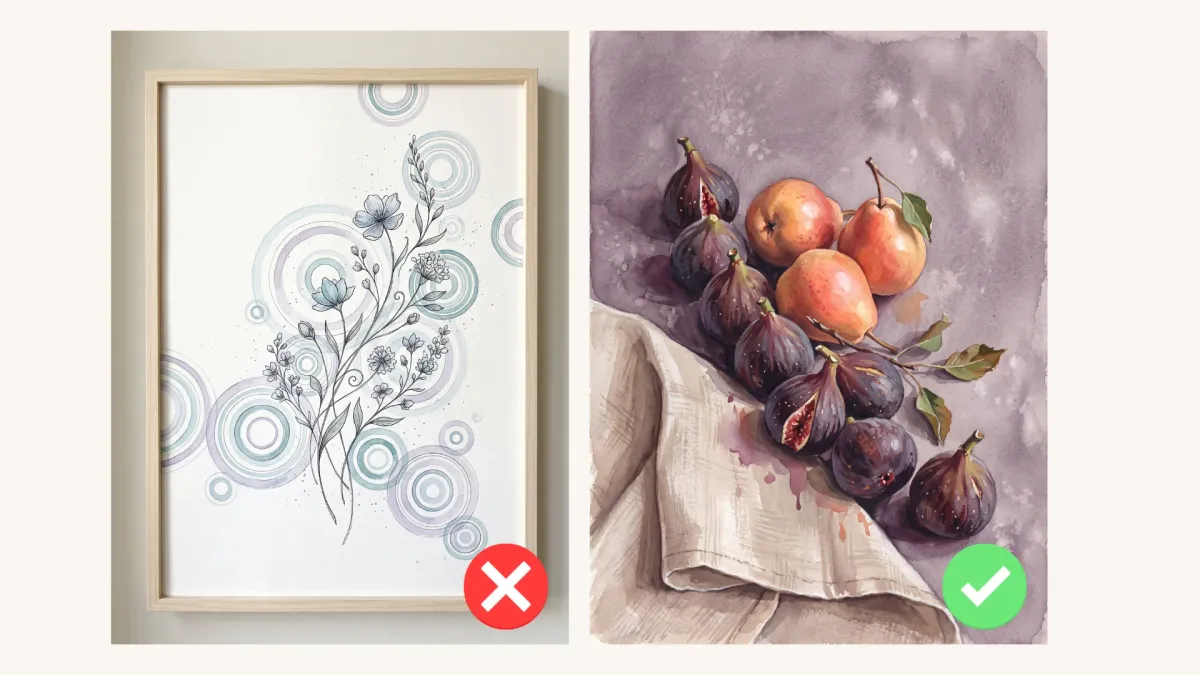
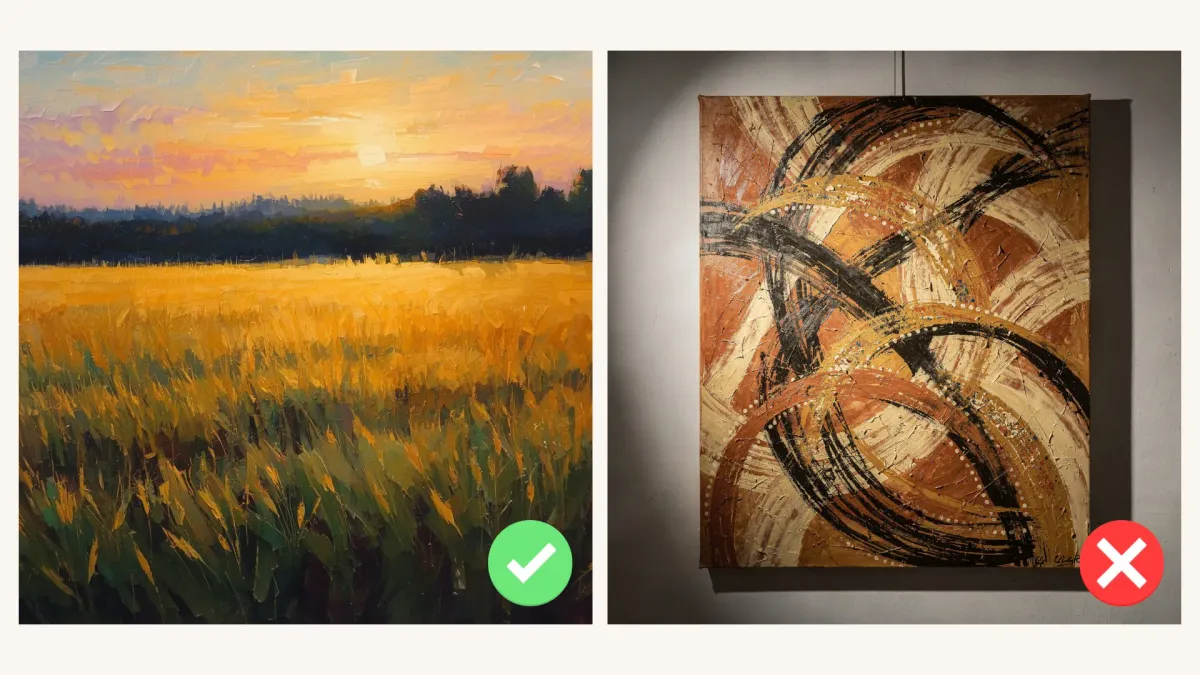
- The one outcome worth actively steering away from is the mockup - when you ask for a painting and the AI hands back a framed painting on a wall, rather than the artwork filling the frame. A few levers pull you off it.
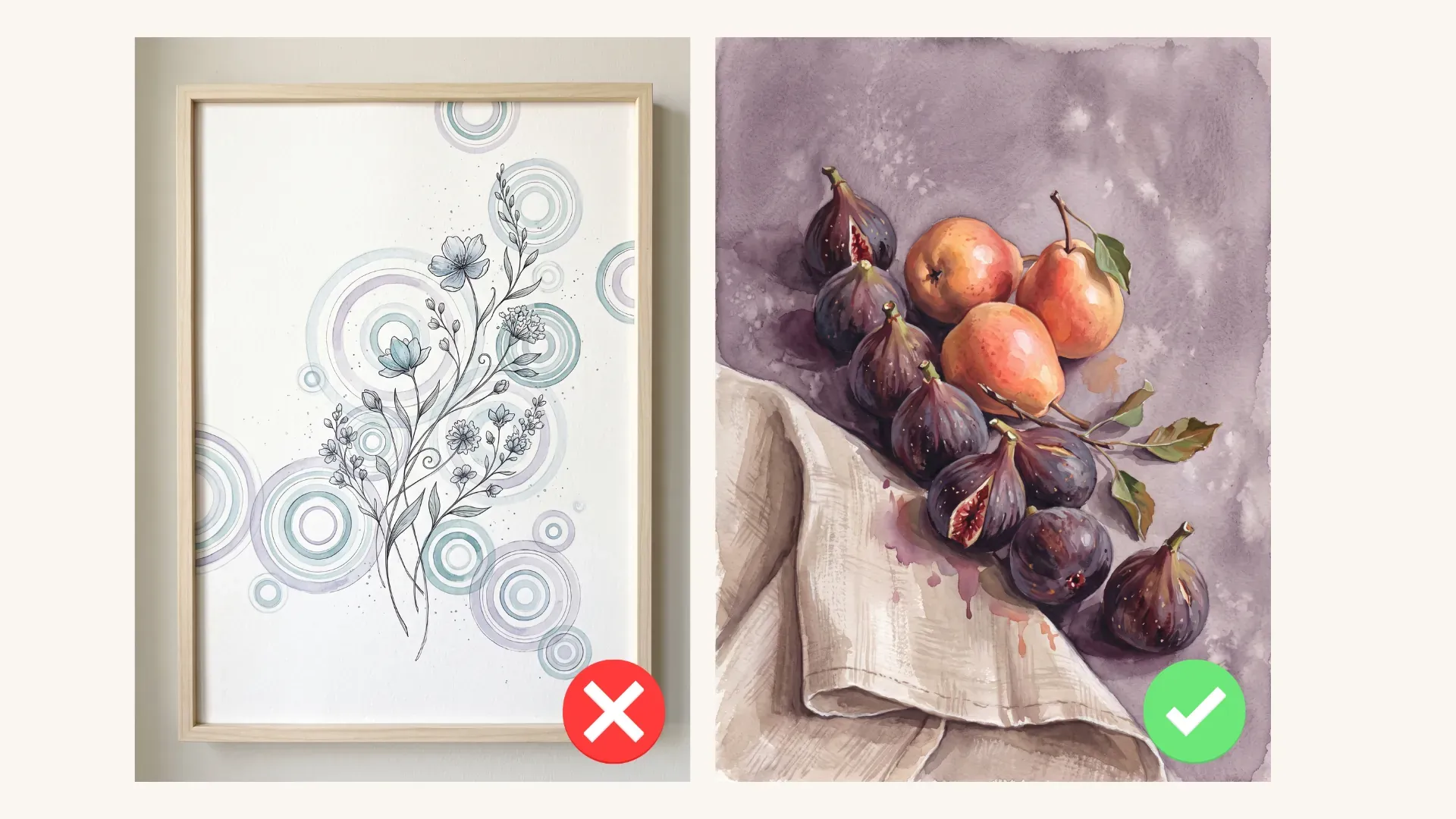
Mockup issue
- The fastest is a finish term from Effects & Details - full canvas artwork edge to edge, or artwork fills the entire frame.
- Lighting is a common culprit. Light the scene inside the artwork and you're fine; light it from outside and you get a framed piece on a wall with light falling across it. Which way it goes depends on your exact wording and your tool, so if the mockup keeps returning, check for a lighting term and pull it unless it's doing something you need.
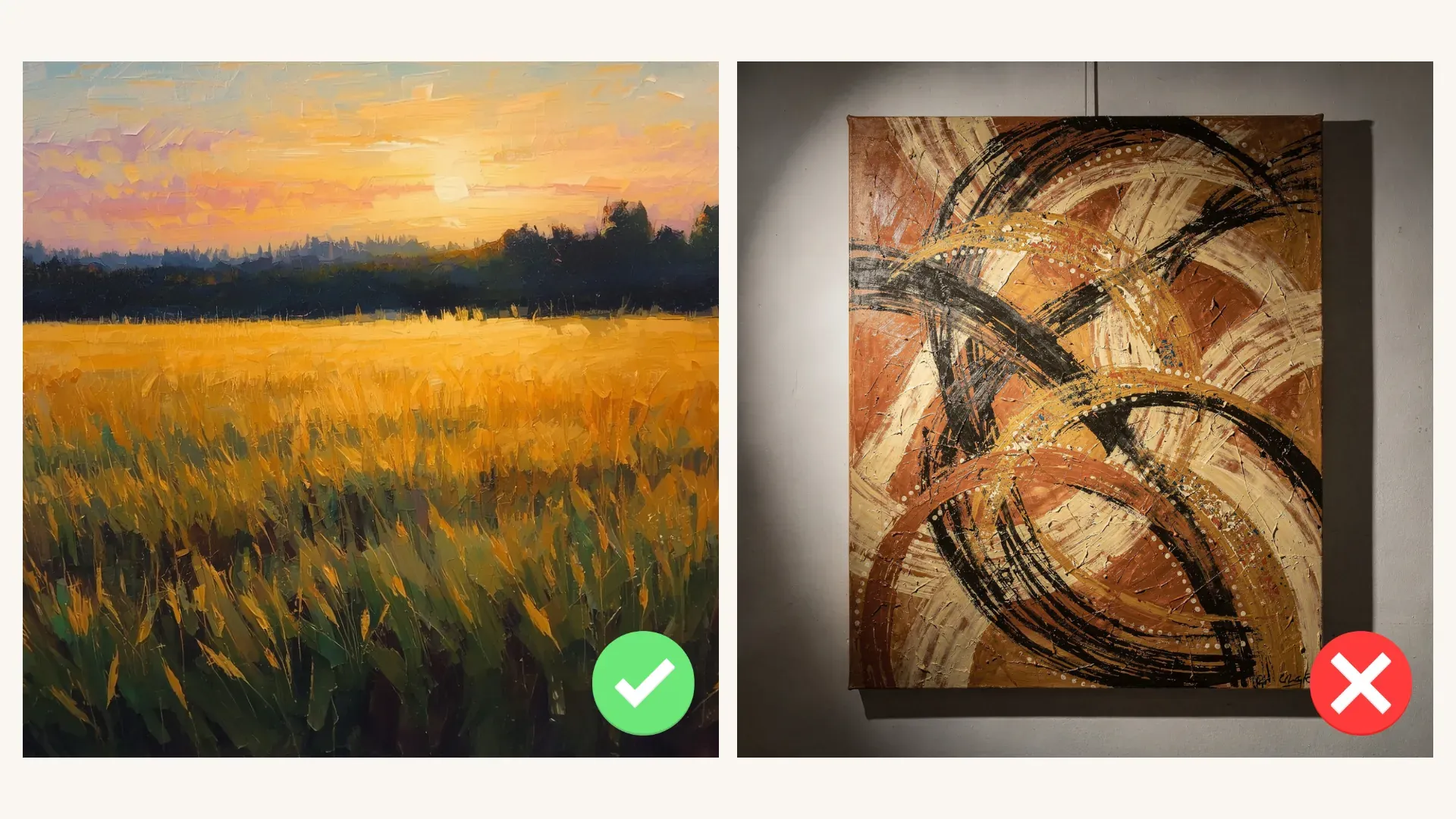
- We also settled one thing for you ahead of time. After plenty of testing, product types like wall art, home decor item, art print, digital print, or typography print aren't in the list at all - those words are among the strongest mockup triggers. Keep it in mind if you add your own terms.
- Parameters give you another route, through negative prompting, on Midjourney, Nano Banana, and ChatGPT. Among the negatives are no mockup, no room interior, no picture frame on the wall, and no wall background - sometimes one of those is the single thing a prompt was missing. It's also where you can drop strong brushstrokes when they turn up uninvited.
- Aspect ratio is the last lever. Paintings and artworks are usually rectangular - taller than they are wide, or wider than tall, and only rarely square - so asking for a square image can nudge a tool into hanging your piece on a wall as a rectangle instead. In our testing today the square ratio no longer seems to do this, but it firmly did when the builder was first built, and some versions of some tools may still lean that way, so it's worth knowing.
- One more habit to keep: use multiple selections. Some lists hold terms that don't overlap at all - one from this group, one from that - because each is telling the AI something completely different about your image.
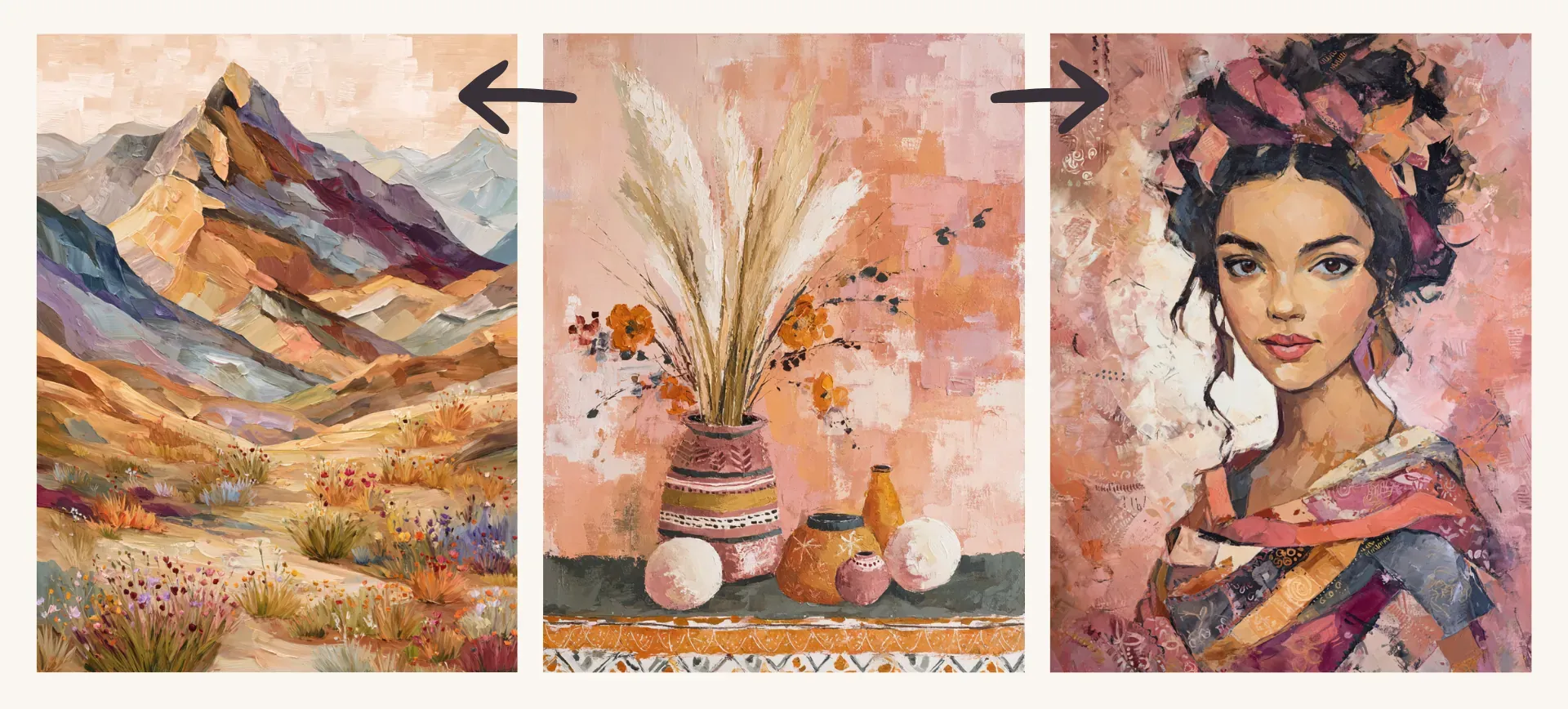
Variations, High Variety Level, No Reference Image
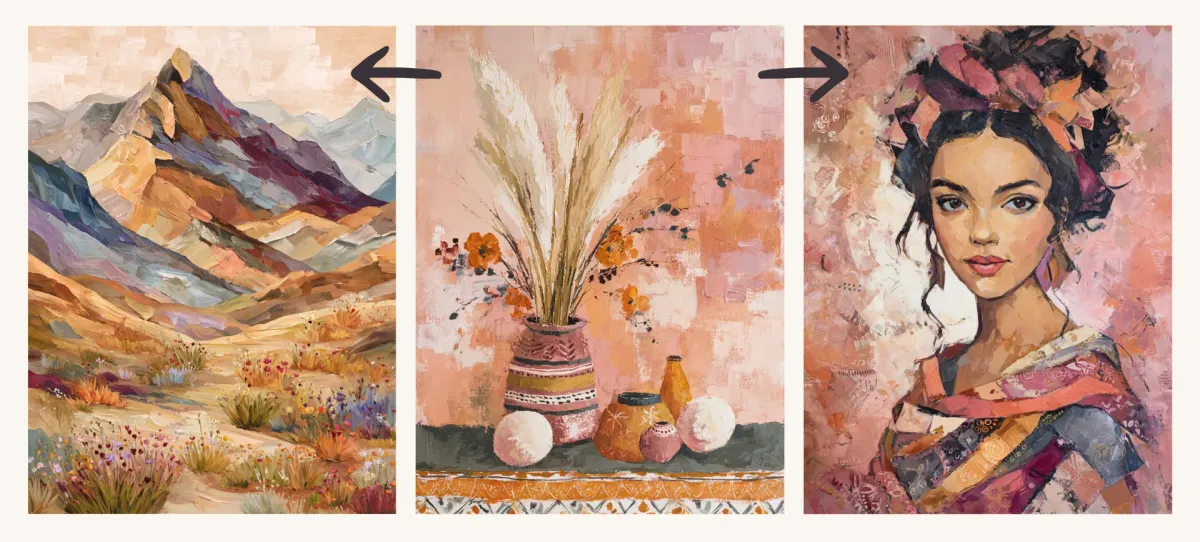
Want to create more of what you love? Move to the Variation Generator, write a line in the what to change between variations field. Leave it empty and the sets can turn repetitive - not inside a single batch, but from one batch to the next.
There's a slower, more hands-on route too: take a prompt from the Prompt Log, or paste your own on the Prompt Builder page, at step one under Use my own prompt, then in Describe any changes name the direction of the change - not "I want to change the main subject", but "I want the main subject to be a woman with an umbrella". You get one carefully shaped prompt out rather than a batch, and some people prefer working that way.
Ready for more? For beginners our Prompt Builder guide runs through several kinds of workflows, and for the most curious ones What AI Tool to Pick for Wall Art weighs every tool for this style.
Happy creating
And that's the Wall Art Builder. Lean on an artist for inspiration, blend a few styles of your own, or head somewhere no single artist has been - there's room for all three. Open it up, start with a product type, and enjoy the freedom. We hope it finds a place in your routine and turns out plenty of pieces you love making.
Every image in this guide came from prompts built in the Wall Art Prompt Builder.